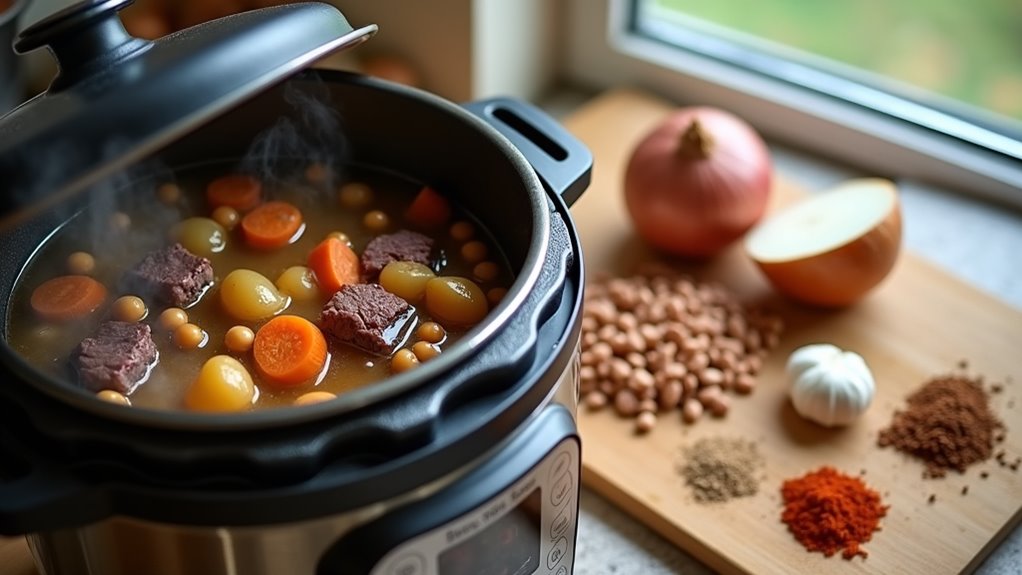
Yes—tough cuts become tender and flavorful in a pressure cooker. Chuck, short ribs, shank, oxtail, and shoulder turn rich and fork-ready far faster than oven braising. Dried beans, lentils, and split peas soften and develop depth without long soaking. Hearty grains, creamy risotto, and quick stews finish efficiently with concentrated flavor. Even simple brothy chicken dishes gain body and speed in a sealed pot.
Tough Cuts of Meat for Pressure Cooking
Tough cuts of meat can turn into the best part of your pressure cooker meal, and that’s where the magic really starts. You can pick beef chuck, short ribs, beef shank, or oxtail, and they’ll turn tender in about 30 to 60 minutes. The pressure traps moisture, so the collagen melts into rich gelatin instead of drying out. That means you get fork-pulling meat with less waiting and more reward. Bone-in cuts like shanks and oxtail also add deep flavor, plus oxtail marrow gives the broth extra body.
Should you use pork shoulder or lamb shoulder, give them about 45 to 60 minutes. For brisket or round, check sooner so they stay juicy. Whenever you adapt old recipes, cut the time way down and trust your spoon.
Dried Beans, Lentils, and Split Peas
Once you’re ready to move from meaty, slow-cooked comfort food to pantry staples, dried beans, lentils, and split peas make pressure cooking feel almost unfairly easy. You can trust them to turn out tender without babysitting the pot.
With careful Soaking methods, you’ll cut time even more for many beans, while unsoaked black, pinto, and navy beans still finish well in about 30 to 45 minutes. Lentils need far less time, and split peas become creamy fast, so your soup can feel like a warm welcome after a long day.
Use plenty of liquid, skip salt and acid until after cooking, and adjust for softer Texture adjustments with natural or quick release. That way, your bowl tastes like you belong there.
Hearty Grains and Porridge Dishes
Hearty grains can feel slow and stubborn on the stovetop, but in a pressure cooker they turn soft, creamy, and deeply comforting with very little fuss. You can make breakfast or dinner feel like home with less waiting and more ease.
| Grain | Time | Result |
|---|---|---|
| Steel-cut oats | 10 to 15 min | Creamy |
| Wheat berries | 20 to 30 min | Silky |
| Harisa mix | 25 to 40 min | Cohesive |
When you use soaked grains, you can cut time and lower scorching risk. Unsoaked grains still work, but they need more care. For grain-and-meat porridges, the pot helps tough cuts turn tender while the starch thickens naturally. Then use finishing techniques like quick-release, a spoon of browned butter, or toasted spices. You’ll get a bowl that feels warm, steady, and made for your table.
Soups and Stews That Thicken Fast
Letting a soup thicken on its own can feel like a small kitchen miracle, and a pressure cooker makes that magic happen fast.
You can build a creamy legume base with split peas, lentils, or black beans in just 15 to 30 minutes, and the starches turn soft without soaking.
Then starchy vegetables like potatoes, squash, and kabocha join in, and vegetable breakdown gives you a velvety body in 8 to 12 minutes.
Should you want more depth, add corn cobs or whole kernels for sweet, thick chowder flavor.
Meaty stews also shine, because collagen turns to gelatin and creates a glossy sauce.
For control, use quick-release, then mash some beans or veg, or stir in a small slurry.
Pressure Cooker Risotto and Risotto-Style Dishes
With your pressure cooker, you can make risotto that turns creamy in just a few minutes, without standing over the stove and stirring nonstop.
Start sautéing your aromatics and lightly toasting the rice, then include the right amount of liquid so you get a silky texture, not a soupy one.
From there, you can play with fun variations like mushroom, corn, saffron, or vegan miso, and finish them with mix-ins that add extra richness and flavor.
Pressure Cooker Risotto Basics
Pressure cooker risotto makes creamy rice feel much less fussy, and that’s a relief whenever you want a comforting meal without standing over the stove.
You still start with aromatic toasting: warm the onion, garlic, and rice in oil so the grains smell nutty and the starch activates. Then add broth at a 1:1 to 1:1.25 ratio for Arborio or Carnaroli, lock the lid, and let the pressure do the work.
In about 6 to 12 minutes, you’ll get tender rice and a cozy base. After release, stir hard to bring out creaminess, then add extra broth, butter, or cream provided necessary.
Use rich additions like mushroom stock prior to cooking, and fold in quick-cooking vegetables or shrimp following pressure so they stay bright and tender.
Creative Risotto Variations
Why keep risotto plain once you can turn it into something warm, bold, and a little surprising? You can build a cozy bowl with roasted pumpkin, then let the pressure cooker do the hard work in 7 to 10 minutes. Use Arborio or Carnaroli rice, keep a 1:2 rice to liquid ratio, and add stock, wine, or dried porcini before sealing.
Should you want deeper flavor, try toasted corn cobs or a spoonful of saffron bouillabaisse broth, then strain out the solids. After the natural release, stir in butter, cheese, or a little miso for silkiness. Next, fold in sautéed greens, shrimp, or chickpeas so they stay bright and tender. That way, you get a risotto that feels comforting, personal, and easy to share.
Quick Chicken Dinners With Beans or Sausage
Whenever dinner needs to happen fast, chicken and pantry staples can save the night. You can tuck chicken thighs into the pressure cooker with canned chickpeas, black beans, or cannellini, and they’ll turn tender in about 8 to 12 minutes. That means you get a cozy, one-pot meal with very little effort.
Should you want more boldness, add spicy sausage like chorizo, andouille, or kielbasa before a short 5 to 8 minute cycle. It keeps its bite and gives the pot a deep, smoky taste.
For the best texture, keep the liquid mostly neutral, then finish with a splash of acid after cooking. With creamy chickpeas or sausage, you’re building a dinner that feels easy, warm, and made for your table.
Vegetables and Broths That Build Flavor
Building flavor in the pressure cooker starts with smart vegetables and a good broth, because a few simple ingredients can turn a plain pot into something rich and comforting.
You can lean on root vegetable sweetness from carrots, potatoes, and beets, which turn fork-tender in minutes. Then add scraps and aromatics for aromatic scrap stock that tastes slow-cooked, even while you’re short on time.
- Toss in onion skins and celery ends
- Add corn cobs for a sweet broth
- Use split peas or barley for body
- Stir greens in after pressure releases
- Cook legumes for a creamy base
Whenever you build this way, your pot feels like home, and every spoonful gives you that cozy, you’re-in-the-right-place kind of comfort.
Frequently Asked Questions
Can I Use a Pressure Cooker for Frozen Foods?
Yes, you can use a pressure cooker for frozen foods, and you’ll still feel confident cooking them. Just add extra time, watch for frozen searing and ice crystalation effects, and keep your community approved safety habits strong.
How Do I Convert Stovetop Recipes for Pressure Cooking?
Start by reducing cooking liquid and shortening time; you’ll join the pressure cooking crowd fast. Adjust liquid, then adjust seasoning after cooking. Recall, haste makes waste, so sample textures and add flavor together, not before.
Are There Safety Tips for Releasing Pressure Quickly?
Yes, you can use quick release techniques safely by standing clear, turning the valve carefully, and using pressure release tools like tongs or a spoon. You will feel more confident, and you are not alone.
Which Foods Should Never Go in a Pressure Cooker?
You shouldn’t pressure cook delicate pastries, thickened dairy, or foods that foam wildly; they can clog rubber seals. Consider it as protecting your kitchen crew—you’ll keep everyone safe, confident, and cooking together.
How Do I Prevent Foamy Foods From Clogging the Valve?
Skim foam before sealing, and use a diffuser to soften boiling so you will keep your valve clear. You will feel confident cooking with your crowd because these simple steps help everyone enjoy safer, smoother meals.