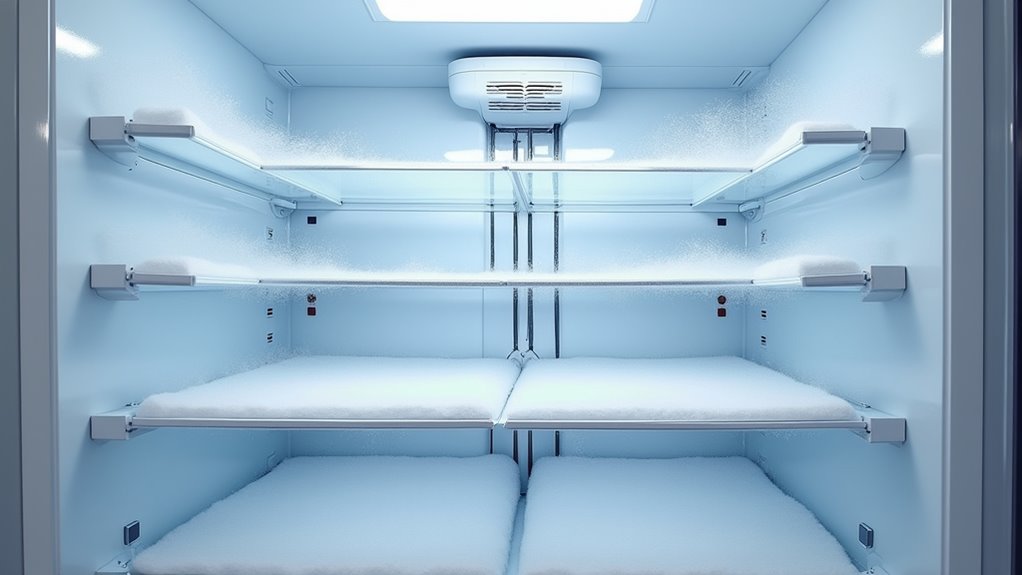
A frost-free freezer prevents icy buildup by periodically warming its evaporator coils to melt accumulated frost. A fan circulates cold, dry air to keep temperatures even throughout the compartment. A timer or sensor pauses the compressor briefly and activates a small heater for the defrost cycle. Melted water drains out through a channel to a pan where it evaporates. The process repeats automatically to maintain usable space and steady temperatures without manual defrosting.
What Is a Frost-Free Freezer?
A frost-free freezer takes the hard work out of keeping food stored safely. You get a freezer that stays drier inside, so ice doesn’t crowd your meals or steal space. It uses moving air and a timed defrost heater to keep frost from building up, which supports better energy efficiency and steadier cold storage. That makes it a smart fit for upright models and fridge-freezer combos, where you want easy access and less mess.
With the right installation tips, you can keep vents clear and seals tight, so the system does its job well. Should you’ve ever hated scraping ice, you’ll feel right at home with this kind of freezer. It gives you convenience, cleaner shelves, and more room for what matters.
How a Frost-Free Freezer Works
As soon as frost starts to form, the freezer doesn’t just wait for it to get worse. Instead, it uses a timed defrost system that works quietly in the background for you.
Every 6 to 8 hours, a heater and thermostat warm the cooling coils just enough to melt light frost. At the same time, a circulating fan keeps cold, dry air moving through the compartment, so moisture from each door opening gets pulled away before it can freeze.
That airflow behavior helps your food stay evenly chilled and supports energy efficiency too. Melted water then drains into a tray, where heat from the compressor or a small heater dries it out.
Keep vents open and food spaced, so your freezer can keep doing its job for your household.
What Happens During the Defrost Cycle?
Every 6 to 8 hours, a timer or sensor kicks off the defrost cycle, so you don’t have to worry about it.
Then a small heater warms the evaporator coils and melts the frost that’s built up there. That water drains away through a channel into a pan outside the freezer, where it can evaporate without freezing back inside.
Timer Triggers Defrost
Usually, a built-in timer or electronic control quietly starts the defrost cycle before frost can get out of hand. You don’t have to guess at what point it happens, because cycle timing keeps the freezer on a steady schedule, often every 6 to 8 hours. That defrost synchronization helps your appliance stay efficient without demanding your attention.
Once the signal goes out, the compressor shuts off and the fan might pause, so cold air doesn’t fight the change. Then a heater near the coils begins its work for a set time. At the same moment, a sensor watches coil temperature and can end the cycle prematurely should it be needed. Meanwhile, meltwater flows away through a drain, and you can count on the system to handle the messy part for you.
Heater Melts Frost
As soon as the timer calls for defrost, the freezer’s heater kicks in and gives the evaporator coils a quick warm-up. You don’t see much drama, but the frost loosens fast as the coil surface rises above freezing.
In just a short burst, the ice turns to water, and that brief heat helps protect energy efficiency because the freezer isn’t fighting thick frost all day.
A thermostat or sensor watches the coil temperature and shuts the heater off at the right moment. That keeps the unit from getting too hot and lowers safety risks.
Then the compressor and fans start again, and your freezer heads back to its set 0°F. You stay on track, and the system stays comfortable, steady, and ready for the next cycle.
Water Drains Away
Once the frost melts, the water doesn’t just sit there and cause trouble. It moves into a drain channel behind the evaporator, and gravity guides it through molded paths toward the freezer’s rear or bottom.
From there, it slips into a drain tube and reaches a drip pan above the compressor, where warmth helps it evaporate. You can envision the system quietly taking care of itself while you store food with confidence.
A timer or thermostat ends the defrost cycle when the coils are warm enough, then cooling starts again, and any leftover moisture refreezes in safe spots. With regular condensate monitoring, you can catch debris or ice before it blocks the flow.
Should a drain redesign be ever needed, clear passage matters most so water stays off your floor.
Frost-Free vs Manual Defrost Freezers
At the time you compare frost-free and manual-defrost freezers, the biggest difference is how each one handles ice before it becomes a problem.
Frost-free models use a fan and brief heat cycles every 6 to 8 hours, so you get steadier temperatures and quicker recovery after you open the door.
Manual-defrost units stay simpler, and you thaw them yourself once frost grows.
- Energy efficiency: Manual models can use a little less power initially, but thick frost makes them work harder.
- Noise levels: Frost-free units often sound louder because of fans, heaters, and timers.
- Food care: Frost-free air can dry food faster, while manual units stay gentler on wrapped and unwrapped items.
Frost-Free vs Auto Defrost Freezers
In case you’ve already seen how frost-free freezers keep ice from piling up, auto-defrost models work in a slightly different way.
You still get a freezer that helps your food stay cold, but it uses timed heater cycles instead of nonstop fan-driven circulation. With frost-free units, airflow patterns move cold, dry air around the compartment, so moisture has less chance to settle. Auto-defrost lets thin frost return between cycles, then melts it off the coils on schedule.
That means your temperature might dip a little during defrosting, while frost-free designs usually bounce back faster after you open the door. Because the air stays drier in frost-free models, humidity control feels tighter, but sealed containers matter more. So, you can choose the style that fits your routine and comfort.
Benefits of a Frost-Free Freezer
With a frost-free freezer, you keep food in a steadier, drier cold, so your frozen meals stay in better shape and ice crystals don’t take over.
You also save yourself the hassle of scraping out frost, because the freezer handles that for you on its own.
Best of all, you keep more usable space inside, so you can actually fit the food you bought instead of a surprise ice wall.
Better Food Preservation
Freshness starts with steady cold, and that’s where a frost-free freezer really shines. You get a calm, even chill that helps your food stay close to the right moisture balance. That steady air also slows the cold enzyme activity that can dull texture and flavor. So your meals don’t just sit frozen, they stay more like the food you packed with care.
- You keep meats and leftovers safer longer because temperatures stay steady.
- You protect berries, ice cream, and soups from rough ice crystals.
- You stop items from sticking together, so you can grab one portion at a time.
Because the freezer recovers fast after you open the door, your food faces less stress. That means better taste, better texture, and a freezer that feels ready for your routine.
Less Manual Maintenance
A frost-free freezer quietly takes one big chore off your plate. You don’t have to unplug it, haul out food, or chip away stubborn ice every few months. Instead, a timed defrost cycle warms the coils, and a fan keeps dry air moving so frost doesn’t build up in the first instance. That means you get minimal upkeep and more homeowner convenience.
You’ll usually just check the door gasket, keep vents clear, and wipe the interior or drip pan as required. Because the freezer handles the messy work for you, you can spend less time managing it and more time enjoying a kitchen that feels easy to care for. For busy households, that kind of help can feel like a small relief with a big payoff.
More Usable Space
That extra room is one of the biggest everyday perks of a frost-free freezer. You keep more of the space you paid for, because frost doesn’t steal room from walls, shelves, or drawers.
With steady air flow and automatic defrost, your food stays separate, easy to reach, and ready whenever you need it.
- You get better space optimization, so full shelf depth actually works for you.
- Your removable shelving and bins keep sliding smoothly, not stuck under ice.
- You avoid the cramped shuffle that occurs whenever frozen buildup crowds every corner.
Common Frost-Free Freezer Drawbacks
Even though frost-free freezers save you from scraping ice, they do come with a few trade-offs you should know about. You might hear higher noise from the fan and the defrost cycle, and that extra hardware can also mean repair risk and a higher upfront price.
Because the freezer moves dry air around, it can dry out food faster, so you’ll want airtight wraps and containers to help protect texture and flavor. Also, should you pack it too tightly, you can block vents and weaken airflow, which could let frost build in spots.
In colder rooms or whenever you open the door often, you might still see a little frost on seals or loose items. Good organization and clean gaskets help you stay ahead of those issues.
Best Uses for Frost-Free Freezers
Frost-free freezers really shine in busy homes because they handle the stop-and-go of daily life so well.
You can grab snacks, tuck in leftovers, and keep your routine moving without fuss. They’re a smart fit whenever you want a freezer that feels easy to live with and still supports your household.
- Meal prepping: You can store cooked grains, soups, and portioned dinners in clear bins.
- Mixed-use storage: You can keep ready-to-eat foods, prepared meals, and short-term meats organized.
- Low-maintenance care: You skip manual defrosting, which saves time and supports energy efficiency.
An upright model helps you see what you’ve got fast, so your kitchen feels calmer and more connected.
Keep tightly sealed packages for best results, especially whenever you’re stocking moderate amounts for the week.
How to Reduce Freezer Burn
You can reduce freezer burn through sealing food tightly with as little air inside as possible. Vacuum sealing or heavy-duty freezer bags work well, and they help protect food from the dry air that keeps moving in a frost-free freezer.
You should also leave vents clear and avoid crowding the fan area so cold air can keep flowing evenly around your food.
Seal Food Properly
Tuck food away the right way, and you can stop freezer burn before it starts. Whenever you seal each package well, you’re helping your food stay tasty and feel like home later. Use these steps:
- Press out air from bags, or use vacuum sealing for a tighter fit.
- Wrap meats and leftovers in heavy-duty foil or freezer wrap.
- Pick airtight containers, then label them with the date and use portion control for meal-sized packs.
For broths and soups, freeze them flat in sealed bags with little empty space. That helps them freeze fast and keeps ice crystals small.
Provided you keep your freezer at 0°F and avoid opening the door too long, your sealed food stays safer from dry air. With a little care, you’ve got this, and your freezer treats you well.
Keep Air Circulation Clear
Keep the cold air moving, and your freezer can do a much better job of protecting food from freezer burn. Leave 2 to 3 inches of vent clearance around vents and the fan housing, so the frost-free air can move evenly.
In case you pack drawers too full or press bags against outlets, you create airflow obstruction, and cold spots can form. That uneven flow makes food dry out faster. So, use airtight, moisture-proof bags, and push out extra air before sealing.
Next, group foods by size and how often you use them. Keep bulk meats in low-traffic spots, so you open the door less and protect steady circulation. Finally, assuming you hold the freezer at 0°F and check the gasket often, because a tight seal helps keep your food safe.
Frost-Free Freezer Maintenance Tips
A frost-free freezer works best whenever air can move freely, so a little routine care goes a long way.
For seasonal maintenance, treat it like a shared home for your food: keep the fan housing and vents open, and leave a few inches around stored items so cold air can travel.
Next, set the temperature to 0°F (-18°C) and check it often. That’s one of the easiest energy saving habits you can build.
- Wipe the door gasket monthly with mild soap and water, and replace cracked seals.
- Use clear, stackable containers so you don’t block airflow.
- Clean the drain channel and drip pan as directed, and remove any debris.
These small steps help your freezer stay steady, calm, and ready for your next grocery haul.
How to Choose the Right Model
Now that you know how to keep your freezer running smoothly, the next step is picking a model that fits your life instead of fighting it. Should you want easy reach and tidy storage, an upright frost-free freezer can feel like a good teammate. It gives you shelves, drawers, and door bins, so you can sort food fast.
Next, do capacity planning with your household in mind. A good rule is 4 to 6 cubic feet per person for everyday use, or 14 to 20 cubic feet when you buy in bulk. Then compare energy efficiency checking ENERGY STAR labels and kWh/year ratings.
You should also review warranty length, service support, noise, and door seals, especially for busy kitchens or garages.
Best Features to Prioritize
Once you shop for a frost-free freezer, the best features are the ones that help it stay cold without making you babysit it. You’ll fit right in with a model that uses smart airflow management and multiple vents, so cold air moves evenly and frost doesn’t build up in one spot.
Next, check for this:
- An automatic defrost cycle with a heater and thermostat
- Fast Freeze settings and a strong compressor
- Gasket durability and tight insulation
These parts work together, so your freezer recovers fast after you open the door and handles busy grocery days with less stress. Clear drawers and baskets also matter, because they keep food organized without blocking vents.
Whenever air can move freely, your freezer works like a reliable teammate, and you feel it every time you reach for a cold treat.
Typical Lifespan and Repair Considerations
Even the best frost-free freezer needs a little real-world care, and that’s where its lifespan and repair needs start to matter. Most units last 10 to 20 years, and many stay strong for 12 to 15 with normal use. You can help yours reach the upper range through cleaning coils, keeping vents open, and checking door gaskets.
| Issue | What You’ll Notice | Typical Fix |
|---|---|---|
| Defrost heater | Frost builds up | Replace part |
| Timer failure | Cooling slips | Service timer |
| Fan problem | Warm spots | Repair fan |
| Drain clog | Water pools | Clear line |
| Wear at end of life | More breakdowns | replacement planning |
If you open the door often or overload it, wear climbs faster. Warranty terms and service access also shape costs, so you can plan repairs with confidence.
Frequently Asked Questions
Do Frost-Free Freezers Run All the Time?
No, frost free freezers don’t run continuously; they cycle on and off. That cycling keeps temperatures steady, and brief defrost periods can slightly increase energy use, especially if you open the doors often.