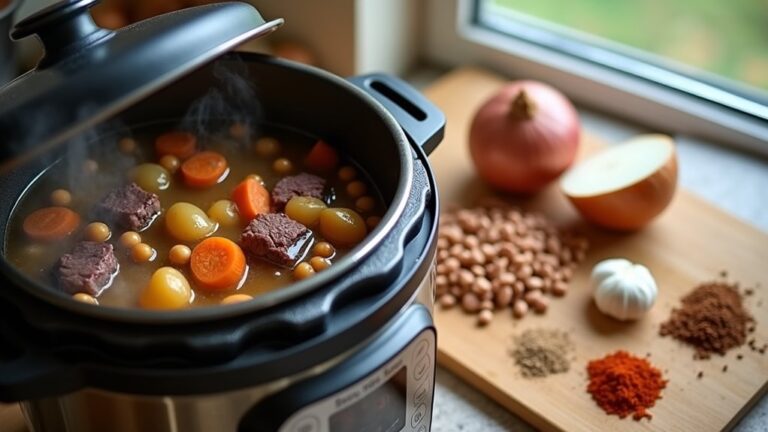
Slow cookers deliver easy, flavorful dinners when used correctly. Common mistakes like adding frozen meat, overfilling the pot, or lifting the lid too often can ruin texture and extend cook times. Choosing the right size and heat setting prevents undercooked centers or mushy vegetables. Layering ingredients and trimming excess fat improve heat circulation and final flavor. Simple adjustments to timing and technique make most slow cooker meals turn out reliably well.
Why Slow Cooker Size Matters
As soon as you choose the right slow cooker size, you make cooking a lot easier and a lot safer too.
You and your pot get better pot placement, so the heat wraps around the food instead of racing across a thin layer. A snug 4-quart cooker fits most family meals, keeps energy consumption sensible, and helps you avoid forcing small batches into a huge crock.
Should you fill it too little, the food might sit too long before it warms evenly. Were you to pack it past two thirds, heat can’t move well and spills become more likely.
Whenever you swap in recipes, you’ll usually cut the liquid a bit because a smaller insert holds steam better. That way, your meals feel right at home.
Avoid Overcooking and Undercooking
Now that your slow cooker size fits the job, the next big win is getting the timing right so your food turns out tender, not sad and soggy. You want texture timing to match the ingredient, so the whole pot feels like dinner, not guesswork. Use these simple habits:
- Add shrimp, fish, peas, and spinach in the last 15 to 30 minutes.
- Choose chuck roast, brisket, pork shoulder, bone-in chicken, dried beans, and root vegetables for long cook times.
- Should meat still feel tough, keep cooking so connective breakdown can finish.
- Wait for fully thawed meat before it goes in.
When you trust the process, you get food that fits your table and your people.
Don’t Add Frozen Food
Skip frozen meat and other frozen ingredients whenever you use your slow cooker, because they can cool the pot and leave you with unevenly cooked food.
Thaw everything fully in the fridge beforehand so it starts at a safe temperature and cooks more evenly.
In case you’ve got frozen leftovers, heat them until they boil before they go into the cooker.
Thaw Before Cooking
Thawing meat before it goes into your slow cooker may feel like an extra chore, but it’s one of the easiest ways to protect both your meal and your peace of mind.
- You keep food safety on your side.
- You avoid the 40°F to 140°F danger zone.
- You protect flavor and texture balance.
- You help your dinner cook evenly.
When you start with fully thawed meat, you give your slow cooker a fair chance to do its job.
Frozen meat can leak extra water as it warms, which can make your sauce thin and your meal soggy. So, thaw it in the fridge overnight, or use the microwave’s defrost setting and move it right in.
That simple step helps you feel confident at the table, right where you belong.
Skip Frozen Ingredients
Even although a recipe feels busy enough already, adding frozen meat to a slow cooker can create more problems than it solves.
You might suppose the frozen texture will soften as it cooks, but the meat stays too long in the danger zone, where germs can grow. That puts your meal, and your peace of mind, at risk.
Whenever frozen pieces thaw in the pot, they also release extra water, which can cause flavor dilution and leave sauces thin or soggy.
To keep dinner on track, thaw proteins fully in the refrigerator beforehand so they heat quickly and cook evenly.
Should you must start with frozen food, boil it on the stovetop first.
And in the event the power goes out, toss the food.
Safety matters, and you deserve a meal you can trust.
Prep Ingredients for Even Cooking
Start initially giving your ingredients a little extra care prior to they go into the pot, because that simple step makes a big difference later. Good knife skills help you cut root vegetables and potatoes into even 1 to 1½ inch chunks, so they finish together instead of leaving you with mushy bites and firm ones. Also, thaw meat fully in the refrigerator initially, because frozen pieces can leak extra liquid and linger too long in the danger zone.
- Keep all vegetable pieces similar in size.
- Place hearty roots where they can cook through.
- Wait to add peas, zucchini, spinach, and tender herbs.
- Fill the cooker only 2/3 to 3/4 full.
That smart seasoning timing and prep help you feel right at home at dinner.
Layer Ingredients the Right Way
Start with a hearty base of potatoes, carrots, or turnips at the bottom of your slow cooker, since they need the most heat to cook evenly.
Then place larger cuts of meat on top so they stay tender and let their juices drip down and flavor the vegetables.
Save delicate vegetables like peas, zucchini, and leafy greens for the last 15 to 20 minutes so they don’t turn mushy.
Hearty Base Layer
A smart slow cooker setup begins with the heavy stuff. You’ll get better root placement whenever you put potatoes, carrots, and turnips on the bottom. They need direct heat, and that helps heat transfer work the way you want. Then add meats or other long-cooking proteins on top, so the juices can drip down and season the roots below.
- Keep dense vegetables low for steady cooking
- Stack proteins above to protect them
- Leave room so the pot isn’t packed tight
- Fill only two-thirds to three-quarters full
After that, pour liquids over everything to spread moisture without shifting the layers. This simple setup helps you cook with the crowd, not against it, and it keeps every bite tender, cozy, and well balanced.
Add Delicates Last
Once you’ve built that sturdy base, the next trick is grasping what not to rush. You’ve got the roots and meat where they belong, and now you need delicate timing.
Add shrimp, scallops, zucchini, baby spinach, and frozen peas only in the last 10 to 30 minutes, so they stay bright and tender. Should your recipe call for cream, yogurt, or fresh herbs, wait even longer: stir in dairy during the final 15 minutes, then add herbs in the last 5. That keeps flavor fresh and helps you avoid curdling.
Keep the lid down unless the recipe tells you otherwise, because every peek steals heat and slows dinner. With careful garnish placement and a little patience, you’ll feel like you’re cooking with the whole crew.
Keep the Lid On
Keeping the lid on might feel like no big deal, but it makes a huge difference in slow cooking.
- You keep trapped heat working for you.
- You save about 15 to 20 minutes each time you peek.
- You protect moisture, so meals stay tender.
- You keep condensation recycling steady, which helps prevent scorching.
That’s the heart of lid etiquette. Slow cooker recipes count on a sealed pot, so every lift breaks the rhythm your meal needs. Instead, use the glass lid to check progress without disturbing the seal.
Should you truly need to add something, move fast and cover it right away. That simple habit keeps your food in the safe zone and helps your kitchen feel calm and capable. Whenever you trust the process, you join the club of cooks who know patience pays off.
Get the Liquid Balance Right
As you switch a stovetop recipe to a slow cooker, the liquid needs a small reset because the lid traps steam and barely lets any moisture escape. That’s why smart liquid reduction matters. Cut the recipe’s liquid by about 20 percent, then keep the pot between two thirds and three quarters full so you’ve got enough simmer space without flooding the sides.
Should the pot start to smell burnt or food stick, add at least 1/2 cup more liquid and stir right away. You’ll also protect flavor by starting with thawed meat, since frozen pieces can water things down. For rice, pasta, and dairy, wait until the end. That keeps your sauce cozy, not soupy.
Handle Reheating and Power Loss Safely
As soon as you need to warm leftovers in a slow cooker, don’t start with food that’s still cold or frozen, because the cooker heats too gently for that job. Reheat initially on the stovetop or in the microwave until it reaches 165°F, then move it in so your meal stays safe and feels ready for the table.
- Keep hot food at 140°F or higher.
- Use temperature monitoring with a food thermometer.
- Never begin with frozen meat.
- Follow emergency protocols should power drops.
Should the power goes out, act fast. Whenever food stayed above 140°F for under two hours, finish it on another heat source. In case the outage lasted longer, or you were away, toss it.
Afterward, chill leftovers within two hours so your kitchen crew stays protected.
Frequently Asked Questions
What Are You Not Supposed to Put in a Slow Cooker?
You’re not supposed to put frozen meat, delicate seafood, dairy products, acidic fruits or quick cooking vegetables in your slow cooker at the start. Add them later or they’ll turn mushy, curdle or cook unevenly.