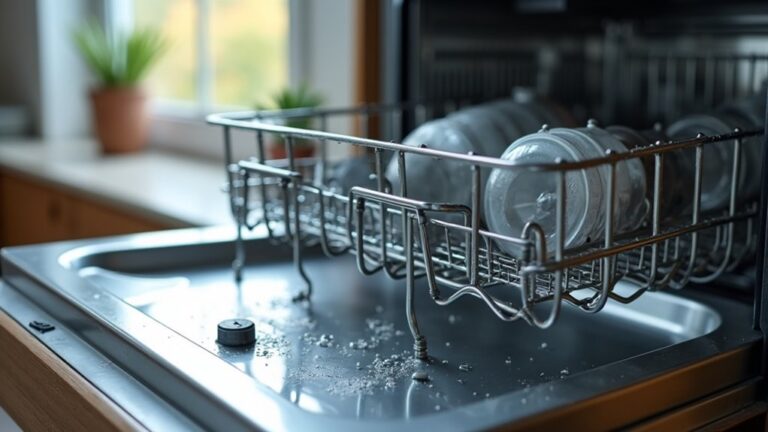
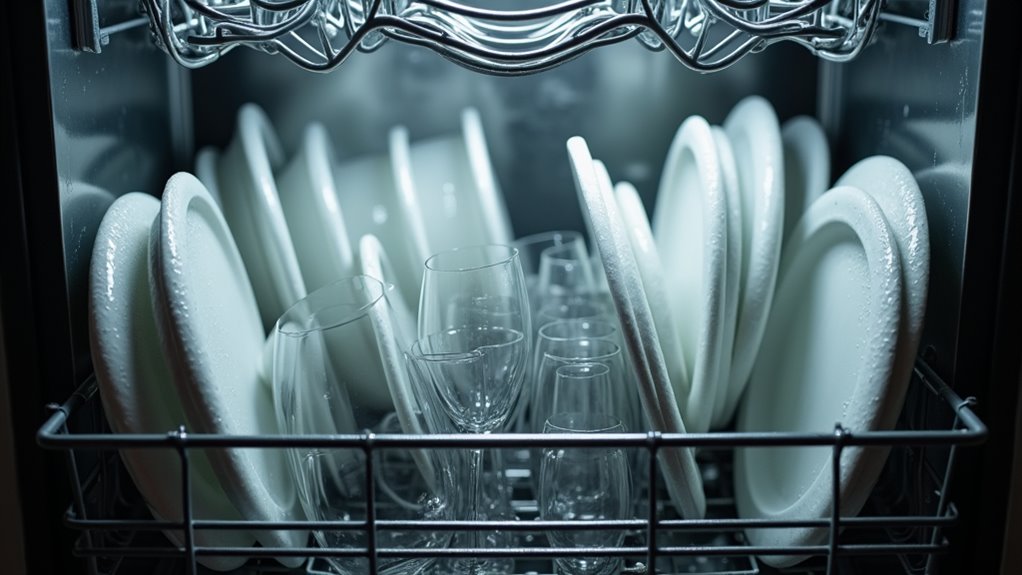
Dishes stay wet after a dishwasher cycle because drying settings, rinse aid levels, loading patterns, heat elements, or blocked vents are not working optimally. Check the dry mode and add rinse aid to improve water sheet-off. Arrange bowls and plastics to let water run toward the drain instead of pooling. Inspect the heating element, thermostat, and vent for faults that reduce evaporation. Small adjustments often restore proper drying performance quickly.
Check Your Dishwasher Dry Setting
Initially, check the dishwasher’s dry setting, because this one small choice can make a big difference.
You might suppose the cycle is fine, but cycle selection often controls whether your dishes get heat or just a breeze. In case you want drier plates, choose Heat Dry or Extended Heat, not Air Dry or Energy Saver. Those cooler options skip the heater on purpose, so plastics and bowls can stay damp.
Also, check the owner’s manual, since quick cycles often change drying to match user preferences and save power. On some models, the heater or thermostat should warm the load by the end.
Should your dishes feel cold after a Heat Dry run, that setting couldn’t be working right.
Make Sure Rinse Aid Is Working
Next, make sure rinse aid is actually doing its job, because even a small refill can change how dry your dishes feel. It lowers water surface tension, so water sheets off instead of clinging in beads. Keep the dispenser full, and set it between 2 and 4 for most loads.
Should your glasses still spot or plastics stay wet, the dispenser could be clogged, empty, or set too low.
- Check the cap and refill line.
- Clean the dispenser so it can release a measured dose.
- Run a heated cycle to see whether the rinse aid is working.
Were your detergent dependent on it, don’t skip this step. Some rinse aid alternatives can help, but always watch the environmental impact and choose one that suits your machine.
Load Dishes So Water Can Drain
Whenever dishes stay wet, the problem is often in how they’re loaded, not just how they’re washed. You can help water escape by giving every item a clear drain slope and enough rack spacing.
| Item | Best angle | Why it helps |
|---|---|---|
| Plates and bowls | Tilted down | Water slides to the sump |
| Cups and glasses | Slightly inward | Rims don’t hold puddles |
| Silverware | Mixed up and down | Stops tight pockets |
Leave 1 to 2 inches between pieces, and don’t let bowls nest. Set pots and pans at an angle, not flat, so spray reaches them and runoff keeps moving. Whenever you load with care, you’re not fighting the machine. You’re helping your dishes dry with less work and a lot less frustration.
Why Plastics and Upper Racks Stay Wet
Plasticware often stays wet because it doesn’t hold heat well, so it cools down fast and leaves moisture behind.
You’ll also notice that upper-rack items dry more slowly since they sit farther from the heater or fan, where the warm air is weaker.
In case you angle cups, bowls, and other plastic pieces so water can run off, you give them a much better chance to dry instead of collecting little puddles.
Plasticware Retains Moisture
Sometimes the dishes that come out looking clean still leave you with a little puddle of frustration, and plasticware is usually the reason. You’re not doing anything wrong. Plastics made with different polymer blends and surface texture don’t hold heat well, so they lose warmth fast and water lingers longer.
- Flat bowls can catch droplets.
- A quick angle helps water slide off.
- Rinse aid can cut spotting.
Even should your cycle use Heated Dry, the plastic cools quickly and moisture can settle back on it. That’s why your cups and containers might look damp while glass nearby seems done. You can get better results with higher-heat or extended cycles, and some loads still require air-drying. Were your kitchen to feel a little too familiar here, you’re in good company.
Upper Rack Dries Slower
The upper rack often stays wetter than the lower one because it sits farther from the dishwasher’s heating element, which is usually near the bottom. With upper rack placement, you get weaker radiant heat and gentler airflow, so water evaporates more slowly. That’s why plastics, cups, and bowls can still look damp even though the rest of the load feels finished.
| Factor | What you notice | Why it happens |
|---|---|---|
| Heat distribution patterns | Top items stay cool | Less heat reaches them |
| Plastic pieces | Droplets cling | They don’t hold heat well |
| Loading space | Water sits in curves | Pools don’t clear fast |
If your cycle uses no-heat drying, the top rack cools fast and moisture hangs on. You’ll do better provided items fit loosely and water can sheet away.
Angle Items For Drying
Angling rules make a big difference while you’re trying to dry dishes, especially on the upper rack where plastics tend to stay damp.
Whenever you set each piece with the right dish angle, water can slide off instead of hanging around like it owns the place.
- Tilt bowls and cups downward 15 to 30 degrees.
- Leave at least one inch between items.
- Use rack tilt and rinse aid to help water sheet away.
Plastics cool fast, so they trap more droplets than glass or ceramic.
That’s why you want every piece standing apart, not nested or flat.
With a smart rack tilt, warm air reaches more surface, and gravity helps during the dry phase.
You’ll notice less wetness, fewer puddles, and a lot less towel duty later.
Let the Dishwasher Vent After the Cycle
Once the wash ends, let your dishwasher breathe for a few minutes before you crack the door open. That allowance time helps the built-in vent move moist air out, so your plates don’t get a fresh coat of steam. Should you open right away, the room fills with humidity, and water can fall back onto the dishes and tub. For good vent maintenance, keep the door shut while the fan or vent finishes its short run.
| Wait time | What happens | Your payoff |
|---|---|---|
| 0 min | Steam rushes out | More dripback |
| 5 min | Vent works | Better drying |
| 10 to 15 min | Moist air fades | Drier dishes |
In case your model uses an energy-saving cycle, add rinse aid or Heat Dry. Should the vent seems stuck, call for service.
Clean the Filter, Spray Arms, and Drain
You should start by checking the filter at the bottom of the tub, since a dirty one can hold water and leave your dishes damp.
Next, rinse the spray arms and clear any stuck bits from the holes so the water can reach every dish.
Then inspect the drain hose and air gap for clogs or kinks, because good draining is just as crucial as strong spraying.
Clean Filter Regularly
Cleaning the filter regularly is one of the easiest ways to stop dishes from coming out wet. Whenever you keep this part clean, you help water move out the way it should, and your load dries better. Make a simple preventive schedule so you don’t forget. Most filter materials handle a gentle rinse well, but a soft brush helps lift stuck grease too.
- Check the filter every 1 to 3 months.
- Rinse it under hot water after each removal.
- Swap out warped or cracked parts fast.
You’ll also want to inspect nearby spray-arm holes for bits of food and mineral buildup, because a blocked spray pattern can leave you with that damp, sticky feeling nobody wants.
Afterwards, run a hot rinse or cleaning cycle to clear leftover debris and keep your machine working with the crew, not against it.
Clear Spray Arms and Drain
Whenever the filter is already clean and the dishes still come out damp, the next place to check is the path water takes through the machine. Remove the spray arms and look for mineral grit or food bits in each jet. That quick jet unclogging helps water hit every dish again. Make sure the spray arm alignment is right, so the arms spin freely and don’t scrape the rack. Provided a spoon or pan blocks them, move it. Then check the drain hose and disposal connection for kinks, clogs, or a knockout plug problem. A backed-up tub can splash dirty water back onto plates.
| Check | What you want | Why it matters |
|---|---|---|
| Jets | Open and clear | Strong spray |
| Arms | Spin freely | Full coverage |
| Drain | Water exits fast | Less re-splash |
Run a short hot rinse and watch for even spray.
Test the Heating Element
Next, check the heating element, because this part does the heavy lifting during the dry phase. Whenever you run Heated Dry or Sanitize, the tub should feel warm at the end, close to washing temperature. Should it stay cool, you might be looking at a failed element or thermostat. That’s frustrating, but you’re not stuck.
- Feel the inside right after the cycle ends.
- Watch the sanitize light or high-heat indicator.
- Use heating diagnostics with a multimeter to check continuity.
A good element usually reads about 10 to 30 ohms, depending on the model. If the meter shows no continuity, element replacement could be needed. After repair, run another high-heat cycle and check for warm dishes, better dryness, and no error codes.
Inspect the Vent Fan
Next, check the vent fan, because it pushes moist air out at the end of the cycle. Should it’s stuck closed or blocked by debris, damp air can stay trapped inside and leave your dishes wet.
Run a heated-dry cycle and listen for the fan, then clean the vent cover unless you don’t hear it working.
Vent Fan Blockage
When your dishes still come out damp after a wash, the vent fan is a smart place to check, because it’s often the little part doing the big job of moving moist air out during the dry cycle. Provided that airflow stops, warm steam hangs around and your dishes stay wet.
- Look near the tub or door after removing the lower spray arm.
- Clear food bits, lint, and detergent residue from the vent path.
- Run Heated Dry and feel for airflow; weak air can point to a stuck fan or clogged vent.
Should you still get no movement, check for warped seals or a misaligned flap. That small issue can block drying fast.
At that point, you might require fan replacement, vent relocation, or a pro to examine the motor with a multimeter.
Stuck Closed Vent
Provided your dishwasher keeps leaving dishes damp, a stuck-closed vent is often the concealed troublemaker, because it traps warm, moist air inside the tub instead of letting it escape.
You can check the vent area near the door or top rim for food debris or mineral buildup.
A misaligned latch can keep the vent actuator from opening, so give that part a close look too.
Should your model use a fan, run a heated dry cycle and listen near the front or top of the tub. No sound, weak airflow, or cool air points to an airflow obstruction or a failed motor. You should feel some warm air at cycle end.
In the event cleaning and alignment don’t help, call a technician to replace the actuator or fan motor.
Moist Air Trapped
Should your dishes still come out damp, the vent fan could be trapping moist air inside the dishwasher instead of letting it escape. You can check the vent opening for debris, hard water buildup, or leftover packaging. Should your model use an active fan, run a heated-dry cycle and listen near the end. You should feel air moving at the vent when it works.
- A stuck flap can hold humid air in.
- Faulty fan parts could need a pro.
- Clean seals help reduce interior condensation.
Should the fan never starts, humidity sensors could still read a wet tub, yet the real problem is trapped air. So, whenever you want drier dishes and less frustration, give the vent a quick look.
Check the Thermostat
Provided your dishes still come out wet, the thermostat is a smart place to check initially, because it helps the dishwasher know at what point to heat the water and dry the load. In the event the thermostat misses the right temperature, it can underreport heat and cut the heated-dry phase short.
That leaves you with soggy plates and a small wave of annoyance. Check the thermostat calibration and sensor placement, since both affect how well it reads wash and dry temperatures. Normal wash water sits near 120°F, and the machine should run hotter during sanitize or dry.
In case the sanitize light blinks or won’t turn on, that can point to a heating problem. You can also examine a cycle with Heated Dry and feel for warm air at the end.
When to Call for Dishwasher Repair
At the point your dishwasher keeps leaving dishes cold and wet, even after you’ve checked the basics, it’s time to contemplate repair. You’ve done your part, and you shouldn’t have to guess alone. Should heated cycles still fail, or plastics and ceramics stay damp, call a technician. That pattern often means a bad heater, vent fan, or sensor.
- Look for error codes or a blinking Sanitize light.
- Check warranty coverage before you set appointment scheduling.
- Ask for service when the vent is stuck or the heater trials open.
Should you already cleaned filters, spray arms, and the drain, but drying still falls flat, you deserve help that works. A pro can find the fault fast and help your kitchen feel normal again.
Frequently Asked Questions
How to Stop Condensation in Dishwasher After Cycle?
Crack your dishwasher door 1 to 2 inches after the cycle, use air drying techniques, and check the vent. Add rinse aid, avoid overcrowding, and consider vent upgrades so you will help moisture escape and keep dishes drier.