A smelly microwave is easy to fix with a few quick steps. Unplug the appliance and remove loose crumbs and splatters using a soft cloth, warm water, and mild dish soap. Clean the door seal and waveguide cover thoroughly to remove trapped residue. Steam a bowl of water mixed with vinegar or lemon to lift remaining odors and wipe the interior afterward. For persistent smells, try deeper cleaning or odor-absorbing methods.
Clean the Microwave Interior
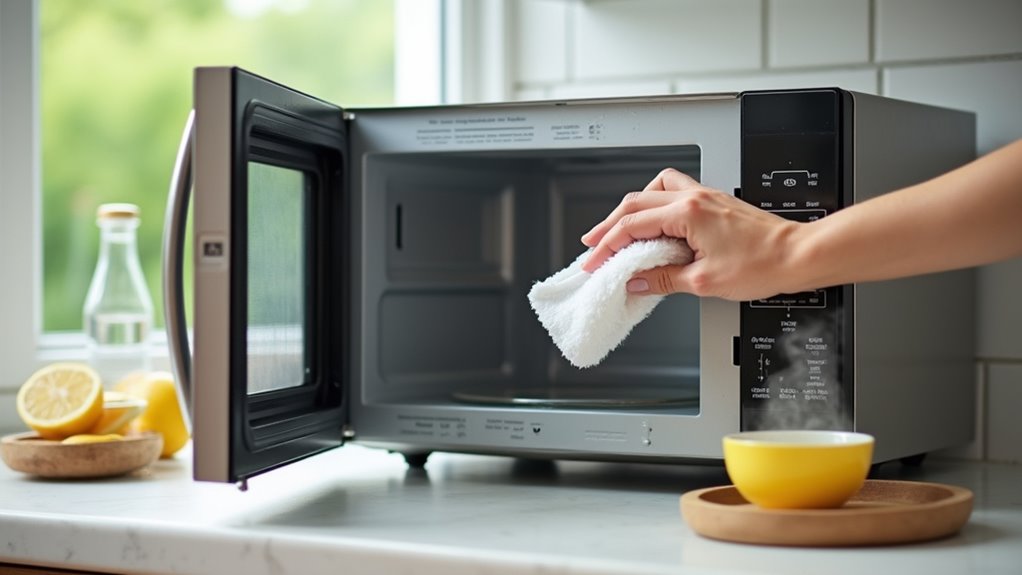
Start through giving the microwave a real reset. Initially, clear out every crumb and wipe the inside with a soft cloth or sponge and mild dish soap.
Then rinse with a damp microfiber cloth so no residue stays behind to hold onto odors. Pay attention to the interior materials, since rough buildup can cling to smells and make the space feel stale.
In case you spot stubborn stains, clean the waveguide cover and door seals gently with a damp cloth. This careful step supports odor absorption later, because a clean cavity works better with fresheners.
Should the cover look burned or damaged, replace it right away. Once you finish, let the microwave air-dry fully. That extra pause helps you join the next odor-fighting step with confidence.
Steam Out Microwave Odors
You can steam out stubborn microwave smells by heating 1 cup of water with 1 tablespoon of white vinegar for about 4 minutes.
In case you’d rather have a fresher scent, use lemon juice or a sliced lemon with water and heat it for 2 to 5 minutes.
Then leave the door closed for 10 to 15 minutes, wipe the inside, and repeat the steam cycle over a few days should the odor keeps hanging on.
Vinegar Steam Cycle
A simple vinegar steam cycle can do a lot of quiet work whenever a microwave smells stale or burnt.
You just need a microwave safe container with 1 cup of water and 1 tablespoon of white vinegar.
Place it in the center, then run the microwave on high for 3 to 5 minutes until it steams well.
That warm mist helps with acidity neutralization and loosens stuck-on bits.
Once the cycle ends, keep the door closed for 5 to 10 minutes so the steam can keep working.
Then lift out the hot bowl carefully and wipe the inside with a soft cloth, sponge, and mild soap.
Concentrate on the ceiling, door seals, and waveguide cover.
In case odors linger, repeat the cycle after drying.
Lemon Juice Steam
Lemon juice steam can freshen a microwave fast whenever stale food smells seem to stick around like an unwelcome guest. You can turn that odor fighter into a simple habit that feels easy and welcome in your kitchen.
- Fill a microwave-safe bowl with 1 cup of water and 1 tablespoon of lemon juice.
- Heat it on high for 2 to 5 minutes until it boils and fills the cavity with steam.
- Leave the door closed for 5 to 10 minutes so the citrus enzymes and warm moisture loosen grime.
- Remove the bowl carefully, then wipe the ceiling, walls, and door seal with a soft cloth.
This lemon steam works as a natural deodorizer and mild degreaser, and its bright zest infusion can help your microwave feel clean again. Avoid harsh scrubbing or chemicals.
Dry And Repeat
Once the initial steam round has loosened the odor, dry the microwave completely and repeat the process in case the smell still hangs on.
After you wipe the walls, seals, and turntable with mild detergent, leave the door open so every drop can escape. Good moisture management matters here, because trapped dampness can feed new smells.
Should the odor linger, run the steam cycle again after a few hours of drying. You can do this over several days, up to about 10 to 12 times.
Between sessions, set an open box of baking soda or a bowl of activated charcoal inside the cool, dry cavity for extra odor absorption.
In the event a burnt or electrical smell won’t quit, check the waveguide cover or call a technician.
Use Lemon or Vinegar for Stubborn Smells
Assuming the smell still hangs on after basic cleaning, you can bring in vinegar or lemon to help reset the air inside your microwave.
- Mix 1 cup of water with 1 tablespoon of white vinegar.
- Heat it for 2 to 5 minutes, then keep the door closed 5 to 10 minutes.
- Wipe the inside with a soft cloth, and repeat on stubborn days.
- For a brighter scent, use lemon juice or a sliced lemon, then dry with a microfiber cloth.
Should you like gentle freshness, this step fits well after baking soda or essential oils elsewhere in your kitchen.
Keep the microwave cool to start, and use mild cloths so you don’t scratch the surface.
In case odors still cling, repeat the steam cycle over a few days.
Scrub the Filter and Vent Area
Next, clean the grease filter so it can stop hanging onto old food smells.
Take it out as your manual directs, then soak it in warm soapy water or vinegar to loosen the grime.
While it dries, wipe the vent area and louvers with a damp cloth or soft brush so trapped odor bits don’t keep sneaking back in.
Clean Grease Filter
Carefully remove the grease filter so you can reach the concealed buildup that often keeps microwave odors hanging around.
Follow your model’s manual so you don’t bend clips or tabs, then give the filter a real reset. Soak it in hot water with a few drops of mild dish soap for 15 to 30 minutes.
- Gently scrub with a soft brush.
- Add 1/2 cup baking soda for stubborn grease.
- Use a degreasing kitchen cleaner when needed.
- Rinse well, then dry fully.
While you wait, check for replacement filters and note the filter lifespan so you stay ahead of future smells.
A clean, dry filter helps your microwave feel fresher, and it makes your kitchen feel more like the place everyone wants to gather.
Vent Area Wipe Down
With the microwave unplugged, open up the vent area and take a good look inside for crumbs, grease, or any sticky film that could be holding onto bad smells.
Remove the grille or filters as your manual directs, then use a soft cloth with warm soapy water or diluted vinegar to wipe the louvers and nearby surfaces.
For tight slots, a soft toothbrush or cotton swab helps you reach the grime without roughing up the finish.
Should you have a metal grease filter, soak it in hot soapy water, then rinse and dry it well. Replace charcoal filters on schedule.
This routine maintenance and airflow inspection keep your microwave fresher, cleaner, and easier to share with the people you care about.
Dry every part fully before reinstalling, then run a vinegar steam cycle.
Check for Damage or Electrical Odors
Provided that the burnt smell still hangs around, it’s time to check for concealed damage or electrical trouble. Start with a calm electrical inspection, because you want your kitchen back to normal, not guesswork. Look at the waveguide cover for charring, melted spots, or stuck-on food. Unless it’s damaged, plan a waveguide replacement.
- Check vents, seals, and cavity edges for smoke stains or melted paint.
- In case you smell sharp chemicals or burning insulation, stop using the microwave.
- Ask a technician to examine the magnetron, diode, and transformer.
- Run a short empty trial with a cup of water for 10 to 20 seconds.
Should you hear sparking, burning noises, or notice new odors, get service right away. Whenever steam cleaning hasn’t helped after several days, a pro can find concealed faults and help your household feel safe again.
Learn What Causes Microwave Smells
Microwave smells usually start with something simple, even though they feel stubborn and annoying. You’re often handling food splatter that got left behind on the walls, ceiling, vents, or waveguide cover. Whenever grease and spilled sauce heat up again, they can burn and smell stronger.
In some cases, tiny bits of residue and moisture can also support microbial growth, which adds a stale hint. These odors can sink into painted surfaces and sealed vents, so they don’t always fade fast.
Should the smell be acrid or like burning plastic, the source could be electrical instead of messy. That’s why you need to notice what kind of odor you’re smelling before you try to clean it.
Prevent Odors From Coming Back
To keep that stubborn smell from sneaking back, make a few small habits part of your routine. With a little preventive maintenance, your microwave can stay fresh and ready for the next snack.
- Wipe spills right away with mild detergent and a soft cloth.
- Steam a vinegar or lemon mix for 2 to 5 minutes, then dry the inside.
- Check the waveguide cover, filters, and door seals each month.
- Use odor proofing storage for strong leftovers, and skip abrasive pads that scratch surfaces.
These steps help stop food bits from baking in and turning into ghost smells. Should you still notice a burnt odor after several cleanings, call a technician. A worn part can keep feeding the problem, and you deserve a microwave that fits right into your kitchen life.
Frequently Asked Questions
Can Coffee Grounds Absorb Microwave Smells?
Yes, coffee grounds can absorb microwave smells through odor adsorption. You’ll get fresher air, and you’ll feel confident using them. Place fresh, dry grounds inside overnight, then replace them if the scent lingers.
How Long Does It Take to Air Out a Microwave?
You can air out a microwave in a few hours for light smells if you improve ventilation and reduce residual humidity; stubborn odors might need several days, repeated cleaning, and perhaps repair.