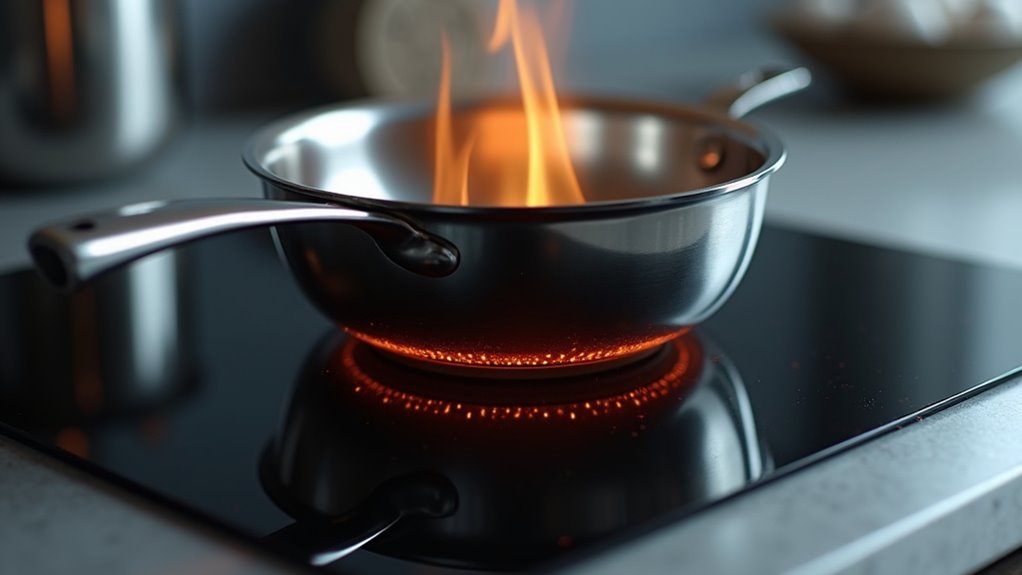
Induction cooktops heat pans by creating a rapidly oscillating magnetic field that induces electric currents inside ferromagnetic cookware. Those currents encounter electrical resistance in the metal and generate heat directly in the pan. Non-magnetic or poorly conductive pans do not support strong induced currents and stay cool. This direct heating makes induction fast and efficient. Proper cookware material and flat contact with the cooktop are essential for best performance.
What Is Induction Cooking?
Step into an induction cooktop, and you’ll see a setup that feels almost magical at initially. You place a pan on the smooth surface, and a concealed copper coil sends out a changing magnetic field. That field creates energy transfer straight into ferromagnetic cookware, so the pan itself warms up fast.
Because the heat forms in the metal, you get strong efficiency and fewer wasted moments in the kitchen. You also gain useful safety considerations, since the cooktop stays cooler than a flame or glowing burner. Should you be unsure about your pans, a magnet trial helps you check fit right away. A flat base that matches the burner size also gives you steadier heating and a more comfortable cooking experience.
How Induction Heats a Pan
Whenever you turn on an induction cooktop, an alternating current runs through a copper coil and creates a changing magnetic field under your pan.
Should your pan have ferromagnetic metal, that field reaches into the base and stirs up eddy currents inside it.
Then the pan heats itself from within, so you get fast cooking without a flame doing all the work.
Magnetic Field Heating
Beneath the smooth cooktop, an electric current races through a copper coil and builds a fast-changing magnetic field that slips into the base of your pan.
Whenever your pan has iron or certain stainless steel, that field finds a friendly path and starts energy exchange.
- You get heat in the pan, not on the glass.
- A pan that matches the coil feels stronger coupling and better contact.
- The shape of the field geometry matters, and magnetic hysteresis can add a little more warmth in some pans.
Because the metal resists that changing pull, the energy turns into heat right where you cook.
That’s why induction can send about 90% of its power to your cookware.
Provided your pan fits the coil, you’re part of a fast, efficient cooking team.
Eddy Currents In Cookware
The coil doesn’t heat your pan by magic, but it sure can feel that way the initial time you watch it work. Under the glass, a copper coil sends out a changing magnetic field that slips into your ferromagnetic pan. That field stirs tiny loops of electricity called eddy currents, and you feel the heat where they form. Because the metal resists that flow, the energy turns into warmth right inside the pan, not on the cooktop.
Stronger fields and higher frequency make bigger currents, so your pan warms faster. Cast iron and magnetic stainless steel work best because they guide the flux well. With skin effect, the current hugs the surface, and eddy current imaging helps show this concealed pattern. Thicker, conductive layers spread heat more evenly.
Why Induction Cooks Faster
You get faster cooking because induction heats your pan directly, so the energy starts working where you need it most.
Since less heat escapes into the air or the cooktop surface, more power reaches your food with less waste. That’s why water and meals often heat up in about half the time, and you can move from a quick boil to a gentle simmer almost instantly.
Direct Pan Heating
A quick burst of heat starts right in the pan with induction cooking, and that’s a big reason it feels so fast. You’re not waiting for a burner to warm up initially. Instead, a coil beneath the glass creates a magnetic field that pushes energy into your pan, so the metal heats via surface conduction. That gives you localized heating right where your food sits, which feels reassuring whenever you want control.
- Your pot starts responding almost at once.
- A cast iron pan usually grabs that energy well.
- In case the pan isn’t centered, you’ll notice cooler spots.
Because the heat forms inside the cookware, you can adjust power and feel the change quickly. That’s why induction often fits busy kitchens and calm cooks alike.
Less Heat Loss
Because induction sends energy straight into the pan, it wastes far less heat than a gas flame or a regular electric coil. You get more of the power where your food actually sits, so you aren’t paying to warm the room. That means reduced kitchen heat and a calmer space while you cook with your people nearby.
Since the pan itself makes the heat, less energy slips away into the air or the stove top. You also get lower energy waste whenever the burner matches your pan well, because the magnetic field couples tightly with ferromagnetic cookware. So your pot responds quickly, and the cooktop stays cooler to the touch. In everyday cooking, that efficiency helps you feel confident, comfortable, and right at home at the stove.
Faster Boiling Times
Fast boil times are one of the biggest reasons people fall in love with induction. You feel the rapid response right away, because the cooktop sends heat straight into your pan instead of wasting it in the air. That surge improves energy efficiency and helps your water reach a boil in about half the time.
- Your pot warms almost instantly.
- Your heat stays steady whenever you adjust power.
- Your meal keeps moving whenever you add cold ingredients.
Whenever you use flat-bottomed cast iron or magnetic stainless steel, the coil couples better with the pan, so more energy turns into heat. That means less waiting and more cooking with your crew. It’s a simple switch, but it makes dinner feel faster, easier, and a lot more welcome at home.
How to Tell if Cookware Works
Start with the magnet trial, since it gives you a quick yes-or-no answer.
Suppose a refrigerator magnet sticks firmly to the base, your pan has ferromagnetic metal and should work on induction. Then check the box or the pan itself for the induction coil symbol or “induction-compatible” wording. That gives you extra confidence before you cook.
Next, glance at the material.
Cast iron, carbon steel, and many stainless steels usually fit the club. Copper, aluminum, and glass need a magnetic layer to join in. Also watch for base warping, because a bent or very large base can heat unevenly. Once you’re ready, set the pan on a cold burner and turn the power to mid-high. A good pan heats fast over the coil while the cooktop stays fairly cool.
Does Cast Iron Work on Induction?
Cast iron works very well on induction, and that’s one of the big reasons so many cooks love it. Because the pan is ferromagnetic, your cooktop sends energy straight into the base, and your food starts warming fast and even.
- Do a quick magnet check in case you’re unsure.
- Preheat slowly so the pan can adjust without stress.
- Expect solid heat retention for steady meals.
You might notice cast iron warms a little slower than lighter pans, but that mass helps once you’re cooking. Since induction heats the spot over the coil first, the heat spreads across the pan over time.
Just keep an eye on weight handling, and give seasoning maintenance a little care, and you’ll fit right in with cooks who trust cast iron every day.
Is Stainless Steel Induction Compatible?
Stainless steel can work beautifully on induction, but only provided the pan has a magnetic base. You can check this with magnetic checking: provided a fridge magnet sticks to the bottom, you’re in good shape.
Not every stainless pan qualifies, because some grades, like 304, stay too weak to respond. That’s why base construction matters so much. Many brands add a bonded magnetic layer or use clad bottoms so the pan’s underside can trigger the cooktop.
While you shop, look for an induction symbol, choose a heavy, flat pan, and match its size to the burner. Then you’ll get better contact, faster heating, and less fuss. With the right stainless, you’ll cook like you belong there.
What Cookware Won’t Work on Induction?
Not every pot or pan can wake up an induction cooktop, and that can feel frustrating once you’re ready to cook. You’re not alone should your favorite piece stays cold. Induction needs a magnetic base, so some cookware simply can’t join the party.
- Pure glass cookware and ceramic bakeware won’t heat unless a magnetic plate sits underneath.
- Copper, aluminum, and some stainless steels also fail the magnet test, so a fridge magnet can help you check.
- Cast iron and many carbon-steel pans usually work well, but a warped bottom can weaken contact.
Should your pan has a magnetic stainless or steel layer, it could still work, even whenever the outside looks like copper or aluminum. That little detail can save you time, money, and a few sighs.
How to Care for Induction Cookware
Once you’ve found cookware that works on induction, caring for it the right way helps it last much longer and cook better, too. You can examine any pan with a fridge magnet, and provided it sticks, you’re good to go.
After that, wash it using hand-washing with warm, soapy water and a soft sponge whenever you can, even provided the label says dishwasher-safe. That gentle routine protects nonstick surfaces and supports seasoning maintenance on cast iron. Skip steel wool and harsh scrubbers. Instead, simmer water, or water with a splash of vinegar, to lift stuck food.
For cast iron, never soak it; dry it right away and add a thin coat of oil as required. Also, use temperature monitoring and match the pan to the burner so heat stays even.
Frequently Asked Questions
What Are Common Mistakes to Avoid With Induction Cooking?
You’ll avoid common induction mistakes by checking cookware compatibility, matching pan size to the burner, and using flat pans. Do not preheat for too long, walk away, or leave empty pans on high; temperature control matters.