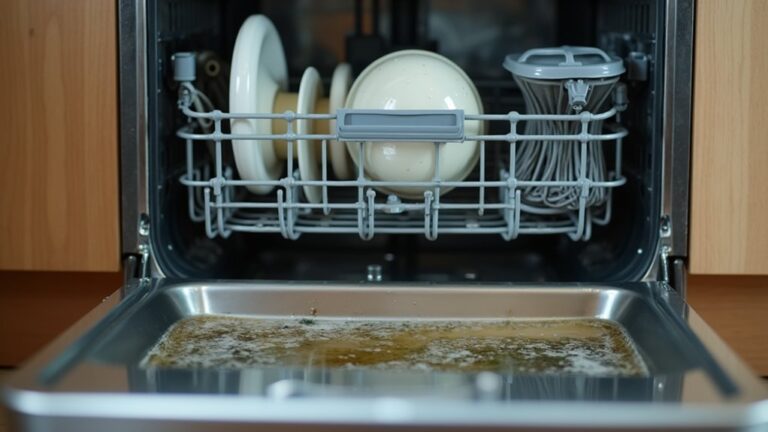
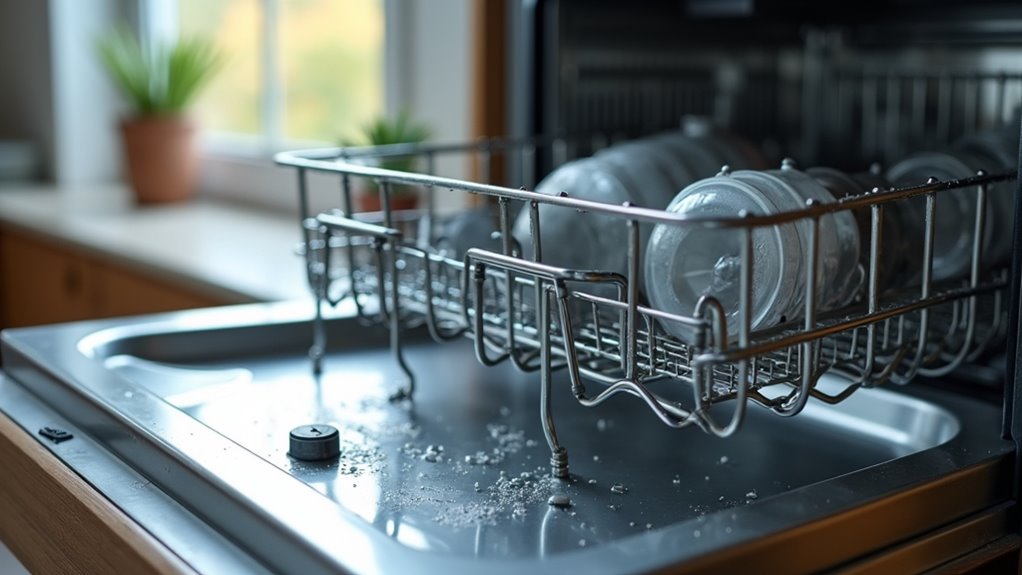
Dishwasher filters should be cleaned at least once a month. Clean more often with heavy use, skipped pre-rinsing, or grease-heavy loads. Some brands require cleaning after every cycle; others recommend every 1–3 months. Watch for grit or cloudy glassware as a clear sign the filter needs attention. Regular filter cleaning prolongs dishwasher performance and prevents odors.
What Is a Dishwasher Filter?
Whenever you lift out the lower rack, you’ll often find the dishwasher filter tucked at the bottom of the tub, quietly doing some very essential work. It catches food bits and debris before they circle back onto your dishes, so you don’t feel like you washed the same crumb twice.
Most filters sit near the spray arm, and your manual usually shows the exact spot. You might see two material types: a simple mesh screen you remove and rinse, or a self-cleaning grinder style that breaks down debris for you.
Helpful installation tips matter here, because a filter must fit snugly to protect the pump and spray arms from clogs and damage. Whenever it stays in place, your machine runs better and smells fresher.
How Often to Clean a Dishwasher Filter?
You should check and clean your dishwasher filter at least once a month, and you might need to do it more often in case you skip rinsing or use the machine a lot.
Suppose you notice bad smells, food bits on dishes, or slow draining, clean it right away because your dishwasher is sending you a clear warning.
A simple quick check after a cycle can save you from a bigger mess later, and your dishes will thank you for it.
Cleaning Frequency Basics
As a general rule, check and clean your dishwasher filter at least once a month so small food bits don’t turn into bigger problems. Should you run loads often, skip pre-rinsing, or scrape plates instead of rinsing them, give it extra attention.
Some brands ask for a check after every cycle, while others suggest every one to three months. That’s where monthly alerts help you stay on track without stress. You can also use usage tracking to count washes, especially should your machine see daily action.
A quick routine keeps your kitchen team feeling in sync, and it saves you from surprise messes later. In case you notice damage or holes, replace the filter right away so your dishwasher keeps working well.
Signs It Needs Cleaning
A dishwasher filter usually gives a few clear hints before it turns into a real headache, so spotting the signs beforehand can save you time and a messy cleanup. Whenever you notice these clues, trust them.
| Sign | What It Means |
|---|---|
| Lingering food | The filter might be catching too much debris |
| Foul odors | Trapped gunk needs attention |
| Slow draining | Water could be struggling past a clog |
Do a quick visual inspection provided dishes still come out gritty or cloudy. You should also check for visible buildup after greasy meals, starch-heavy dinners, or heavy daily use. Some brands ask you to look after every cycle, while others permit longer gaps, so your manual still matters. In case you see tears, holes, or clogs that keep coming back, clean or replace the filter soon.
Easy Cleaning Routine
Most of the time, a dishwasher filter only needs a quick check once a month, but busy kitchens can ask for more attention. Use a quick checklist: open the lower rack, twist out the filter, rinse it under warm water, and brush away trapped bits.
Should you run heavy loads, skip pre-rinsing, or notice odors, clean it every 2 to 4 weeks. Some brands request you to inspect it after every cycle, so your manual matters.
Between cleanings, a daily wipe down of the tub and door helps keep food from drifting back to the filter. Were you to scrape plates well, you could stretch the gap to a few months, but never ignore slow drainage or gritty dishes.
Set a reminder, and you’ll keep your machine working with less stress.
Signs Your Dishwasher Filter Needs Cleaning
Often, your dishwasher will give you small warning signs before the filter gets badly clogged, and it helps to catch them promptly.
Should you spot visible food buildup, slimy residue, or bits trapped in the basket, clean it right away. You might also notice a stubborn smell that lingers after a cycle, which means odor prevention matters more than ever.
Whenever dishes come out with stuck-on food, film, or greasy spots, the filter could be blocking water flow.
Slow drainage, pooling water, or food particles coming back during the wash also point to trouble.
In case you hear odd pump noises or see an error code, check the filter and nearby drain path. Staying alert helps you feel confident in your kitchen.
Manual vs. Self-Cleaning Dishwasher Filters
With a manual filter, you’ll need to lift it out, rinse or brush away trapped food, and check it often so the pump stays protected.
A self-cleaning grinder system does that work for you, but it can run louder while it breaks up scraps and sends them down the drain.
Manual Filter Maintenance
Whenever your dishwasher has been leaving food specks behind, it’s time to check the filter before you blame the whole machine.
Provided you’ve got a manual mesh filter, you need to remove it and rinse it by hand, because it traps solids instead of grinding them away.
Stick to a steady routine timing, usually monthly, or sooner whenever your household runs heavy loads or skips pre-rinsing.
That simple habit protects filter lifespan, cuts odors, and eases strain on the pump.
You’ll usually find a removable cylindrical screen at the tub bottom, which means you’re in the manual camp.
After each cleaning, snap the parts back in place so your dishes can come out clean and your kitchen feels like it’s on your side.
Self-Cleaning Grinder System
A self-cleaning grinder system works differently from a manual filter, and that difference can save you a little effort while still asking for your attention. You still need to stay involved, because food gets ground up and sent through the drain, not caught in a basket.
That means less scraping for you, but it also means motor maintenance matters should the unit start acting up.
- Check for unusual odors, since odor prevention still matters.
- Watch for slow draining or clogging.
- Clean nearby spray areas whenever residue shows up.
- Call for service in case the grinder sounds rough or jammed.
Noise vs. Upkeep
In case you want a quieter dishwasher, manual mesh filters usually win, but they ask more from you over time. You’ll notice lower sound levels during wash cycles because there’s no grinder motor humming along. That can matter should your kitchen opens into the home room or you just like calm evenings.
Still, the maintenance tradeoffs are real: you need to pull out the filter, rinse or brush it, and check it about once a month. Should you skip that, clogs and odors can show up fast.
Self-cleaning filters feel easier because they shred food and send it away, yet their noise impact is higher during drain and grind cycles. So your user preferences matter most. Choose quiet control, or choose hands-off convenience with a little extra racket.
How to Find Your Dishwasher Filter
You can usually find the dishwasher filter on the floor of the tub, right under the lower rack and often tucked around the spray arm, so pull out the bottom rack initially to get a clear look. That spot depends on dishwasher placement, but visual indicators can help you spot it fast.
- Look for a round cylinder or flat mesh at the bottom.
- Check whether it twists, lifts, or clips in place.
- Should you see no removable part, your model might use a grinder system.
- Use the owner’s manual or the maker’s website for model-specific diagrams.
When you know the style, you’ll feel less unsure and more at ease. A manual filter is easy to recognize once you know the signs, and that small check can save you time later.
How to Remove and Rinse a Dishwasher Filter
Pull out the lower rack so you can reach the filter assembly under the spray arm, then twist it counterclockwise or release the tab to lift it out.
Rinse the filter under hot running water, and use a soft brush to clear away stuck food from the mesh and crevices.
After that, let it dry a bit, check for damage, and lock it back in place before you slide the rack in again.
Remove the Lower Rack
Start beneath sliding out the bottom rack all the way so you can see the space beneath the spray arm, where the filter assembly usually hides.
First, do your rack removal gently so you don’t bump nearby parts. Assuming your model has a lower spray arm, pop it off or unscrew it and set it aside safely. That little step protects the arm and gives you room to work. Then find the filter parts, usually a round inner piece and a flat outer screen. Turn the locking tab counterclockwise, and lift them out together.
- Slide the bottom rack fully out.
- Check for spray arm clearance.
- Place parts in simple storage solutions.
- Keep your hands steady and calm.
Now you’re ready for the next step with confidence.
Rinse and Reinstall Filter
With the filter assembly in hand, give it a careful rinse under hot running water to wash away stuck-on food and greasy buildup.
Slide a soft brush or old toothbrush over the mesh, and use a little mild dish soap where bits cling. A quick rinse helps loosen residue fast, so you can feel good about the job.
Check the screen for holes or damage while you work. Should you spot wear, replace the part before reinstalling.
Then let the filter dry with a cloth or air-dry it until no water drips off.
Next, follow your manual for filter placement, then twist or lock it securely back in.
Finally, return the bottom rack and run a short rinse cycle to make sure everything sits right and works smoothly.
How to Scrub a Dishwasher Filter Safely
Carefully removing the dishwasher filter before you scrub it can save you from a lot of avoidable frustration later.
- Pull out the lower rack, then twist or lift the filter assembly with your manual nearby.
- Rinse it under hot water in a sink or basin, so loose food falls away and you stay tidy together.
- For filter sanitization, add a drop of mild soap. Then focus on brush selection: use a soft brush or old toothbrush and sweep the mesh and crevices gently.
- Should grease stick, soak it 10 to 15 minutes in warm water with white vinegar, then scrub again.
Check for tears or worn seals, dry with a lint-free cloth, and reinstall securely. Wear gloves when preferred, and plan monthly care so your kitchen crew keeps running smoothly.
When to Replace Your Dishwasher Filter
Even after a good cleaning, your dishwasher filter won’t last forever, and grasping at what point to replace it can save you from bigger problems down the line.
Check it closely should you see holes, tears, or warped plastic, because damaged parts can let debris hit the pump.
Should stains, calcification, or greasy buildup stay put after washing, it’s time for a new one.
Also, should odors, food residue, or drainage trouble keep showing up, a fresh filter could restore the clean you want.
Whenever your manual gives a 6 to 12 month check, follow it to protect fit, seal, and warranty implications.
Buy the exact model or part number from your manual or brand site. That small step supports a better eco impact too.
How Often Brands Recommend Cleaning
Different brands ask for different cleaning rhythms, so the safest move is to follow your manual instead of guessing. You’re not alone when the rules feel mixed; that’s why brand schedules matter.
- Bosch and LG tell you to inspect or clean the filter after every cycle.
- Whirlpool and Maytag usually suggest every 1 to 3 months, depending on use.
- Miele often sets a check at about 50 wash cycles.
- Self-cleaning models still need periodic checks, while mesh filters need routine washing.
Your habits shape the timing too. Should you pre-scrape less or skip rinsing, you might need more cleaning reminders. Whenever you match the schedule to your machine, you protect the wash and feel more at ease.
How to Reduce Food Buildup in the Filter
A few small habits can keep your dishwasher filter from turning into a soggy food trap.
Before loading, scrape plates and dump big scraps into the trash. This simple pre filtering hacks move can cut debris approximately half, and you’ll feel like part of a tidy kitchen crew.
Skip heavy rinsing, but wipe off greasy or starchy bits like rice and pasta, since they clog fast.
After a big cooking session, run a quick rinse so loose food washes away before it settles.
Also, place a dishwasher-safe basket or cutlery holder where bits won’t collect under the spray arm.
For better sensor optimization, don’t overload the racks.
Then, every 1 to 3 months, pull the filter and rinse it with hot water and a soft brush.
Frequently Asked Questions
Can Dishwasher Filters Be Cleaned in the Dishwasher?
Yes, you can, but your dishwasher filter is not exactly a spa guest. Use manual scrubbing initially; a chemical soak can help stubborn grime. You will fit right in with cleaner dishes and less kitchen drama.
Do Hard Water Deposits Affect Dishwasher Filters?
Yes, hard water deposits can clog your dishwasher filter. You will notice mineral buildup faster with higher water hardness, and rinse aid helps. Clean it regularly to protect filter lifespan and keep your kitchen crew running smoothly.
Should You Clean the Filter After Every Cycle?
No, you don’t need to clean it after every cycle; that would be overkill. With regular filter maintenance and sensible cycle frequency, you’ll keep your dishwasher humming and your kitchen crew feeling right at home.
Can a Clogged Filter Damage the Dishwasher Pump?
Yes, a clogged filter can damage your dishwasher pump by causing motor strain and seal failure. You will keep your machine running smoothly and remain in the reliable care crowd when you clean it regularly.
Do Eco or Quick Wash Cycles Dirty Filters Faster?
Quick cycles can leave your filter like a busy net catching more grit; eco cycles might as well. You’ll usually see more buildup with either if you skip scraping, so you’ll feel right at home cleaning regularly.