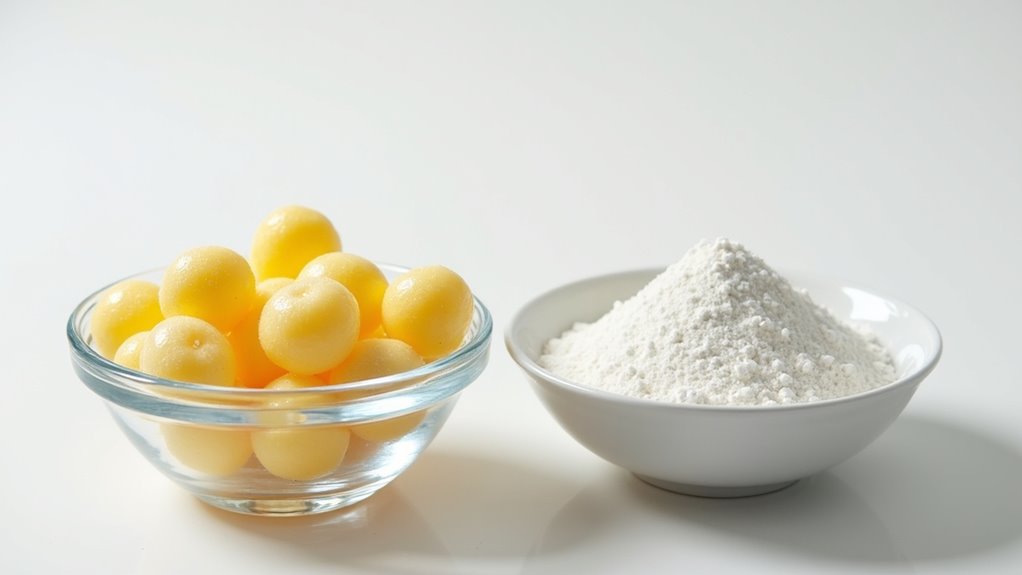
Pods are the easiest choice: premeasured, convenient, and consistent. Powder gives precise control over dose for greasy pans or light loads. Water hardness and wash temperature influence which option cleans better. Proper storage keeps both forms effective and clump-free. Choose pods for convenience and powder for adjustable performance and potential savings.
Dishwasher Pods vs Powder: Which Should You Buy?
Whenever you’re trying to narrow it down, dishwasher pods and powder each bring a clear upside, so your best choice really depends on what matters most in your kitchen.
Should you want easy cleanup and steady results, pods fit your user habits because they’re pre-measured and simple. You won’t guess the dose, and that can feel like one less thing to juggle on busy days.
Still, powder can be the smarter pick whenever you care about lower cost, better control, and material safety. You can adjust the amount for greasy pans, and you’ll avoid the PVA film that comes with many pods. Also, powder often uses less packaging.
Just store either one well, since moisture can cause clumps or premature activation.
How Dishwasher Pods Work
If you use a dishwasher pod, you get one premeasured packet that wraps concentrated detergent in a water-soluble film, so you don’t have to guess the dose. As the cycle starts, the film breaks down and the pod releases enzymes, surfactants, and rinse aids at different times to tackle stuck-on food and help your dishes come out cleaner. That said, colder or shorter cycles can sometimes keep the film from fully dissolving, which can leave a little residue behind.
Pod Design And Dosing
Dishwasher pods work like tiny, all-in-one cleaning packets, and that design is what makes them so easy to use.
You drop in one pod, and you’re set for one full wash, so you don’t have to guess or measure. That helps you avoid variable dosing, which can happen whenever loads differ a lot. The tradeoff is flexibility, since a pod can’t shrink for a light load or stretch for a really grimy one.
You also rely on the water-soluble film to open at the right time. In warm, longer cycles, it usually dissolves well, but film failure can happen in short, cool, or humid conditions. Since brands vary, your results can change with the pod’s ingredients and film quality.
Cleaning Agents At Work
Inside a dishwasher pod, several cleaners work together like a tiny cleaning crew, each with its own job and timing. You get enzymes, surfactants, bleach or bleach alternatives, and rinse aids all measured for you. That means you don’t guess, and your dishes feel cared for.
- At the start of the wash, surfactants loosen grease fast.
- Then enzyme timing helps proteases, amylases, and lipases decompose protein, starch, and fat.
- Later, rinse aids help stop spots and film residue from settling back.
The pod’s PVA film dissolves in water, so the mix can spread through the cycle. Still, cool or short washes might leave film residue behind.
Because the formula is set, you’ll like the easy fit, but performance can change with water hardness and brand.
How Dishwasher Powder Works
Powder gets to work upon meeting water and slowly breaking apart into cleaning ingredients that each have a job to do. You measure it per scoop, so you can match the load instead of guessing. That helps your dish routine feel easier and more in control.
Enzymes target food bits, alkalis loosen grease, and softeners help in hard water. Because the blend dissolves gradually, it can keep cleaning throughout the wash and rinse. Some formulas also add rinse aid and anti-spotting support, so your glasses can come out clearer.
Good dispensing mechanics matter too, since powder flows well if stored sealed, cool, and dry. That protects enzyme stability and keeps clumps away, so each wash starts strong and steady for you.
Which Cleans Better: Pods or Powder?
Whenever you compare pods and powder, pods often give you a small edge on everyday loads because they mix cleaning agents in one neat dose.
But powder can clean better on greasy, baked-on messes provided you measure it right, so the real difference often comes down to how well you match the dose to the load. In case you want easy, set-and-forget cleaning, pods feel simpler, but should you want more control and power, powder can give you more room to work.
Cleaning Power Comparison
In a controlled trial, dishwasher pods often get a slight edge for everyday messes because they mix cleaners, enzymes, and rinse aids in one timed-release packet, so each part can work at the right point in the cycle.
You’ll notice strong enzyme stability and better rinse efficacy on normal loads, especially whenever the water stays warm enough to avoid temperature sensitivity.
Still, powder can shine whenever you’re facing greasy pans or baked-on food, since you can build stronger cleaning power and cut residue formation on tough stains.
- Pods feel simple and steady for daily dishes.
- Powder gives you more control for hard jobs.
- Both can clean well whenever ingredients are high quality.
Dosing Precision Matters
That’s where dosing precision starts to change the answer, because the best cleaner isn’t always the one with the strongest label.
You get one measured pod each wash, so you skip guessing and avoid dosing errors, which can feel like a relief whenever you want a simple routine.
Still, pods give you no dose flexibility, and that can matter in cases where your dishes are lightly soiled or badly baked with food.
Powder lets you adjust the amount, so you can use less or more with care.
Whenever you dose it right, powder can clean very well, but under-dosing leaves stains and over-dosing can leave residue or suds.
Also, pods can face dissolution issues on cool, short cycles, while powder can clump in humid storage.
Convenience Versus Results
Once you’ve got dosing sorted out, the next question is the one most people really care about: which option actually gets the dishes cleaner with less fuss? For everyday loads, pods give you handful simplicity and steady results, so you can feel confident on busy nights.
- Pods usually clean well on standard cycles because their mix works across the wash.
- Powder can beat pods on greasy pans, baked-on mess, and hard water when you add more per load.
- Should you use short or cool cycles, powder avoids some sensory tradeoffs like leftover film from a pod that didn’t dissolve.
Which Is Easier to Use?
Pods are easier to use for most people because they take the guesswork out of every wash. With single use convenience, you just drop one in and move on. That simple routine feels good once your day is full.
| Option | Ease |
|---|---|
| Pods | Drop in and go |
| Powder | Measure each time |
| Pods | Less mess |
| Powder | More control |
Powder asks for a scoop or spoon, so you spend a little more time and attention on each load. Still, it lets you adjust for light or greasy dishes. Just keep both stored well, since storage humidity can cause pods to stick and powder to clump. Should you want true set-and-forget ease, pods fit right in. In case you like tweaking each wash, powder gives you that extra control without much fuss.
Pods and Powder: Packaging and Sustainability
As you compare pods and powder, packaging waste can make a real difference in how green your choice feels.
Pods often come with PVA film, plus extra wrappers or tubs, while powder usually arrives in cardboard or bulk boxes that cut down on single-use plastic.
Still, you can find both options in recyclable or compostable packaging, so the brand’s materials matter just as much as the form you pick.
Packaging Waste Reduction
Though both options clean dishes well, their packaging tells a very different sustainability story. You can cut packaging waste choosing the form that fits your habits and your values.
- Pods shrink storage, but each load brings a wrapped film that adds more material.
- Powder often comes in cardboard or bulk boxes, so you can recycle or refill more easily, including at refill stations.
- Should you store powder in a cool, dry, sealed space, you avoid clumps and wasted product, which means less trash from spoiled detergent.
Were you worried about microfiber waste and plastic use, pods can feel convenient, yet powder usually leaves a lighter footprint per wash. You can also look for eco-certified pod films or compostable boxes, so your kitchen choices feel cleaner and more shared.
Recyclable Materials Choice
In a busy kitchen, the package can matter almost as much as the cleaner inside it. When you pick dishwasher powder, you often get cardboard boxes or refill pouches that use recycled materials and fit easier into recycling or compost systems. Pods usually come in plastic tubs or wrap, and some use PVA film, which could raise microplastic concerns and won’t always enter standard recycling. So, if you care about low waste, powder can feel like the friendlier choice.
Still, you don’t have to give up convenience to do better. Eco brands now offer both pods and powders in recyclable or compostable packs, while avoiding phthalates, parabens, and synthetic fragrances. A simple lifecycle analysis helps you see the full image, including bulk buying, storage, and less packaging waste.
Dishwasher Pods vs Powder: Cost Per Wash
Pods usually cost a lot more per wash than powder, and the gap can surprise you provided you only look at the box price. For a fair cost comparison, check the real cost per load, not the shelf label. Whenever you wash often, that usage frequency adds up fast.
- Pods can run about $0.40 a wash.
- Powder can land near $0.065 a wash.
- That means pods might cost about six times more.
If you run a load every other day, you could pay about $54 more each year with pods. Powder also lets you dose with care for lighter loads, so you stay in control. Still, don’t underuse it so much that you need a rewash. That’s money gone, too, and nobody wants that.
Which Ingredients Matter Most?
A few ingredients do most of the heavy lifting in both dishwasher pods and powder, and once you know them, the label starts making a lot more sense.
You should look initially at enzymes, especially protease and amylase, because they decompose protein and starch. In pods, enzyme timing can be more controlled, so stain removal stays steady through the cycle.
Next, check water softeners like sodium carbonate or sodium citrate. Should you live with hard water, these matter a lot because they block calcium and magnesium, helping the wash work better.
After that, scan for surfactants that lift grease.
Finally, watch the extras. You might want fewer fillers, strong fragrances, and harsh phosphates, since cleaner dishes shouldn’t come with extra worries for yourself or your home.
How to Store Pods and Powder
Once you’ve figured out what makes pods and powder work, storing them the right way helps them keep doing that job well. You can protect both with a few simple habits that feel easy to keep up with.
- Keep pods in their sealed box or an airtight container in a cool, dry spot.
- Use a moisture-proof container for powder, and close it tightly after each use.
- Choose a dark pantry shelf instead of a place near the dishwasher, sink, or stove.
That kind of temperature control supports the film on pods and helps powder stay loose. For humidity prevention, label opened containers with the date and use older stock first.
Whenever you store detergent with care, you help your whole kitchen run a little smoother, and your cleanup crew stays ready too.
When Powder Makes More Sense
Whenever your dishwasher deals with tough messes, powder often makes more sense because it gives you more control and more reliable cleaning where it counts. You can use metered scoops for load tailoring, so you add less for light loads and more for baked-on pans without wasting money.
Should you live with hard water or stubborn grease, powder can help cut spots and film with gradual builders and water softeners. It also supports your machine because there’s no PVA film to clog dispensers, spray arms, or filters on shorter cycles.
And whenever you wash often, the lower cost per load can feel like a small win that adds up fast. In humid homes, powder stays steady in cool, dry storage too.
When Pods Are the Better Choice
Pods can take the guesswork out of dishwashing, and that’s a relief whenever you want clean dishes without the extra chore of measuring soap.
When you want compact convenience and dosing simplicity, pods fit right into your routine. You grab one, drop it in, and let it work.
- They help busy households skip measuring and avoid soap mess.
- Their multi-phase blend can clean through the cycle for steadier results.
- They’re a smart pick for standard, full-size loads on regular cycles.
Because pods release the right ingredients at the right time, you might see fewer cloudy glasses and less film.
Also, their small packs store easily, which feels good whenever your kitchen already has enough going on.
Should you like a smoother wash with less fuss, pods can make you feel right at home.
Frequently Asked Questions
Can I Split a Dishwasher Pod for Smaller Loads?
Yes, you can split dishwasher pods, but tablet halves might dissolve unevenly. You will get better dosage control with powder or a smaller tablet, and you will still fit in with people who prefer customized cleaning.
Do Pods Work in Short Dishwasher Cycles?
Yes, pods can work in quick cycles, but they might not fully dissolve or release enough detergent concentration. Want cleaner dishes? You will fit right in when choosing a cycle that gives pods more time.
How Long Do Dishwasher Powder and Pods Last Unopened?
Unopened, you’ll usually get about 1 to 2 years from dishwasher powder and pods, depending on shelf stability and storage conditions. Keep them cool, dry, and sealed, and you’ll stay in the safe, clean crowd.
Can I Make My Own Dishwasher Powder at Home?
Yes, you can make your own dishwasher powder at home, but it might not clean as well. If you try the idea, you’ll find homemade scouring ingredients and custom fragrances can suit your kitchen needs.
Are Dishwasher Pods Safe for Septic Systems?
Yes, you can use some pods provided you choose septic safe formulations. You will protect your system by avoiding harsh chemicals, which can reduce bacterial impact and help your household feel confident together.