Choosing the right reverse osmosis system can feel like picking a compass in a fog, because the best fit depends on your space, water quality, and maintenance tolerance.
You will see under-sink, tankless, portable, and dispenser style options in this roundup, along with the filters and replacement sets that support them.
If you want cleaner water without guesswork, the details ahead will show which models deserve a closer look.
| Geekpure 3-Stage Portable RO Water Filter System |  | Best Portable Pick | System Type: 3-stage portable RO system | Installation: Portable DIY setup | Filtration Stages: 3 stages | VIEW LATEST PRICE | Read Our Analysis |
| IPW Industries 4-Stage Under Sink RO Filter Kit |  | Best Replacement Kit | System Type: 4-stage under-sink replacement kit | Installation: Under-sink replacement | Filtration Stages: 4 stages | VIEW LATEST PRICE | Read Our Analysis |
| Waterdrop KJ600 Reverse Osmosis Hot and Cold Dispenser |  | Best Hot Water | System Type: 5-stage hot/cold RO dispenser | Installation: Under-sink installation | Filtration Stages: 5 stages | VIEW LATEST PRICE | Read Our Analysis |
| APEC FILTER-MAX90 Replacement Filter Set for Ultimate Series | 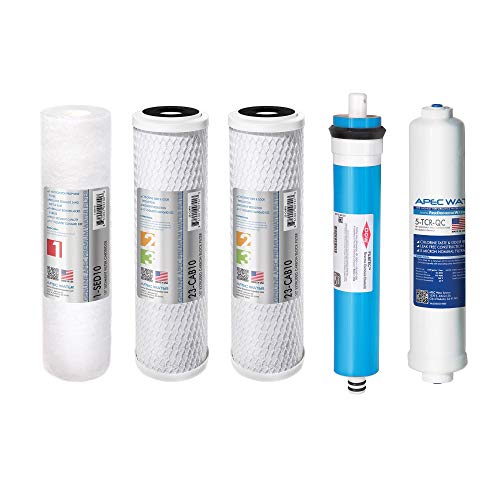 | Best Premium Set | System Type: 5-stage replacement filter set | Installation: Filter replacement only | Filtration Stages: 5-stage set | VIEW LATEST PRICE | Read Our Analysis |
| PureDrop 5-Stage Reverse Osmosis Water Filter System |  | Best For Families | System Type: 5-stage under-sink RO system | Installation: Under-sink installation | Filtration Stages: 5 stages | VIEW LATEST PRICE | Read Our Analysis |
| EcoPure Reverse Osmosis Replacement Filter Set (ECOROF) | 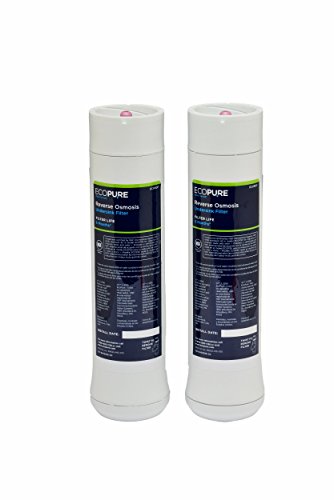 | Best Cartridge Swap | System Type: 2-cartridge replacement set | Installation: Quick twist-on replacement | Filtration Stages: 2 replacement stages | VIEW LATEST PRICE | Read Our Analysis |
| iSpring RO500AK-BN Tankless Reverse Osmosis Water Filter System |  | Best Tankless System | System Type: 3-stage tankless RO system | Installation: Under-sink DIY install | Filtration Stages: 3 stages | VIEW LATEST PRICE | Read Our Analysis |
More Details on Our Top Picks
Geekpure 3-Stage Portable RO Water Filter System
Should you need a compact RO system, Geekpure’s 3 stage unit stands out as a strong portable pick. It uses a tankless design that fits apartments, RVs, boats, and aquariums, and it can be installed in a couple of hours with quick push fittings. Its sediment and carbon stages prepare water before the NSF/ANSI 58 compliant RO membrane filters it down to 0.0001 micron, reducing TDS, chlorine, fluoride, lead, mercury, arsenic, and more. It handles feed water up to 1,000 ppm, produces 100 gallons per day, and includes 24/7 support plus a one year warranty.
- System Type:3-stage portable RO system
- Installation:Portable DIY setup
- Filtration Stages:3 stages
- Output Capacity:100 GPD
- TDS Reduction:Reduces TDS
- Certification:NSF tested
- Additional Feature:Portable tankless design
- Additional Feature:Aquarium-compatible use
- Additional Feature:Quick push fittings
IPW Industries 4-Stage Under Sink RO Filter Kit
Need a universal 4 stage RO replacement kit that fits most standard systems? The IPW Industries Inc. UN4STG-KIT provides a simple upgrade with filters and a membrane in one set. It works with most 10 x 2.5 inch under sink systems, including Ispring, Watts, Premier, and Aquaphor Crystal models. It reduces TDS and helps block rust, salt, silt, and dirt with activated carbon, coconut shell, polypropylene, and a high density graded membrane film. Replace it every 6 to 12 months, and you can keep maintenance easy with its user friendly spindle design. WQA certification adds confidence too.
- System Type:4-stage under-sink replacement kit
- Installation:Under-sink replacement
- Filtration Stages:4 stages
- Output Capacity:Standard RO cartridge set
- TDS Reduction:Reduces TDS
- Certification:WQA certified
- Additional Feature:Universal 10×2.5 cartridges
- Additional Feature:Twist-on spindle replacement
- Additional Feature:Compatible with major brands
Waterdrop KJ600 Reverse Osmosis Hot and Cold Dispenser
Waterdrop’s KJ600 suits you anytime you want purified water and near-instant hot water from one under-sink system. You get tankless reverse osmosis filtration with a 5 stage, 5 in 1 process that reduces TDS, fluoride, arsenic, lead, mercury, PFOS, PFOA, and nitrate, even with water up to 2000 PPM. It heats water from 104°F to 203°F in seconds, delivers 600 GPD, and keeps waste low with a 2:1 pure to drain ratio. The smart faucet shows TDS, temperature, and filter status, while child lock, anti-scalding protection, and dry-boil prevention help keep you safe.
- System Type:5-stage hot/cold RO dispenser
- Installation:Under-sink installation
- Filtration Stages:5 stages
- Output Capacity:600 GPD
- TDS Reduction:Up to 2000 PPM feed
- Certification:No listed certification
- Additional Feature:Instant hot water
- Additional Feature:Smart display faucet
- Additional Feature:Child lock safety
APEC FILTER-MAX90 Replacement Filter Set for Ultimate Series
APEC’s FILTER-MAX90 gives your Ultimate Series system a premium 5-stage replacement set. It includes a US-made 90 GPD package with a sediment filter, two carbon blocks, a Filmtec membrane, and an inline carbon post-filter. It fits APEC RO-90, RO-PERM, and most standard 10-inch under-sink RO units with 1/4-inch output. It helps reduce sediment, chlorine, VOCs, fluoride, TDS, PFAS, and more, while improving taste and odor. APEC says the prefilters last 12+ months, and the membrane and post-filter can last 3 to 5 years, with NSF external testing supporting performance.
- System Type:5-stage replacement filter set
- Installation:Filter replacement only
- Filtration Stages:5-stage set
- Output Capacity:90 GPD membrane set
- TDS Reduction:Reduces TDS
- Certification:NSF tested
- Additional Feature:Made in USA
- Additional Feature:High-rejection Filmtec membrane
- Additional Feature:Long-life filter set
PureDrop 5-Stage Reverse Osmosis Water Filter System
PureDrop’s 5-stage system is designed for families who want cleaner water without increasing utility costs. It uses sediment, granular carbon, carbon block, 0.0001-micron RO, and post-carbon filtration to remove up to 99% of contaminants, including arsenic, lead, chlorine, heavy metals, and TDS. It handles water up to 500 PPM and operates without electricity, producing up to 50 gallons per day. With less than 3 gallons used per gallon produced, it helps conserve water. Under-sink installation is straightforward, and the faucet and tank are included. BPA-free parts meet NSF/ANSI and FDA standards.
- System Type:5-stage under-sink RO system
- Installation:Under-sink installation
- Filtration Stages:5 stages
- Output Capacity:50 GPD
- TDS Reduction:Up to 500 PPM feed
- Certification:NSF/ANSI tested
- Additional Feature:BPA-free parts
- Additional Feature:Deluxe chrome faucet
- Additional Feature:Includes storage tank
EcoPure Reverse Osmosis Replacement Filter Set (ECOROF)
EcoPure ECOROF makes cartridge swaps simple for compatible reverse osmosis systems. You get a set of two NSF-certified replacement cartridges for Stage 1 and Stage 3 in the EcoPure ECOP30, as well as compatible Kenmore 42-38156 and 42-38556, and Brita Total 360 systems. The activated carbon filters reduce lead, chlorine taste and odor, sediment, cysts, chemicals, and total dissolved solids, so you can enjoy bottled-quality water at home. Their encapsulated twist-on design lets you install them in minutes without tools or shutoff. Replace them every six months for best performance and steady flow.
- System Type:2-cartridge replacement set
- Installation:Quick twist-on replacement
- Filtration Stages:2 replacement stages
- Output Capacity:Replacement cartridges
- TDS Reduction:Reduces TDS
- Certification:NSF certified
- Additional Feature:Quarter-turn cartridges
- Additional Feature:No-tools replacement
- Additional Feature:No shutoff required
iSpring RO500AK-BN Tankless Reverse Osmosis Water Filter System
Whenever you want a streamlined under-sink system, iSpring’s RO500AK-BN fits busy kitchens well. You get NSF 58-certified TDS reduction, a QR code to the official test report, and a 2:1 pure-to-waste ratio that cuts wastewater up to 400% versus standard RO units. Its 3-stage design removes rust, chlorine, lead, fluoride, arsenic, and more, then adds alkaline minerals back. The tankless build saves up to 70% space, delivers 500 GPD, and gives you an 8-ounce cup in about 10 seconds. Tool-free filter changes and self-cleaning make upkeep easy.
- System Type:3-stage tankless RO system
- Installation:Under-sink DIY install
- Filtration Stages:3 stages
- Output Capacity:500 GPD
- TDS Reduction:Up to 1000 PPM feed
- Certification:NSF 58 certified
- Additional Feature:Natural pH remineralization
- Additional Feature:Automatic self-cleaning
- Additional Feature:Space-saving tankless design
Factors to Consider When Choosing a Reverse Osmosis Filter System
When choosing a reverse osmosis filter system, compare the filtration stages, TDS reduction, water efficiency, flow rate, and installation type. More stages can improve water quality, but you should also make sure the system matches your household’s water use and available space. Choose a model that balances performance and convenience so it works well for your needs.
Filtration Stages
Filtration stages matter because they determine how thoroughly your reverse osmosis system treats water before it reaches your tap. When you choose a multi-stage unit, you give your water several targeted treatment steps. A sediment filter can catch grit first, then carbon stages can reduce chlorine, tastes, odors, and organic compounds before the water reaches the membrane. The RO membrane does the heavy lifting, filtering extremely fine particles and dissolved contaminants. Some systems add a post-carbon or polishing stage afterward to freshen taste and reduce lingering odors. You will often see 3 stage, 5 stage, or 6 stage designs, and more stages can improve treatment depth and help keep water quality more consistent.
TDS Reduction
Once you have reviewed the filtration stages, the next question is how effectively the system lowers total dissolved solids, or TDS. An RO system forces water through a semipermeable membrane rated at about 0.0001 micron, removing dissolved salts and minerals. For strong performance, check the maximum feed water TDS the unit supports. Many models can handle roughly 500 ppm to 2000 ppm. If your source water is especially mineral rich, choose a membrane with a higher rejection rate, since it usually lowers TDS more effectively in the finished water. With the right match to your water and proper maintenance, many systems can reduce TDS by up to 99%. If TDS reduction matters most, also compare the pure to waste ratio, because it affects drain flow during purification.
Water Efficiency
Water efficiency matters because a reverse osmosis system does not just produce purified water, it also sends some water down the drain. When you compare models, look at the pure to waste ratio. Common systems range from 1:2 to 2:1, so you might waste one to two gallons for every gallon you keep. If you want less wastewater, choose a high efficiency design. Some claim up to 400% less waste than traditional units. Also consider output capacity and feed pressure, because low pressure or high TDS can raise waste. Tankless or self cleaning systems can improve practical efficiency by reducing water loss during standby and maintenance. The best choice balances conservation, your water quality, and how much purified water you actually need each day.
Flow Rate
Flow rate tells you how quickly a reverse osmosis system can supply purified water, so it is worth checking if you want water on demand. You will usually see capacities from about 50 to 600 gallons per day, but what matters most is how fast the system fills a glass whenever you need it. Some models deliver around 0.4 gallons per minute, which can fill an 8-ounce cup in about 10 seconds. If your household uses water often, a higher flow rate helps you avoid waiting. Lower-flow systems can still work well, but you might notice delays between fills. Pressure also affects performance, so check the system’s operating range. Faster models often use tankless designs or electric enhancement to keep water moving steadily.
Installation Type
After you’ve checked flow rate, the next big choice is installation type, since it affects where the system fits and how easy it is to use. You’ll usually choose between under-sink, tankless, portable, or dispenser-style models, so match the design to your space and how you want water delivered. Look at the plumbing first: some systems need a faucet connection, tank, drain saddle, or direct line to your pipes, while others offer quick-connect DIY setup. If you would rather skip tools and shutting off the water, pick a replacement or cartridge-based unit. Also check power needs, since electric tankless systems need an outlet, but non-electric options do not. Compact tankless units can save up to 70% of under-sink space, while tanked systems need more room.
Filter Lifespan
Filter lifespan matters because you will replace different RO stages at different times, not all at once. In most systems, sediment and carbon filters last about 6 to 12 months, while the RO membrane often lasts 3 to 5 years. You should check each component’s recommended schedule instead of treating lifespan as one number. Your actual replacement timing depends on water quality and how much water you use each day. When your supply has high TDS, sediment, chlorine, or heavy metals, you may need to change filters sooner. Staying on schedule helps maintain strong filtration performance, better water quality, and less wastewater from clogged or overdue cartridges. Before buying, make sure the system clearly lists stage by stage replacement intervals for your home.
Certification Standards
When you’re comparing reverse osmosis systems, look for recognized certifications such as NSF/ANSI 58, since that standard specifically verifies RO performance for reducing total dissolved solids and other contaminants. You should also check for third-party approval from groups like NSF or WQA, because independent testing adds credibility to a system’s claims. Make sure the certification matches the system’s main purpose, whether that is TDS reduction or another target. If a brand says it removes lead, fluoride, arsenic, or PFAS, verify that the certification or lab report names those contaminants directly. Do not rely on broad marketing claims alone. Certified systems often include documented lab results, which help you confirm that the membrane, filter stages, and final water quality really meet the performance promised.
Frequently Asked Questions
How Often Should Reverse Osmosis Membranes Be Replaced?
You should replace your reverse osmosis membrane every 2 to 5 years, depending on water quality, usage, and maintenance. If you notice reduced flow or poorer taste, you will likely need a new one sooner.
Does Reverse Osmosis Remove Beneficial Minerals From Water?
Yes, reverse osmosis removes some beneficial minerals from water. You will get cleaner, crisper water, but you may want to get minerals from food or use a remineralizing filter to keep your hydration healthy and balanced.
Can RO Systems Improve Water Taste and Odor?
Yes, you will usually notice cleaner taste and less odor because RO systems remove chlorine, sediment, and many contaminants. They can make your water taste fresher, though some people prefer remineralization afterward.
Do Reverse Osmosis Filters Waste a Lot of Water?
Yes, they do, but modern systems waste less. You will see some drain water, yet efficient units reduce it. That runoff helps flush contaminants, and choosing a high-efficiency model can save more water.
Is Professional Installation Necessary for RO Systems?
No, you do not always need professional installation for RO systems. Many under sink units can be installed yourself if you are comfortable with basic plumbing, but hiring a professional can help prevent leaks, ensure proper connections, and save time.