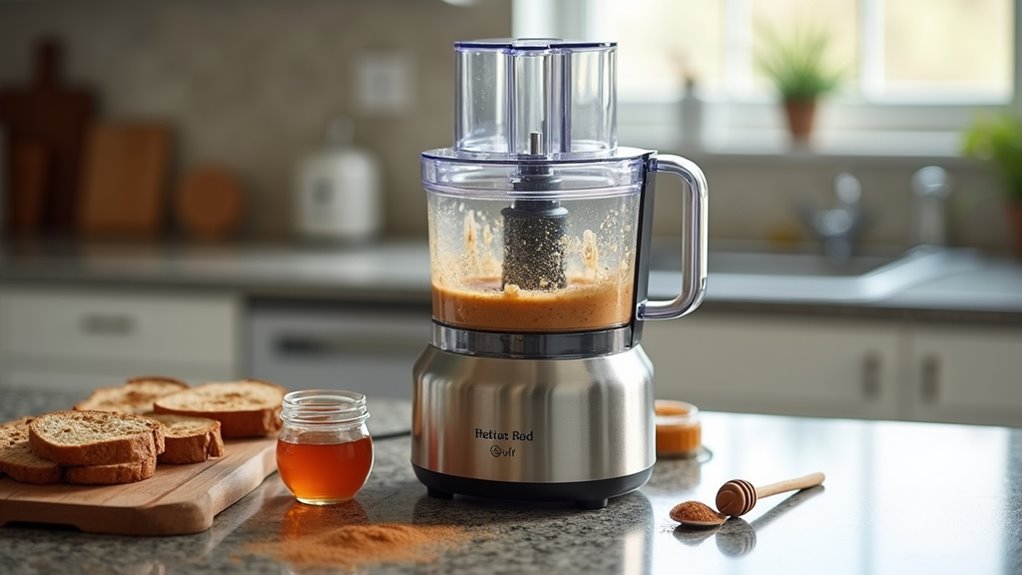
A food processor handles far more than chopping vegetables. It shreds cheese, potatoes, and carrots quickly. It slices fruits and root vegetables evenly. It blends pesto, salsa, and aioli with ease. It mixes dough and grinds herbs and nuts reliably.
What Can a Food Processor Do?
A food processor can speed through prep work that would normally eat up your time and energy.
You can lean on it for meal prep and ingredient prep, and it fits right into a busy kitchen that still wants good food.
With the shredding disk, you can turn hard cheese like cheddar or Parmesan into fine shreds in seconds.
Then the metal S-shaped blade and pulse setting help you mince onions, garlic, herbs, and vegetables without turning them mushy.
The slicing disk gives you even cuts for potatoes, cabbage, and carrots, with thickness you can adjust.
You can also pulse cold butter with flour for flaky dough, or puree soups and sauces whenever you need a smoother finish.
Shred Cheese, Carrots, and More
Shredding cheese, carrots, and other sturdy ingredients feels like a small kitchen win, especially as your hands are tired before the meal even starts. With the right disk, you can turn a 1 lb block of cheddar into even shreds in under 30 seconds. That speed matters whenever you want dinner to feel calm and doable.
| Ingredient | Best move |
|---|---|
| Hard cheese | Use the shredding disk |
| Carrots | Trim, quarter, then feed |
| Soft cheese | Try the S blade |
| Starchy pieces | Lightly oil the bowl |
For carrots, you’ll usually finish a pound in 45 to 90 seconds. Pulse, then check promptly so cheese stays firm and carrots don’t turn mushy. Assuming you enjoy cheese aging or even cold smoking, this tool helps you prep clean, consistent shreds with less effort.
Make Salsa, Aioli, and Pesto
You can turn your food processor into a fast helper for fresh salsa, creamy aioli, and bright pesto without much fuss.
For salsa, a few quick pulses give you a chunky mix, while a steady stream of oil helps your aioli turn thick and smooth.
Then you can make pesto with short bursts that keep the herbs lively and the texture just right.
Quick Salsa Prep
Fresh salsa comes together fast in a food processor, and that’s a real relief whenever you want bold flavor without a lot of chopping. You can keep a chunky texture by pulsing chopped tomatoes, onion, jalapeño, cilantro, lime juice, and a pinch of salt just 6 to 8 times.
Start coarse, then taste and adjust. In case you need a looser bite, add more lime juice in tablespoons. That makes ingredient swaps easy, too, so you can use what’s in your kitchen and still feel proud of the bowl you bring out.
Keep the lid on, pulse briefly, and stop before the mix turns mushy. With a few quick pulses, you’ll make salsa that feels fresh, bright, and ready for chips, tacos, or a casual get-together.
Creamy Aioli Blending
A food processor can really speed things up whenever you want creamy aioli or a smooth pesto without arm strain or guesswork. For a silky base, chill the bowl and ingredients, then use the S-shaped metal blade for chilled emulsification. Add 1 egg yolk, 1 tsp mustard, and 1 to 2 tsp lemon juice or vinegar. Pulse while you pour in about 1 cup neutral oil through the feed tube.
| Texture | Speed | Result |
|---|---|---|
| Short pulses | Low | Chunky salsa |
| Longer run | Medium | Thick aioli |
| Longer run | Medium | Pesto |
| Scrape sides | Any | Even mix |
If you desire egg free aioli, use a trusted substitute and keep the oil moving slowly. Use this same care with pesto, and you’ll feel right at home in the kitchen.
Fresh Pesto Mixing
Pesto comes together just as smoothly as aioli whenever your food processor does the heavy lifting, and the trick is to control the texture from the start. You can make a batch that feels like it belongs on your table, not just in a recipe book.
- Add basil varietals, Parmesan, pine nuts or walnuts, and garlic.
- Pulse until they look coarsely chopped.
- Run Low/On and drizzle olive oil in slowly.
- Stop, scrape, and taste until it matches your serving suggestions.
For a chunkier pesto, use quick bursts. For a silkier sauce, let it run a bit longer. Keep the basil moving so it stays bright, not bitter.
Then spoon it over pasta, spread it on toast, or tuck it into a jar with a thin oil layer.
Chop Nuts, Herbs, and Spices
Whenever you need to chop nuts, herbs, or spices fast, your food processor can save you time and a lot of hand strain.
For toasted nuts, add 1 to 2 cups and pulse 5 to 10 times for 1 to 2 seconds. You’ll get coarse pieces for baking, not nut butter.
For fresh herbs, use the S-shaped blade and give parsley, cilantro, or basil 4 to 6 quick pulses. That keeps them bright and helps whenever you want them in herb infused oil.
For whole spices like coriander, cumin, or peppercorns, work in small batches and pulse until coarse, then sift provided you desire it finer. Stop often, scrape the bowl, and check the texture so you remain in control.
Make Dough in a Food Processor
Making dough in a food processor can feel like a small kitchen win, because it cuts down on mixing time and saves your hands from a lot of sticky work. You can make pie crust, shortcrust, and quick bread fast with the metal S-blade. Try this:
- Add flour and salt.
- Pulse in cold cubed butter 8 to 10 times.
- Drip in ice water, 1 tablespoon at a time.
- Stop once the dough just clumps.
That pause matters for gluten control, so your pastry stays tender. For bigger batches, a larger processor helps, while small ones shine with pie dough and cookies.
Should you be doing cold fermentation, mix only until combined, then chill. You’ll fit right in with bakers who know that less handling often means better texture.
Choose the Right Blade and Feed Tube
The right blade makes all the difference, so you should match the metal S-shaped blade to chopping, pureeing, or grinding, and switch to shredding or slicing disks whenever you want even pieces.
You’ll also save time whenever you pick the feed tube that fits your ingredients, since large pieces like onion wedges need room while thin carrots and zucchini stay neater in the small tube.
Once you line up the food straight and press it steadily, you get cleaner slices, fewer jams, and a lot less kitchen frustration.
Blade Types
Pick the right blade, and your food processor can feel almost magical instead of messy. You’ll fit in fast once you know the basics, and blade maintenance and safety guards help you stay confident.
- Use the metal S-shaped blade for chopping, pureeing, and quick dough.
- Switch to the slicing disk for potatoes, cabbage, or carrots, and pick a thinner setting for tidy gratins.
- Reach for the shredding disk whenever you want Parmesan, cheddar, apples, or carrots in even shreds.
- Choose the dough blade for pastry or fast bread dough, but keep pulses short so you don’t strain the motor.
Once you match the blade to the job, you work faster and waste less. That’s how your kitchen starts to feel like your kind of place.
Feed Tube Fit
Once you know which blade does the job, the feed tube helps that blade work cleanly and safely. You’ll feel more in control whenever you match produce fit to the tube diameter. Use the large feed tube for potatoes, onions, and cabbage wedges, and choose the small tube for carrots, zucchini, and celery whenever you want less trimming and better slices.
Next, pair the tool to the task. Use the slicing disk for uniform pieces, the shredding disk for cheese or carrots, and the S-blade through the feed tube only for small chopped bits. For firm produce, use a tight packing technique and steady pressure with the pusher. For leafy greens, roll them or use the smaller tube so your food processor gives you even, friendly results.
Pulse vs. Continuous: When to Use Each
At the point you want your food processor to do the right kind of work, pulse and continuous each have a clear job. Use pulse timing for better texture control continuous blending, and trust your speed settings to match the task.
- Pulse 1-second bursts whenever you chop, combine pie dough, or add flour with butter.
- Stay with pulses for about 6 to 10 quick hits, so your mixture stays cold and flaky.
- Switch to continuous for 20 to 60 seconds whenever you want soup, hummus, or gazpacho silky smooth.
- Commence with pulses, then finish with a short run for cheese or cauliflower rice.
You’re in good company whenever you choose less initially. If it looks close, stop and check. A little patience keeps your food from turning mushy fast.
Food Processor Tips for Faster Cleanup
Cleaning up shouldn’t feel like a second cooking project, so a few smart habits can save you time and stress.
Before you start, lightly coat the disk, feed tube, and bowl with oil or nonstick spray for better nonstick maintenance.
After processing, fill the bowl halfway with warm water and a drop of soap, then pulse it for 10 to 20 seconds. That loosens sticky bits fast.
Next, use brush storage to keep a small brush or old toothbrush near the sink, so you can scrub the blade hub and feed tube without touching the sharp blade.
For big shredding jobs, work in batches and soak removable parts right away in hot soapy water.
Finally, store blades and disks in a protective case or wrapped in a towel.
Frequently Asked Questions
What Can’t You Put in a Food Processor?
You can’t put hot liquids, hard bones, whole frozen blocks, or sticky dough in your food processor. Don’t use metal utensils inside it, either. They can damage the blades, strain the motor, and make cleanup harder.
Is There a Food Processor That Chops?
Yes—many food processors chop beautifully, like a kitchen teammate that never tires. You’ll want the right blade types and manageable noise levels. With a good S blade, you can chop fast, evenly, and feel right at home.