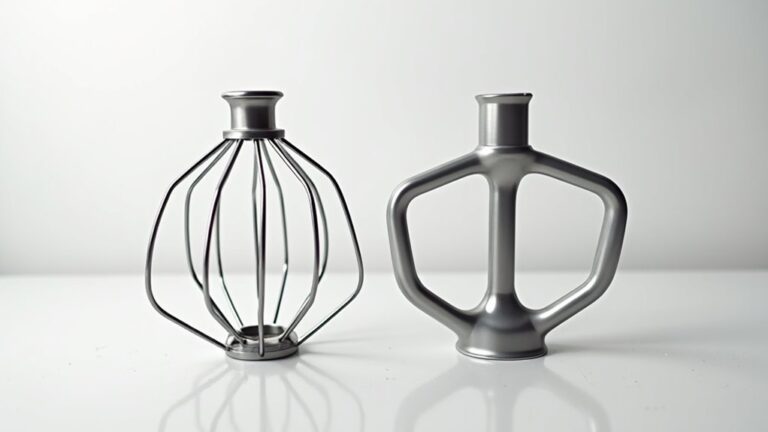
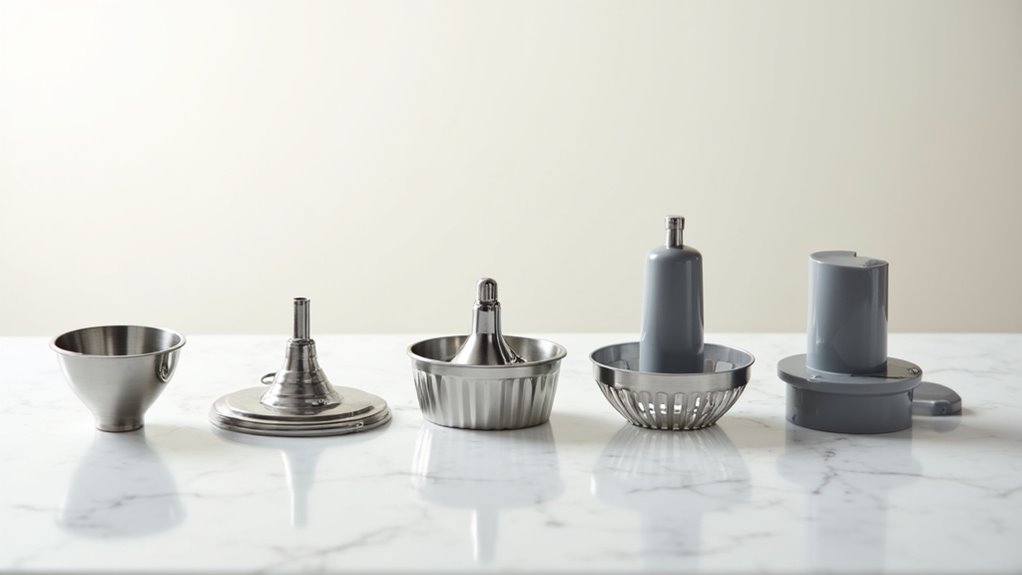
A food processor attachment determines whether onions, carrots, and cheese become a smooth puree or neat slices. Use the S-blade for chopping, pureeing, and making sauces; switch to slicing or shredding discs for uniform pieces. The dough blade handles kneading without overheating the motor. Specialty discs create textures for specific recipes, and the feed-tube and pusher keep operation safe and consistent. Choosing the correct attachment speeds prep, protects the machine, and improves final results.
What Is a Food Processor?
A food processor is a handy kitchen helper that can speed up some of your most tiring prep work. You’ll see a motorized base, a work bowl, and a lid with a feed chute that welcomes different blades and discs.
In its history evolution, it became a smart batch tool for solid and semi-solid foods, not a liquid machine like a blender. You can chop, slice, shred, grate, or knead with less strain, which makes weeknight cooking feel more manageable.
Should you’ve been searching for home alternatives to endless knife work, this appliance can fit right in. Its high-torque motor and changeable attachments help you make steady, even cuts and doughs, so you can cook with confidence and feel at home in the process.
Food Processor S-Blade for Chopping and Puréeing
The S-shaped blade sits at the bottom of your food processor’s work bowl, right over the center shaft, and its two angled edges do the heavy lifting.
You’ll use it for chopping onions, mixing pesto, and puréeing hummus or nut butters with ease.
Whenever you switch between pulse and steady speed, you can control whether you get a chunky texture or a smooth finish.
S-Blade Design And Placement
Flip the bowl over, and you’ll see why the S-blade does so much heavy lifting in a food processor. This S-shaped stainless-steel blade fits right over the center drive shaft and rests flush on the bowl floor. That ergonomic placement lets food fall onto the cutting edges fast, so you get a clean, even chop with less guesswork.
You’ll also notice less blade heat during short bursts, which helps protect fresh flavors. Because the blade cuts and stirs at the same time, it gives you one tool for many kitchen jobs. Whenever you want control, use pulse. If you want smoother results, let it run. That simple design makes you feel at home in the process, like you’re cooking with a reliable teammate.
Chopping, Mixing, Puréeing Uses
Whenever you want fast, reliable results, the S-blade becomes your best helper for chopping, mixing, and puréeing. You fit it over the center shaft, then let it do the hard work while you keep texture control and enhance flavor release.
- Use Pulse for salsa, onions, and chunky nut pieces.
- Use high speed for dressings, nut butters, and smooth purées.
- Let cooked vegetables and soft fruit turn into baby food in under a minute.
- Pour oil slowly through the feed tube for mayo or pesto.
Because the blade sits low in the bowl, it blends wet mixtures evenly and quickly. So you can make spreads, sauces, and silky purées with less effort and greater confidence.
Food Processor Slicer and Shredder Disc Basics
A food processor’s slicer and shredder disc can save you a lot of time, and it’s one of the most useful attachments in the box. You place the reversible metal disc on the center shaft, then feed food through the lid tube. As the blade is up, you get neat slices. While it’s down, you get shredded pieces.
This helps you manage slice thickness for potatoes, zucchini, apples, and Brussels sprouts, while the grating side handles cabbage, carrots, potatoes, and cheese for slaws, latkes, and toppings. For the best results, use the right feed tube and pusher so long or small items move evenly and don’t jam.
Treat the disc with safety handling during cleaning. Many are dishwasher safe, but hand-washing helps keep the edge sharp longer.
When to Use a Food Processor Dough Blade
Reach for the dough blade whenever you want your food processor to do the heavy kneading for you. This dull paddle folds dough instead of slicing it, so you can make bread, pizza, or pasta with less effort and more confidence. Install it on the drive adapter so it reaches the bowl base, then trust its shape to stretch gluten gently. Use short kneading cycles, usually 1 to 3 minutes, because kneading timing matters and too much heat can hurt rise. Its gluten development impact is great for wet or sticky dough, especially when you’re making 1 to 2 loaves.
- Your hands get a break
- Sticky dough feels easier
- Bigger batches mix more smoothly
- In case needed, brief S-blade pulses can help
Attachments That Expand Your Food Processor
Food processor attachments can turn one machine into a much bigger helper, and that makes busy prep feel far less stressful.
You can flip reversible slicer shredder discs for even slices or shreds, then switch to an ExactSlice style attachment whenever you desire thin or thick cuts without stopping to change tools.
The S blade helps you chop, mix, and puree for hummus or sauces, while a dough blade gently builds bread or pizza dough.
Should you want more variety, dicing kits, julienne discs, and specialty cutters handle fries, peeled potatoes, and citrus with ease.
With simple accessory maintenance, these parts stay ready for the next meal.
That also supports recipe integration, so you can match the right attachment to your cooking crew and feel right at home in the kitchen.
How to Choose a Food Processor Blade
While you’re trying to pick the right food processor blade, it helps to match the blade to the job instead of guessing and hoping for the best.
- Choose the S-shaped blade for chopping, pureeing, pesto, and nut butters.
- Use Pulse for quick chops, then switch to steady run for smooth purées.
- Pick the plastic dough blade when you knead bread or pizza dough.
- Use reversible or adjustable discs whenever you want even slices or shredded cheese.
Next, check blade material and edge angles, because they affect cutting, safety, and how long the part lasts.
Should a blade look dull or damaged, replace it with a genuine part, not a bargain stand-in.
Clean it right away, and follow your manual for hand-washing or top-rack dishwashing.
That way, you keep your kitchen tools ready and your prep time stress-free.
Best Foods for Each Food Processor Attachment
The right attachment can make prep feel a lot less like work and a lot more like a win. You’ve got options that fit real meals. The S-shaped blade helps you whip pesto, hummus, mayo, nut butters, and smooth purées. For chopped texture, just pulse. For silky results, let it run.
| Attachment | Best foods |
|---|---|
| Reversible slicer/shredder | potatoes, zucchini, cucumbers, Brussels sprouts |
| Shredding disc | cheeses, carrots, cabbage, potatoes |
Use the slicer for salads and roasted vegetables that need even cuts. Pick the shredder for gratins, carrot cake, latkes, or hash browns. Should you be reaching for exotic fruits or veggies, ExactSlice gives you clean, steady rounds. The julienne disc makes matchstick carrots, zucchini, and fries. For dough, use the plastic blade so you don’t cut the mix.
Food Processor Uses for Dough, Sauces, and More
You can use your food processor for much more than chopping, and dough is one of the easiest places to start. With the right blade, you can mix and knead bread or pizza dough, then move on to smooth sauces, dips, and purées without switching to a second tool. It also helps you make creamy nut butters and even homemade dressings, so your prep gets faster and a lot less messy.
Dough Preparation Basics
Whenever dough is on your menu, a food processor can save you a lot of effort and still give you a solid result.
You’ll feel right at home whenever you use the plastic dough blade for focaccia, pizza, or pasta dough, since it kneads without cutting.
In case that blade isn’t around, the S-blade can still help in short bursts.
Keep hydration control in mind, because too much liquid can make the dough sticky quickly.
Use low speed or pulse for 1 to 3 minutes, then stop and check.
Resting times matter too, so let the dough relax before shaping.
- Watch for a smooth, elastic ball.
- Stop promptly in the event the dough feels warm.
- Don’t overwork it.
- Replace dull blades to avoid tearing.
Sauces, Dips, And Purées
A food processor really shines whenever it’s time to make sauces, dips, and purées, because the S-shaped blade can turn a few simple ingredients into something smooth, chunky, or creamy with very little effort.
You can use Pulse for chunky salsas and coarse pesto, then switch to continuous speed for hummus, baby food, or silky roasted vegetable purée. For mayonnaise, aioli, and other cold sauces, start low and drizzle oil through the feed tube so the emulsion stays stable.
You can also blend acid, mustard, and oil into dressings fast. Should you want extra smooth results, stop and scrape the bowl, then keep going until your texture calibration feels right.
With a little practice, you’ll get the exact consistency your table loves every time.
Common Food Processor Blade Mistakes
Even a sturdy food processor can act up whenever the blade or disc gets used the wrong way, and that’s where many of the most common mistakes begin. You can avoid a lot of frustration whenever you match the tool to the task and watch the blade orientation.
- Don’t knead dough with the S-shaped blade; use the dough blade so you don’t cause motor strain or gummy dough.
- Don’t run the S-blade nonstop for chopping; pulse it for onions and herbs.
- Check reversible discs before you start, because upside-down setup changes slicing and shredding.
- Skip whole ice cubes and hard nuts on thin discs; pre-cut, thaw, or use a sturdier blade.
Whenever you handle parts gently, they stay ready for your next meal together.
How to Clean Food Processor Attachments
You can keep your food processor attachments in great shape by rinsing blades and discs right after use, then washing them by hand in warm soapy water with a soft cloth or sponge.
Should your parts be dishwasher-safe, place them on the top rack on a gentle cycle and skip high heat, because too much heat can dull or warp them.
After cleaning, dry every blade and accessory completely, then store them carefully so they stay safe, rust-free, and ready for your next recipe.
Safe Hand Washing
Fresh food residue is much easier to remove provided you rinse food processor attachments immediately after use, and that small habit can save you a lot of scrubbing later.
For safe hand washing, start with blade handling and your soap choice. Use warm water and a drop of mild dish soap, then clean sharp blades and discs with a soft sponge or cloth. Hold each piece by the spine, not the edge, so you stay in control.
- Soak stuck-on bits in warm water for a few minutes.
- Brush feed chutes and crevices gently.
- Keep your fingers away from shredding teeth.
- Rinse, then dry every part well before storage.
Should you want a quick freshen-up, wash the bowl with the S-blade inside, then rinse it out.
Dishwasher Cleaning Tips
A good hand wash is often the easiest fix, but your dishwasher can save time once you use it the right way.
You can place top-rack-safe blades, bowls, and discs in the dishwasher on a gentle cycle, but skip high heat so plastics don’t warp and edges stay sharp. Use eco friendly detergents that clean well without harsh residue.
Before loading, rinse off food, and check your manual for exact limits, especially for plastic dough blades and adjustable-slice discs.
Should you want a faster reset after a busy meal, try steam sanitizing methods only whenever your manufacturer allows them.
Also, keep sharp parts separated so they don’t knock together. Were an attachment to look chipped, bent, or dull, retire it instead of risking another wash.
Drying And Storage
Once the washing is done, drying and storage matter just as much, because clean attachments can still get damaged provided they sit wet or bounce around in a drawer.
After rinsing, set blades, discs, and plastic parts on air drying racks or vertical racks so water drains away fast. Pat them dry with a soft towel, especially around edges and hubs, since trapped moisture can leave stains.
Then tuck sharp pieces into in-bowl storage or a caddy, should you own one, so everything stays organized and safer to grab.
- Keep blades separated so they don’t nick each other.
- Let dishwasher-safe parts cool before storing.
- Check every piece for moisture before you close the drawer.
- Give your setup a small, easy home that feels right.
How to Store Food Processor Blades Safely
Stored the right way, your food processor blades can stay sharp, safe, and ready for the next job instead of turning into a messy pile in the cupboard.
Keep sharp S-shaped blades and metal discs in their in-bowl storage caddy or a dedicated blade holder so they don’t bump together and get dull.
For better blade organization, use childproof containers or a locked cabinet, especially when kids share your home.
Dry each piece fully before you tuck it away, and provided you need a quick clean, run the processor with warm soapy water for 30 seconds, then air-dry.
Place plastic dough blades and other non-sharp parts together in the bowl or a sealed container, so everything stays paired and easy to grab.
When to Replace Food Processor Blades
Sometimes, your food processor blades start telling on themselves before they fully fail. You can trust those replacement indicators and act promptly, so your prep stays smooth and your kitchen crew stays happy.
- Check the S-shaped blade for nicks, bent arms, or tearing.
- Swap discs whenever shreds or slices turn ragged.
- Replace plastic dough blades should paddles crack or warp.
- Change any chipped, rusty, or loose part right away.
Your blade lifespan depends on use, but heavy chopping could wear the main blade out in 1 to 3 years.
In case cleaning and sharpening don’t help, buy a genuine replacement that fits your model. Dull parts slow you down, and nobody wants sad cabbage or lumpy dough at dinner. Keep spare parts nearby, and you’ll cook with confidence, not guesswork.
Frequently Asked Questions
What Are the Different Functions of a Food Processor?
You can chop, mix, puree, slice, shred, knead, juice, and dice with your food processor. With slice settings and a dough blade, you will handle veggies, doughs, sauces, and snacks fast and easily together.