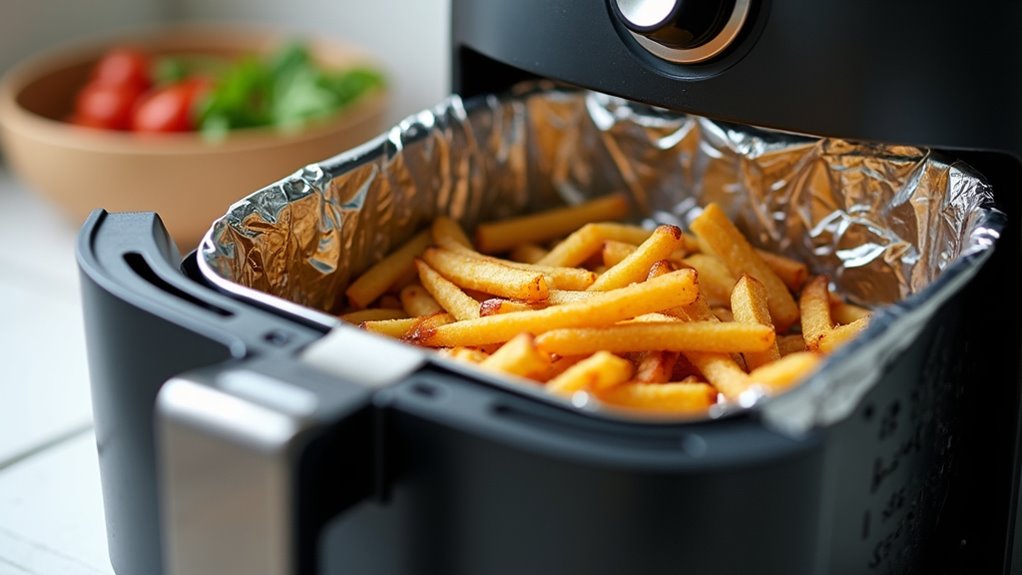
Yes — aluminum foil works in an air fryer when used correctly. Place foil so hot air can circulate, and keep it away from the heating element to prevent hazards. Use foil to line baskets for easier cleanup and to catch drips from marinades or cheese. Avoid wrapping foods completely; foil that blocks airflow prevents proper crisping. Proper placement and ventilation let foil help without ruining texture or safety.
Is Foil Safe in an Air Fryer?
Yes, foil can be safe in an air fryer, but only provided you use it the right way.
You can line the basket or tray with flat foil, then weigh it down with food so it won’t lift into the heating element. Keep every vent open, because blocked holes can trap heat and make dinner less crisp.
Skip loose, wrinkled sheets, and don’t use foil with tomatoes, citrus, or vinegar sauces since acid can leave a metallic taste.
In basket models, keep foil inside the basket only; in oven styles, use it on drip pans or trays, not coils.
If you want easier cleanup, save foil for messy foods and choose punched parchment or silicone liners for better airflow.
For foil disposal and foil recycling, check your local rules before tossing leftovers.
How Air Fryer Airflow Works
An air fryer works a lot like a small convection oven, so the way air moves inside it matters just as much as the heat itself. You get the best results whenever hot air can sweep around your food, not just sit on top of it.
Consider airflow visualization and fan mechanics as a fast loop:
- The top fan pushes heat down and around.
- The holes in the basket let air rise beneath your food.
- Solid foil can block that path and slow browning.
If you use a liner, keep it light and secured so it doesn’t lift and touch the element. In basket-style models, open space helps you belong to the crisp-food club. In oven-style units, the airflow path usually sits higher, so the setup feels different.
When Foil Makes Cleanup Easier
As cleanup starts to feel like the hardest part of dinner, aluminum foil can be a real help. You can line the basket or drip tray with it to catch sauces, melted cheese, and oily drips, so you spend less time scrubbing and more time relaxing. That small shield works especially well after sticky marinades that love to bake on.
In basket air fryers, foil baskets and drip liners should leave gaps so air still moves freely. In oven-style models, a sheet on the lower tray often makes cleanup easier because it catches mess below. Just keep the foil tucked down so it stays put, and skip acidic foods like tomatoes or citrus, since they can react with aluminum.
How To Use Foil in Basket Air Fryers
To use foil safely in a basket air fryer, place it only inside the removable basket and never under it or near the heating element.
Then cut it to fit, leave some perforations open, and tuck the edges down so the fan can’t lift it.
After that, set food on top to hold it in place, and skip acidic foods on the foil so you keep the flavor clean.
Safe Basket Placement
Usually, the safest way to use foil in a basket air fryer is to place it only inside the removable basket, not under it and not loose in the main cavity, because that keeps it away from the heating element and helps you avoid a messy surprise.
That simple step helps you feel more at ease whenever you cook for yourself or your crew.
- Cut the foil to fit the basket, but leave some holes open so air can move.
- Use basket liners or foil as heat shields only in the basket, never as a full wrap.
- Assuming you cook saucy food, shape the foil like a small packet or use a silicone liner.
Then tuck the foil under the food so it stays put and cooks evenly.
Secure Foil Edges
Once the foil is in the basket, the next job is to lock those edges down so they don’t dance around in the fan. Use your tuck technique via folding a 1/2 to 1 inch cuff over the rim, then press it under the food or basket edge. That little move keeps your foil artistry safe and steady.
| Move | Why It Helps | What To Check |
|---|---|---|
| Tuck edges | Stops lift | No loose flaps |
| Add food weight | Holds foil flat | Center stays still |
| Use small weights | Blocks flutter | Basket moves freely |
| Leave side gaps | Keeps airflow strong | 1/2 to 1 inch open |
| Perforate evenly | Enhances circulation | Holes stay pressed flat |
If you need a sling for delicate food, keep every seam tight. Small, secure edges help you cook with confidence and feel at home doing it.
How To Use Foil in Air Fryer Ovens
In an oven-style air fryer, you can use aluminum foil with a little care, and that small bit of care makes a big difference. You’re not alone provided you want easier cleanup and better foil maintenance with nicer foil aesthetics, too. Try this:
- Line the bottom drip pan or a tray, but keep foil away from the top heater.
- Leave gaps or use a basket above the foil so air can move and food stays crisp.
- Use food to weigh it down, and keep foil off tomatoes, citrus, and vinegar-heavy marinades.
When you line only part of the tray, you protect the appliance and still get the results you want. A few smart moves help you feel confident, cook with your crew in mind, and keep every meal simple.
How to Keep Foil From Flying Around
Keeping foil still in an air fryer comes down to giving it something solid to hold on to, especially after you’ve already lined the tray for easier cleanup. You can use foil anchors by placing food right on top, or by tucking and crimping the edges under the basket rim. That way, the fan can’t lift a loose corner. Should you need extra help, add airflow weights like a rack, pie weights, or a few potatoes.
| Move | Why it helps |
|---|---|
| Cut foil to size | Limits loose edges |
| Leave small gaps | Keeps air moving |
| Poke tiny holes | Stops lift under flaps |
| Cross two strips | Makes a stable sling |
| Secure with food | Holds foil flat |
For light foods, skip foil and choose perforated liners instead.
Why Acidic Foods and Foil Don’t Mix
Acidic foods and foil don’t get along for long, so you’ll want to ponder twice before setting tomatoes, citrus, vinegar, or wine-heavy marinades on aluminum in the air fryer.
Heat and moving air can speed up acid leaching, so the foil might decompose and pass on a metallic note.
You’re not just protecting taste; you’re also helping keep the food surface calmer and cleaner.
- Use parchment between the food and foil.
- Pick a ceramic or silicone liner when possible.
- Should you use foil with mild acids, keep contact short.
That little buffer helps prevent flavor transfer and reduces aluminum leaching.
Anytime you cook with a crowd of flavors, you want the bright ones, not the tinny ones, to shine.
When Foil Hurts Air Fryer Crisping
Often, the foil that seems helpful at initially can quietly get in the way of the crisp finish you want. Whenever you cover the basket or block the holes, you choke the hot air that should rush around your food. That can leave you with soggy bottoms and uneven browning, especially on the underside where moisture needs to escape.
Even a small sheet can slow convection, so your food might take longer and lose that snap you’re after. Should loose foil lifts in the fan, it can shift airflow and make hot spots. For better results, keep most openings clear. Use foil only in small, weighted down spots for drips or delicate bites, so you still get the crunchy texture you came for.
Parchment Paper vs. Foil in Air Fryers
When you choose between parchment paper and foil in your air fryer, consider about airflow initially. Parchment with holes lets hot air move around your food better, while foil can block those openings and slow down crisping.
You can use parchment for most dry foods, but foil still helps whenever you need to hold sauce, liquids, or drips without a mess.
Foil Airflow Risks
Even though foil can seem like a handy shortcut, it can create real airflow problems in an air fryer whenever you cover the basket holes or line the cooking surface too tightly. That airflow obstruction hurts heat circulation, so your food might cook unevenly and stay soggy underneath.
In case you want better results, keep these simple habits in mind:
- Use foil only when it stays flat and weighted down.
- Leave open gaps so hot air can move around your food.
- Never let foil touch the heating element.
Parchment with perforations or a silicone mat usually gives you safer airflow and better crisping. You’ll feel more confident whenever your meal comes out evenly browned instead of half-steamed. Should you use parchment, choose a weighted liner so it won’t lift and burn.
Parchment Liner Uses
Parchment paper can be a smart choice in an air fryer, especially provided you want an easier cleanup without the metal concerns that can come with foil.
You can lean on it for nonstick baking and for foods that could react with foil, like tomatoes, citrus, or vinegar marinades.
For the best result, choose vented liners or poke holes yourself so hot air can move around the food and keep it crisp.
Then, weigh the parchment down with food so loose edges don’t lift and scorch.
Should you be cooking a very saucy meal, parchment may not hold up well, so foil or a silicone liner might fit better.
On oven-style trays, line the lower sheet for spills, but leave space so airflow stays open.
Best Alternatives to Aluminum Foil
A few smart swaps can make air frying easier, safer, and a lot less messy. Should you want to skip foil, choose liners that fit your food and basket well. You’ll feel more at ease whenever cleanup stays simple.
- Perforated parchment paper lets air move and catches drips. Use pre-cut circles or punch holes, then weigh it down with food.
- Silicone basket liners, silicone molds, and reusable trays handle heat, wash easily, and suit eggs, sauces, and other wet foods.
- Unbleached parchment works well with acidic foods and crisping. In oven-style air fryers, a lined baking sheet below can catch messes without blocking airflow.
Skip wax paper and regular paper. Pick high-heat liners, and follow your fryer guide so your meals stay tasty and your kitchen crew stays happy.
Air Fryer Foil Tips That Work
Whenever you use foil in your air fryer, keep it tucked under food so the fan can’t lift it and push it toward the heating element.
Leave gaps or poked holes in the foil so hot air can move around and help your food crisp, and skip foil for acidic ingredients or very light foods that can pull it upward.
Foil works best for messy, saucy, or fragile foods, while parchment or silicone liners are a better pick whilst you need more airflow or a nonreactive surface.
Safe Foil Placement
Safe foil placement can make the difference between a crisp, easy dinner and a smoky mess, so it’s worth getting it right from the start. Whenever you handle foil placement well, you protect the air fryer’s heat zones and keep your food cooking evenly.
- Keep foil flat, tucked tight, and covered with food so it can’t lift.
- In basket models, leave perforations open or poke holes so air keeps moving.
- In oven models, set foil on the lower tray only, away from the top coils.
Use foil sparingly, because too much can block airflow and dull crispness. Skip it with tomatoes, citrus, or vinegar-heavy marinades, since acid can damage foil. Whenever you want the same cozy help without the fuss, parchment or silicone liners can fit right in.
Best Foil Uses
Foil can be a real time-saver in the air fryer, especially should you want to catch drips and keep cleanup simple. You can line the basket or drip pan with it, then leave the perforations open so hot air keeps moving. That helps heat diffusion and keeps your food cooking evenly.
For thicker foods, poke a few tiny holes in the foil, and tuck the edges or weigh it down with food so the fan can’t lift it. Foil accessories like a simple sling can also help you lift out messy bites with less fuss. Just keep foil away from top or bottom heating elements, and avoid acidic foods, since they can change the taste. Whenever you desire extra crisping, perforated parchment or silicone liners could work better.
When To Skip Foil
Even though aluminum foil can make cleanup easier, you should skip it in an air fryer any time it gets in the way of crisp, even cooking. In case you want that golden finish, trust the airflow initially.
- Skip foil under fries, chips, wings, and roasted veggies. The holes in the basket need open space, or your food can turn soft and slow to cook.
- Skip foil with tomatoes, citrus, vinegar, or peppers. Acid can react with aluminum and leave a metallic taste.
- Skip loose foil, full-basket lining, and very light foods unless they’re firmly weighted. A fan can lift it toward the heater, so safety comes foremost.
When you need easier cleanup, try foil alternatives like parchment or a reusable liner. Good foil durability helps, but the best choice still supports the cook you want.
Frequently Asked Questions
Is It Safe to Put Aluminum Foil in the Air Fryer?
Yes, it is usually safe provided you keep foil flat and away from the heating element. You will reduce food sticking, but avoid blocking airflow. Check your manual, since liner notes might warn about heat conductivity risks.