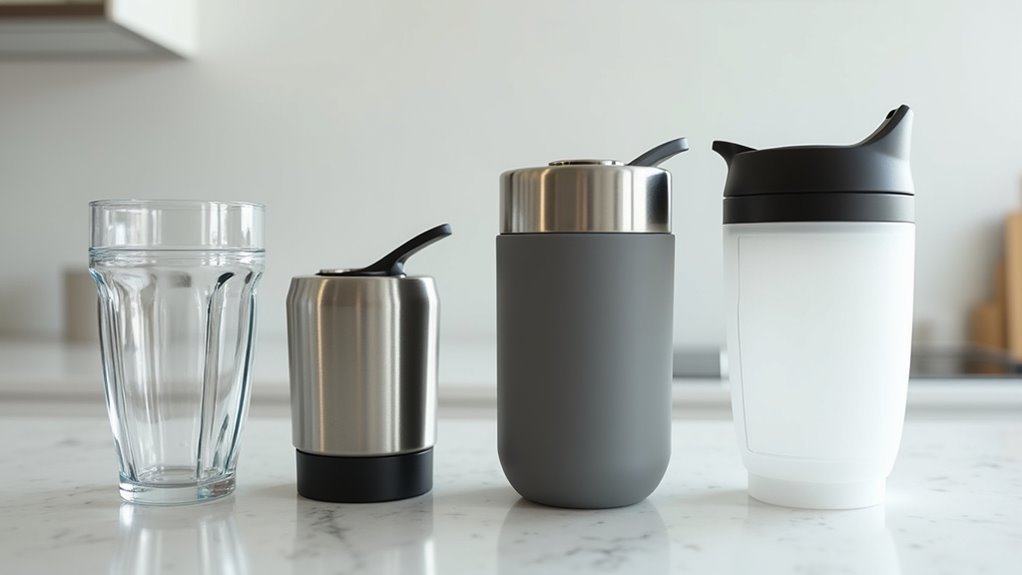
Glass jars stay clear, resist heat, and won’t retain odors. Plastic jars are lightweight, shatter-resistant, and budget-friendly. Stainless steel jars offer top durability and excellent impact resistance. Each material differs in scratch resistance, ice-handling, and cleanup ease. Choosing the right jar depends on priorities like heat tolerance, weight, appearance, and maintenance.
Which Blender Jar Lasts Longer
Whenever you’re picking a blender jar, the longest-lasting choice usually comes down to glass or stainless steel, not plastic.
In this longevity comparison, tempered or borosilicate glass keeps its clarity and shape through 1,000-plus cleanings and years of use, so you won’t feel stuck replacing it too soon. Stainless steel lasts even longer because it resists wear best, though you can’t see inside while blending.
Plastic jars feel light and easy, but ice, nuts, and blades leave scratches that trap food and slow mixing. That means your maintenance frequency goes up, and clouding often shows after about five years.
Should you prefer a jar that fits your kitchen crew and saves money over time, glass or stainless steel gives you the strongest, most dependable match.
Glass Blender Jars: Durability and Heat Resistance
Glass blender jars are a strong choice provided you want a jar that can handle regular use without wearing out fast. You get solid scratch resistance, so the surface stays clear even after 1,000-plus washes. That means your blender keeps looking clean and familiar in your kitchen.
Glass also handles heat well, often up to about 300°F, so you can blend hot soups and sauces with less worry about warping. Because it resists odor and stain buildup, you won’t have to fight turmeric rings or spice smells later.
Still, glass can crack from thermal shock when you move from very hot to very cold too fast. It’s also heavier and can shatter if dropped, yet its long life often makes the higher cost worth it.
Plastic Blender Jars: Light Weight and Wear
Plastic blender jars offer a different kind of ease after the strength of glass. You get a weight advantage that feels kind on your hands, and that travel convenience helps whenever you’re packing for a trip or reaching for a quick shake.
| Feature | Plastic Jar | Glass Jar |
|---|---|---|
| Weight | Light | Heavy |
| Heat limit | About 200°F | About 300°F |
| Wear over time | Scratches, clouding | More stable |
That lighter build can make you feel more at home in the kitchen, especially should you need easier lifting. Still, regular use leaves marks. Ice, nuts, and hard foods can scratch the surface, trap bits, and make cleaning tougher. Over years, plastic might also absorb odors and lose strength. In case you want a budget-friendly start, plastic can fit your routine, but you might replace it sooner.
Blender Jar Material and Blending Performance
Whenever you compare blender jars, you’ll notice that the material usually doesn’t change raw blending power very much. What really drives how well your blender crushes ice, frozen fruit, and tough greens is the motor and the blade design, not whether the jar is glass, plastic, or steel. Still, each material can change how smoothly ingredients move inside the jar, so the right choice can make your blending feel easier and more consistent.
Material Choices
Although jar material might seem like a small detail, it can make a big difference in how your blender feels, performs, and lasts.
Whenever you want eco friendly options, glass often fits the mood because it stays clear, resists stains, and keeps looking fresh through years of use. It also matches many aesthetic trends, so your kitchen can feel pulled together.
Should you need something lighter and less costly, BPA free plastic can help, and it’s less likely to crack if dropped. Still, it could cloud or hold odors over time.
Stainless steel gives you tough, long lasting confidence, but you can’t see the mix inside. So, you can choose the jar that suits your routine, style, and comfort.
Performance Differences
At the same time, jar material does play a small supporting role, even though it doesn’t change the blender’s raw power much. You’ll still rely on motor strength and blade shape, but the jar can shape how smooth your mix feels. In your kitchen crew, that matters.
- Glass keeps clarity and steady circulation, even after many cleanings.
- Plastic feels light, but scratches can slow flow and raise speed variability.
- Stainless steel stays tough for heavy use, yet you can’t watch the blend.
- Jar wear can also affect noise levels and consistency over time.
Glass vs Plastic Blender Jars for Ice
Whenever you crush ice often, you’ll notice glass jars stay clearer longer and resist the tiny scratches that can trap bits of ice.
Plastic jars can be lighter and tougher against drops, but they’ll usually pick up scuffs faster, which can make them look cloudy over time.
Ice Resistance
Ice has a way of challenging a blender jar fast, and the material you choose can make that job easier or messier. Whenever you crush frozen cubes, glass usually handles the scrape better, while plastic can flex but wear down sooner.
In impact trials, tempered or borosilicate glass often shows strong ice resistance, yet it can fail hard should a frozen chunk hit just right. Plastic feels safer for accidental knocks, but repeated ice use can leave tiny scars that slow the blend.
- Glass stays smoother after many uses
- Plastic resists drop breaks better
- Ice can nick plastic inside
- Strong blades still matter most
Should you want a jar that fits your kitchen rhythm, consider how often you blend ice and how careful you can be with each pour.
Scratch And Clarity
More often than not, the jar’s clarity becomes the initial clue that tells you how well it will age in your kitchen. With glass, you keep strong visual clarity and a steady surface gloss, even after ice and countless washes. Tempered and borosilicate jars resist scratches, so they stay smooth and easy to trust.
Plastic jars can feel lighter, but ice, nuts, and hard foods often leave tiny marks inside. Those scratches cloud the surface, trap oils, and hold onto smells like turmeric, which makes cleanup less pleasant for you. Over time, especially with regular ice crushing, plastic might lose clarity and strength sooner. In case you want a jar that keeps looking fresh and clean, glass gives you the longer-lasting, friendlier finish.
Cleaning Glass Blender Jars Safely
Because glass stays clear and resists stains so well, keeping it clean is usually pretty easy provided you act fast.
Start with immediate rinsing after each blend, then run an initial cycle with warm water and a drop of dish soap. That simple habit keeps you ahead of stuck-on bits and helps your jar feel fresh.
- Use a baking soda paste for marks or light odors.
- Scrub gently, so the glass keeps its shine.
- Run another warm soapy cycle after scrubbing.
- Check for chips or cracks prior to you use it.
If the jar is hot, let it cool initial. Avoid sudden cold water, since that can stress the glass.
For jars with fixed blades or a heating part, clean the inside only, then wipe the base by hand.
How Plastic Blender Jars Trap Odors and Stains
Plastic blender jars can hold on to smells more than you’d expect, because their tiny pores soak up oils and strong spice pigments.
Over time, those same jars also pick up stains and micro-scratches that trap food bits and make the odor stick around.
Odor Absorption Risks
When you use the same blender jar for bold spices, oily sauces, and fragrant smoothies, tiny smells can start to stick around long after the drink is gone. In plastic jars, those smells can settle into tiny pores and scratches, so odor prevention matters whenever you want a fresh, welcoming kitchen.
- BPA-free plastic can hold spice oils.
- Turmeric and similar ingredients can linger.
- Scratches trap bits of food and oil.
- Repeated use makes cleanup harder.
With a bit of material evaluation, you might see why glass often feels easier. It stays non-porous, so it keeps a neutral taste and a cleaner scent, even after lots of washes.
In case your jar already smells off, a long soak or baking soda could help, but sometimes replacement is the kindest fix for your routine.
Stain Retention Issues
Over time, even a good blender jar can start to show its wear, and that’s where stains become more than just a cosmetic problem.
Should you use plastic, you might notice turmeric, garlic, and other bold ingredients leaving behind color and smell. Those marks don’t just sit on the surface. Repeated blending creates tiny scratches and cloudy spots, and those crevices hold onto food bits like stubborn guests who missed the exit. That’s why odor barriers matter, although plastic often struggles to provide them.
For stain prevention, you’ll need warm soapy soaks, careful scrubbing, and sometimes baking soda or a targeted cleaner.
Glass, in contrast, stays clear, resists staining, and usually needs only a simple rinse or quick scrub.
Glass Blender Jars for Hot Soups and Sauces
Glass can bring a real sense of ease to hot blending, especially whenever you want smooth soups and sauces without any strange smells or stains.
Whenever you choose a tempered or borosilicate jar, you get better microwave safety and less worry about thermal expansion during hot pours.
You’ll also notice the jar stays clear, even after many spicy batches.
- It handles heat up to about 300°F.
- It helps stop warping and off-gassing.
- It resists odor absorption after repeated use.
- It feels steady, though it’s heavier and can shatter if dropped.
Because some models include heating parts, you should follow cleaning steps carefully and avoid full immersion.
Whenever you make hot soups often, borosilicate glass can save you replacements and help you feel right at home in your kitchen.
When Plastic Blender Jars Make More Sense
Whenever heat and stain resistance matter less than comfort and convenience, plastic blender jars can be the smarter pick for your kitchen.
You’ll appreciate them whenever you want lightweight portability and easy lifting, especially assuming gripping heavy gear feels tiring. They also help you keep costs down, so you can start blending without stretching your budget.
For portable camping or quick morning smoothies, BPA-free plastic jars give you safer shatter resistance and less worry in transit. Provided you like simple, fast blends, many mid-power models handle single-serve drinks well, and they don’t ask much from you.
That mix of ease, value, and safety can fit your routine nicely. Whenever you want a blender that feels friendly, practical, and ready to move with you, plastic often makes sense.
Scratches, Clouding, and Replacement Costs
Even a strong plastic jar can start to show wear after enough blending, because ice, nuts, and other hard foods leave tiny scratches on the inside.
- Those marks trap bits of food and make cleanup harder.
- Clouding can follow, so your jar loses its clear look.
- After about five years of regular use, plastic often looks tired.
- Glass stays clear longer, so you replace it less often.
You might look for scratch repair or coating treatments, but they usually can’t fully restore a worn jar. That’s why many people feel frustrated when a cheap swap turns into a cycle of buying again.
Plastic replacements cost less upfront, yet repeated changes can add up fast.
Should you want a jar that keeps up with your routine and still looks good, a tougher material can help you feel right at home in your kitchen.
Stainless-Steel Blender Jars Compared
Stainless-steel blender jars bring a tougher option to the counter, and they can handle daily use with less worry about chips, cracks, or deep scratches.
You get a jar that feels sturdy in your hands and keeps going as life gets busy. Because it’s nonbreakable and lighter than thick glass, it works well for portable use and heavy-duty jobs. It also resists odors and stains, so cleanup stays simple.
Still, you can’t watch the mix through the sides, which can make judging texture trickier. Stainless steel also has strong thermal conductivity, so it can help with heat transfer, and some designs offer noise reduction during blending.
You’ll usually pay more upfront, but you’re also getting a jar that can last much longer.
How to Choose the Right Blender Jar Material
Whenever you choose a blender jar, start with what you blend most often, because the right material can make your routine easier and your blender last longer.
Should you make hot soups or sauces, choose tempered or borosilicate glass. It handles thermal shock better, stays clear, and fights stains and odors.
For daily smoothies, travel, or tight budgets, BPA-free plastic feels lighter and easier to carry, though it can scratch and cloud over time.
- Pick glass for heat and long life.
- Pick plastic for low cost and easy handling.
- Match the jar to your blender’s power and ice use.
- Consider user preferences, cleaning, and visibility.
In case you want the toughest option, stainless steel lasts longest, but you can’t see inside.
Frequently Asked Questions
Is Glass or Stainless Steel Better for Blenders?
Stainless steel is better if you want durability; glass wins for visibility and heat. Your pick hinges on thermal retention and flavor transfer. You’ll feel at home with either, like a trusty carriage in your kitchen.