
Ceramic-coated pans promise easy food release without old-style coatings, but not every set survives a busy kitchen. I put this roundup together for anyone tired of skillets that scratch within months, whether you cook dinner nightly or only on weekends. The six sets below cover everything from a three-pan starter kit to a full ten-piece lineup, and I have noted the honest trade-offs of each. Hard anodized aluminum, for those new to the term, is aluminum treated electrochemically to make it harder and less reactive than plain metal.
A Side-By-Side Look

Redchef Titanium Ceramic Nonstick Frying Pan 3-Piece Set
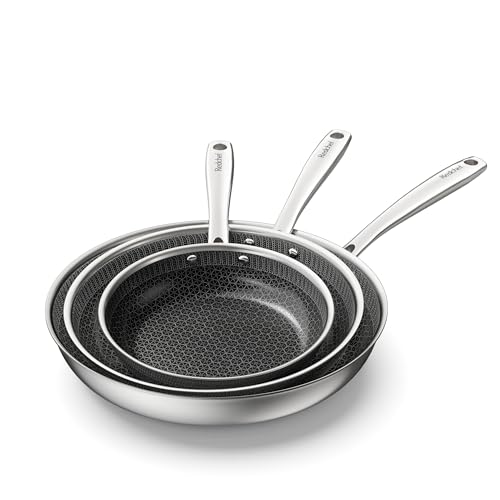
Redchef Hybrid Ceramic Nonstick Honeycomb Fry Pan Set

Redchef Ceramic Non Stick Frying Pan Set, 4-Piece (Beige White)

Blue Diamond 10 Piece Hard Anodized Ceramic Nonstick Cookware Set

Sur La Table Kitchen Essentials Cool Commune Hard Anodized 10-Piece Cookware Set

Chef Power Ceramic Cookware Set, 10-Pcs
The Picks, Examined More Closely
This three-pan set covers the sizes most cooks actually reach for: 8, 9.5, and 11 inches, with a lid on the 9.5. Redchef bonds its ceramic surface to the pan through a plasma-based titanium fusion process, which in plain language means the coating is fused under intense energy rather than just sprayed on. For someone frying eggs every morning, that bonding is the difference between a pan that lasts and one that dulls by spring.
Compared with the hybrid Redchef later in this list, this one trades searing muscle for smoother release. In most kitchens that is the right trade.
The Practical Payoff
- Three graduated sizes mean one pan for eggs, one for sautés, one for family portions.
- The fused titanium-ceramic surface is built to resist the flaking that commonly ends cheap nonstick pans early.
- Smooth release lets delicate fish and eggs slide out, so weekday cleanup takes seconds.
- A lid on the 9.5-inch pan adds simmering and steaming flexibility the others lack.
Things To Consider
- Skillets only, so you will still need pots; the Chef Power set fills that gap.
- Like most ceramic coatings, it tends to last longest with low-to-medium heat and silicone tools.
Quick Facts
Who It Suits Best
Everyday home cooks who want a dependable skillet trio and already own pots.
Where A Sibling Pick Shines
Cooks who sear steaks at high heat will get more from the Redchef Hybrid Honeycomb set instead.
Where the titanium set above leans gentle, this one is built for force. A precision-etched stainless steel honeycomb raises steel peaks above recessed nonstick valleys, so you get the sear and scrape tolerance of steel with ceramic release underneath. The three sizes stretch from 8 to 12 inches, and the larger top end matters when you are browning a batch of chicken thighs for four.
The honest read is that hybrid surfaces feel different under a spatula; food releases well but not quite as effortlessly as on the smooth Redchef titanium pans. For weeknight stir-fries and weekend steaks, most owners find that a fair exchange.
Reasons It Performs
- Steel peaks tolerate metal utensils and high-heat searing that plain ceramic coatings resist poorly.
- The 12-inch pan handles one-pan meals for a family without crowding.
- Induction-compatible base suits modern glass stovetops.
- Protected nonstick valleys keep eggs and pancakes releasing cleanly between sears.
Small Caveats
- The textured surface holds slightly more residue in the etching, so a soft brush helps during washing.
- No lids are listed for these pans, unlike the titanium set’s 9.5-inch.
The Right Fit
Confident home cooks who sear, fry, and stir-fry often and want pans that shrug off heavy use.
Swap It Out When
Gentle, low-oil egg cookers will prefer the smoother Redchef Titanium set at the top of this list.
This four-piece set is the friendliest entry point here. Its ceramic coating is made without PFAS, PFOA, or PTFE, the fluorinated chemicals often found in older nonstick formulas, which matters to cooks who want a simpler ingredient list on their cookware. The standout spec is the 4.0mm flow-formed aluminum base; thicker bases spread heat evenly and resist the warping that thin pans develop on high-output burners.
Redchef also describes a “vortex oil effect” where oil pools toward the center, and while that sounds like marketing, an even-heating base genuinely does make oil behave more predictably. Against the ten-piece Blue Diamond set, this is a skillets-first choice with a softer look in beige white.
Well-Handled Touches
- The 4.0mm thick base fights hot spots, so sauces and pancakes brown evenly across the surface.
- Ceramic interior made without PFAS, PFOA, or PTFE appeals to cautious cooks.
- Little to no oil is needed for eggs and fish, trimming calories and cleanup alike.
- The warm beige finish looks at home on open shelving.
Points To Note
- As a frying-pan set, it leaves sauces and soups to other pots.
- Ceramic coatings generally prefer hand washing to stay slick longer.
Core Details
Made For
First-time cooks and small households who want quality skillets without committing to a full cabinet of pots.
Consider Something Else When
Anyone furnishing a whole kitchen from scratch should look at the Blue Diamond ten-piece set instead.
This is the set I would point a whole-kitchen shopper toward first. Blue Diamond applies its diamond-infused ceramic coating over hard anodized aluminum, and the company states this line is substantially harder and longer-lasting than its classic pans. Hard anodizing, briefly, is an electrochemical treatment that densifies aluminum, making it tougher and less prone to reacting with acidic food.
Ten pieces means frypans, pots, and lids covering nearly every routine meal, and the coating is rated metal-utensil safe, a rarity worth pausing on. Owners commonly report the dark anodized exterior hides wear well over years of stove time, though no ceramic coating is immune to gradual dulling.
The Helpful Details
- Hard anodized bodies resist dents and corrosion better than bare aluminum.
- Metal-utensil-safe coating removes the constant worry about scratched surfaces.
- Ten pieces outfit a kitchen in one purchase, from morning eggs to evening pasta.
- Diamond-infused ceramic is designed for easy release with less oil.
Things To Weigh Up
- A ten-piece set needs real cabinet space, a squeeze in small apartments.
- Ceramic nonstick still fades faster than bare stainless with years of high heat.
Whose Shelf It Belongs On
Households replacing an entire mismatched pot collection in one go.
Reach For A Different Pick When
Shoppers wanting a curated lidded lineup with a Dutch oven should compare the Sur La Table set below.
The Sur La Table set is the most thoughtfully assembled lineup here. The box holds two frypans (8 and 10 inches), two lidded saucepans (1.4 and 2 quarts), a 3.3-quart lidded sauté pan, and a 4.85-quart Dutch oven. That composition reads like someone planned actual menus: saucepans for grains and sauces, the sauté for braises, the Dutch oven for soups and Sunday chili.
The forged aluminum bodies carry a hard anodized exterior with a ceramic interior made without PFAs, and the whole set is induction compatible, so it travels well between older gas ranges and newer induction cooktops. Compared with the Blue Diamond set, you trade diamond-infused hardness for a more complete lidded shape selection.
Bright Spots
- Six vessels with matching lids cover boiling, braising, and slow simmering in one purchase.
- Forged aluminum construction is denser and steadier than stamped pans.
- Induction compatibility future-proofs the set against stovetop upgrades.
- The 4.85-quart Dutch oven handles one-pot meals for a table of guests.
Worth Noting
- Storing six lidded pieces takes a deep cabinet or a pot rack.
- Ceramic interiors are best preserved with gentle sponges rather than scouring pads.
Feature Snapshot
Who Should Grab It
Home cooks who host and want one coherent, lidded set rather than piecemeal purchases.
Another Choice May Suit
Small-space cooks should weigh the compact Redchef 4-piece beige set instead of a ten-piece cabinet commitment.
Chef Power closes the list with the most flexible stove story of the bunch. The ten-piece set works on induction, gas, electric, and ceramic stovetops, and the bodies are oven-safe to 450°F with silicone glass lids rated to 350°F. For a household that bakes a frittata after starting it on the burner, that oven range is genuinely useful.
The stone-derived ceramic coating is made without PFAS, PTFE, PFOA, lead, or cadmium, and stainless steel handles stay cool enough to grip without a folded towel. Next to the Sur La Table set, this one leans practical and easy-care, with dishwasher-safe bodies for busy weeknights, though hand washing is still the kinder long-term habit for any ceramic surface.
Positive Points
- True all-stove compatibility removes any guesswork about your cooktop.
- Oven-safe to 450°F supports burner-to-oven recipes without transferring dishes.
- Dishwasher-safe bodies make post-dinner cleanup a one-step job.
- Coating made without lead, cadmium, or fluorinated chemicals suits cautious kitchens.
Less Ideal Details
- Glass lids capped at 350°F limit covered oven baking compared with all-metal lids.
- Dishwasher cycles, while permitted, tend to dull ceramic release sooner over the years.
Who Will Love This
Busy families on mixed or older stovetops who want one forgiving, low-maintenance set.
Look Elsewhere When
Serious sear-first cooks will be happier with the honeycomb steel surface of the Redchef Hybrid set.
What Matters Most Before Choosing Hard Anodized Ceramic Cookware
Match the Set to Your Stove and Space
Induction bases need ferrous metal, so confirm compatibility before anything else. A ten-piece set rewards a family kitchen but swallows a small apartment’s cabinets. Count your burners and your storage honestly first.
Coating Chemistry and Thickness
Ceramic interiors made without PFAS, PFOA, or PTFE appeal to cooks avoiding fluorinated coatings. Base thickness matters just as much: a 4.0mm flow-formed base resists warping and spreads heat evenly. Thin bases cost less and disappoint faster.
Oven Limits and Lids
Check both body and lid ratings; a 450°F body with 350°F glass lids constrains covered baking. Metal lids tolerate more heat. Think about the recipes you actually finish in the oven.
Care Habits Over Time
Ceramic surfaces last longest with medium heat, silicone tools, and gentle washing. Dishwasher-safe labeling is convenient, but hand washing preserves release. Your habits predict lifespan more than the logo on the box.
Key Considerations Across These Picks
Where Shoppers Go Wrong
The most common slip is buying a ten-piece set for a two-burner studio, then storing half of it in the oven. Another is cranking a ceramic pan to maximum heat, which shortens its slick life quickly. Size the set to your stove and cook low to medium.
The Case For Spending Up
Higher-tier sets pay for harder anodized bodies, thicker bases, and coatings engineered to bond better. That translates into years of even heating and fewer replacements. Frequent cooks recover the difference; occasional cooks rarely need to.
Frequently Asked Questions
Is hard anodized cookware safe for daily cooking?
Hard anodizing seals the aluminum surface, making it harder and less reactive. Cooked with normal care, it is a widely used material in everyday kitchens.
How long does a ceramic nonstick coating last?
With medium heat and gentle tools, many owners report two to five years of good release. High heat and metal scouring shorten that considerably.
Can I use metal utensils on these pans?
Only where the maker says so, such as the Blue Diamond set’s metal-utensil-safe coating. On most ceramic surfaces, silicone or wood is the safer habit.
Do I still need oil with ceramic nonstick?
A light amount helps browning and flavor even though release works with little to none. Completely dry cooking can stress any coating.
Are these sets dishwasher safe?
Some, like the Chef Power set, allow dishwasher cleaning. Hand washing keeps the ceramic surface slick for longer in most cases.
Closing Thoughts
Every set here solves the same core problem, keeping food moving without fluorinated coatings, just at different scales. Start with the Redchef titanium trio for daily skillets, the Blue Diamond or Sur La Table sets for a full kitchen, or the Chef Power set for mixed stoves and easy cleanup. Match the piece count to your cabinets, treat the coating gently, and any of these should serve you well for years of ordinary dinners.
