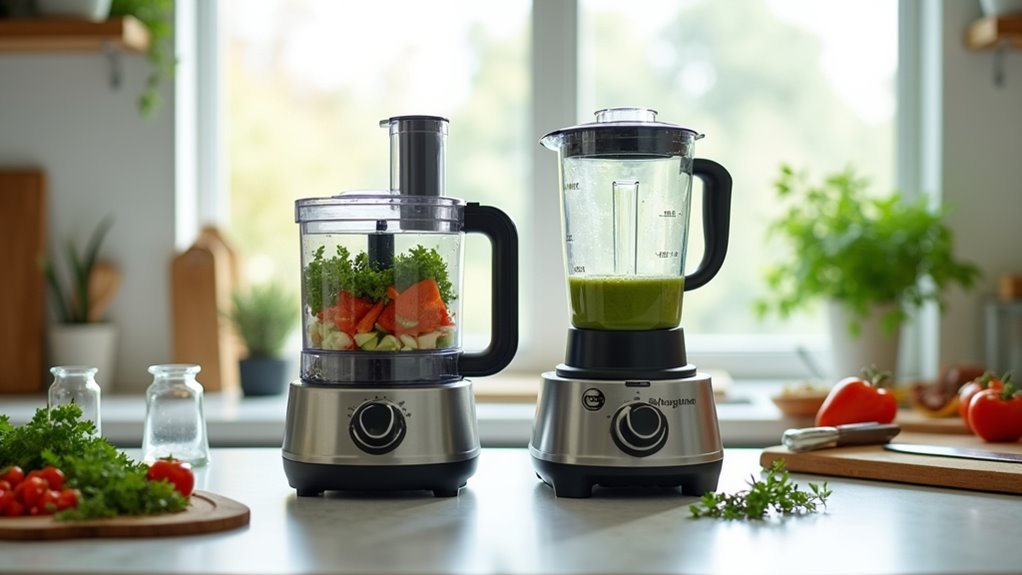
A blender handles liquids, smoothies, soups, and emulsified dressings best. A food processor excels at chopping, shredding, slicing, and mixing dough. Choose a blender for smooth textures and a food processor for more precise, chunky prep. Many kitchens benefit from having both tools for different tasks. The right choice depends on the recipes and textures you prepare most often.
Which Is Better for Meal Prep?
At the time you’re trying to get a week’s worth of meals ready without spending all day in the kitchen, the better tool depends on what you make most often.
In case you chop big batches of vegetables, a food processor usually feels like your teammate. It shreds, slices, and dices fast, so you can build salads, slaws, and hash browns without sore wrists.
Should you lean on smoothies, soups, sauces, or nut milks, a high-speed blender gives you smoother results and handles ice with ease.
For dough or thick batters, the food processor saves more effort.
In the event your kitchen feels tight, space saving combos can help, and one motor can improve energy efficiency.
Blender vs Food Processor: The Main Differences
Once you know what you cook most often, the next step is seeing why these two tools act so differently.
A blender uses a tall jar and upward-angled blades, so it pulls food into a strong vortex. That jar circulation helps you smooth soups, smoothies, and ice with ease.
A food processor, in contrast, uses a wide bowl and different blade geometry, so it handles thicker, drier prep with more control. You’ll notice the texture right away: blenders make silky purées, while processors leave chunkier cuts and a more rustic finish.
Capacity also matters, because blender jars hold more liquid, while processor bowls need space for safe chopping. Some tasks overlap, but they’re not truly interchangeable. Choose the one that fits your kitchen rhythm.
What a Food Processor Does Best
Whenever you want fast chopping and neat slicing, a food processor saves you time and keeps your prep looking clean.
You can also use it for grating cheese, shredding veggies, and mixing dough, so one machine handles a lot of meal prep jobs.
On busy days, its wide bowl and strong pulses help you make bigger batches without feeling rushed.
Chopping And Slicing
A food processor really shines whenever you need to chop or slice a lot of food fast, because its wide bowl, sharp S-blade, and slicing discs do the hard work for you in seconds.
You can set your speed calibration by pulsing for coarse stew pieces or finer salsa bits, and that helps with texture retention too.
Since the bowl is wide and flat, you can handle big batches without crowding, so your prep feels calm instead of chaotic.
The feed tube and pusher also keep long foods like potatoes and zucchini moving safely, which makes coleslaw or gratins easier to build.
Whenever you want neat slices, the disc gives you even pieces that look and cook alike, saving you time and keeping your kitchen rhythm steady.
Dough And Grating
Kneading dough and shredding ingredients are two places where a food processor really saves you time and effort. You can mix cold doughs in its wide bowl, and the dough blade works gently at low speed. That helps you build bread or pizza dough without beating it into a tough mess. Most 12 to 16 cup models can handle enough dough for several loaves, so you’re not stuck doing it manually.
It also shines whenever you need even grating. The slicing and shredding discs make quick, uniform shreds of cheese or carrots, and the pulse button gives you grating-style crumbs for breadcrumbs or nut meals. Should you’ve ever wished for better microplane alternatives, this is your friendly shortcut. You’ll spend less time grating and more time feeling ready for dinner.
Batch Prep Power
Big meal prep gets a lot easier once you move past dough and grating, because a food processor really shows its strength in batch jobs. You can fill its wide bowl with cabbage, carrots, or potatoes and get more done in minutes than you’d do manually.
With slicing and shredding discs, you make even pieces for coleslaw, hash browns, or casserole cheese, so every bite feels right. Then the S-blade and pulse control help you choose fine salsa or coarse riced cauliflower for several meals.
Because large feed tubes take halved ingredients, you skip extra chopping and keep moving. These time saving techniques and ingredient batching strategies make your kitchen feel calmer, faster, and more like a team effort.
What a Blender Does Best
Blenders really shine whenever you need speed and smooth texture in one shot. You can count on them for silky smoothies, heated soups, and other liquid-heavy jobs that need a creamy finish. Their strong vortex pulls ingredients down, while fast blades break everything into a uniform mix.
Should you use a high-powered model, you can even crush ice, frozen fruit, and nuts for nut milks or nut butters with less effort. Because the pitcher is tall and narrow, you’ll want enough liquid so everything moves well. That’s why blenders work so well for emulsified dressings, milkshakes, protein shakes, and small-batch purées like baby food or hummus.
Whenever you desire smooth results fast, a blender fits right in with your meal prep routine.
Food Processor vs Blender: Side-by-Side Tasks
Whenever you’re chopping vegetables or shredding a big batch, a food processor usually saves you time and gives you even pieces.
But if you want smooth smoothies, silky soups, or frozen fruit blends, a high-speed blender does the job better.
For dough, batters, and fine emulsions, you’ll usually get the best results by matching the task to the tool.
Chopping vs Blending
For meal prep, chopping and blending could seem close, but these tools handle them very differently.
Whenever you want speed control and texture contrast, a food processor gives you the edge. Its wide bowl and S-shaped blade help you chop, dice, shred, or make crumbs in bigger batches, so you stay steady and in charge.
A blender works in a taller jar, pulls food into a vortex, and pushes everything toward a smooth purée. That’s great for soups or smoothies, but not for a tidy chop.
Supposing you’re making salsa or hummus, both can work, yet the processor keeps more chunk and handles bigger pieces with less fuss.
Best Tasks For Each
Although both tools can help with meal prep, they shine in different jobs, and that’s where your kitchen gets easier. Choose the right one, and you’ll move faster with less stress.
| Food Processor | Blender |
|---|---|
| Slice, shred, and batch prep | Smoothies, sauces, and soups |
| Dough, crumbs, salsa, riced cauliflower | Nut milks and silky purées |
| 6 to 14 cup bowls for big loads | Best with liquid-forward mixes |
Use the food processor whenever you want speed settings for chunky tasks, like cabbage, potatoes, or cheese. It also handles dough and breadcrumb work without much fuss. Reach for the blender whenever you need a smooth vortex for frozen fruit, hot soups, or green drinks. Should you’re sharing cleanup tips with your meal-prep crew, rinse right away and wash lids well. That small habit keeps your gear ready, and your prep team feeling on track.
Best Foods for Each Appliance
Your best results often start with matching the food to the machine, because each appliance has its sweet spot. Use a blender for liquids, soft fruit, and warm soups, where you want a silky finish. It turns smoothies, puréed tomato soup, and dressings into a smooth blend fast. Should you need a nut allergy safe option, keep your ingredients separate and choose seeds instead.
For texture contrast, the food processor shines with chunkier foods. You can shred cheese, slice potatoes, rice cauliflower, and chop salsa without turning everything to mush. It also handles short pastry and pizza dough well. Whenever you prep for the week, let the processor do the bulk work, then let the blender finish the creamy parts, so your meals feel easy and totally yours.
Can You Swap One for the Other?
Yes, you can swap one for the other in some meal prep tasks, but the match is never perfect. Should you’re chopping salsa, making hummus, or blending a soup, either tool can help you feel right at home in the kitchen. Still, each one shines in its own lane.
- Use a blender for silky soups, smoothies, and purées.
- Use a food processor for slicing, shredding, and dough.
- Expect more liquid in a blender and more pulsing in a processor.
A powerful blender usually handles more wet jobs with less effort, which can support energy efficiency. A food processor often needs more scraping, but it wins on bulky prep.
For maintenance tips, clean blades and lids right away so each machine stays ready for your next meal.
Which One Should You Buy?
Provided that you’re trying to decide which appliance belongs on your counter, start with the meals you make most often. Assuming you live on smoothies, frozen drinks, nut milks, or silky soups, buy a high-speed blender. It crushes ice fast and keeps textures smooth.
In case you cook for the week, shred cheese, slice vegetables, or mix dough, a food processor fits you better. Its wide bowl saves time on bigger prep jobs.
Whenever budget and space matter, choose the one that matches more than 60% of your recipes. Also consider countertop aesthetics and noise levels, since both can affect how happy you feel using it daily. If possible, own both. A blender and a 12 to 16 cup processor work beautifully together, and a hybrid attachment can help you save space.
Frequently Asked Questions
Which Appliance Is Easier to Clean After Meal Prep?
You’ll usually clean a blender faster after meal prep, since its simpler shape helps. Still, you’ll feel at home with either provided you choose dishwasher safe parts and blades that can be detached for easy cleanup.
Do Blenders or Food Processors Use More Countertop Space?
You’ll usually need more countertop space for a food processor, but I’d evaluate that theory against your setup. A footprint comparison shows both fit well with smart countertop organization, so you can feel at home.
Which One Is Better for Hot Ingredients?
You’ll usually want a blender for hot ingredients; it handles hot blending better, with better heat tolerance and steam handling. You’ll still need scald prevention—vent the lid and start slow, so you stay safe together.
Can Either Appliance Handle Frozen Fruit Safely?
Yes, either can handle frozen fruit safely provided you follow safety precautions and do not overfill it. You will get different texture results, so choose what fits your recipe and the smooth, welcoming results you want.
How Do Noise Levels Compare Between the Two?
You’ll usually find blenders louder, with a sharper motor hum, while food processors sound lower and steadier. Check decibel ratings before you buy, so you can choose the quieter fit for your shared kitchen space.