Microwaving some foods causes steam buildup, uneven heating, sparks, or chemical leaching that create messes or hazards. Whole eggs can explode, metal sparks and fries cause fires or ruined food, and plastic containers can release harmful chemicals into meals. Certain fruits and sausages launch hot bursts, while bread and pizza become rubbery or soggy. Some sauces heat unevenly, producing dangerously hot pockets. Read on for clear, practical guidance on which items to avoid and safer ways to heat common foods.
What Should Never Go in a Microwave?
Because a microwave can turn a small mistake into a big mess fast, you need to be careful about what you put inside it.
Skip whole eggs in shells and unpierced yolks, since trapped steam can make them burst.
Avoid grapes too, because clustered fruit can spark.
Keep unlabeled plastic and foam out of the microwave, and choose safer containers instead.
You should also stay away from infant formula and breast milk, since hot spots can burn a baby’s mouth.
Should you heat bacon, hot dogs, sausages, or thick cream sauce, use extra care because they can cook unevenly and split.
Metal utensils can spark, and wooden skewers can overheat.
Whenever you’re unsure, pause and check the label or use a different method.
Why Pizza and Bread Turn Soggy
As you microwave pizza, the crust soaks up steam from the sauce and toppings, so that crisp base turns soft fast.
Bread does something similar, since the heat hits unevenly and leaves the inside rubbery while the outside loses its texture.
Because microwaves can’t dry the surface enough to bring back that oven-crisp bite, your slice or loaf ends up soggy instead of satisfying.
Pizza Crust Turns Soggy
Most of the time, microwaving pizza seems like a quick fix, but it usually wrecks the crust initially. You lose that lovely cheesy pull and the crust resilience you want from a good slice.
As the microwave heats the sauce and toppings, moisture rushes into the crust and softens it fast. At the same time, uneven energy makes steam pockets under the base, so it turns limp and a little rubbery. You might also get odd chewy hot spots that stiffen as the slice cools.
Since a microwave can’t brown or re-crisp the surface, the oven-made texture never returns. Should you want your slice to feel like part of the crowd again, use an oven, air fryer, or hot skillet instead.
Bread Becomes Rubbery
At just about a minute in the microwave, bread starts to lose the texture you wanted in the initial place, and that change can feel a little disappointing.
You’ll notice the crumb structure tightening as starches heat unevenly, trap steam, and turn the inside gummy. Then the crust softens, so your slice bends instead of giving you that clean snap.
In case you reheat pizza, the sauce and toppings push even more moisture into the bread, which makes the edge limp and the middle rubbery. As it cools, those starches harden into chewy spots, and that’s no fun whenever you’re trying to eat with the group.
For better results, use oven revival, a skillet, or an air fryer. Dry heat drives off moisture and helps restore the bite you recall.
Why Fried Foods Lose Their Crunch
Fried foods lose their crunch in the microwave because the appliance works against the very texture you’re trying to save. The steam softens the crumb structure, so the coating turns limp fast.
| What you see | What’s happening | Result |
|---|---|---|
| Golden crust | Water molecules vibrate | Steam builds |
| Crisp breading | Oil migration starts | Coating gets soggy |
| Hot spots | Uneven heating | Some bites go greasy |
| Cold center | Trapped moisture | Chewy middle |
You want that shared, satisfying crunch, but microwaving blocks it with no dry heat to re-brown the crust. Instead, the outside stays soft while the inside dries out in patches. Should you need to reheat fried food, use an oven, air fryer, or hot skillet. A few minutes at 300 to 375°F can help drive off surface moisture and bring back the bite you miss.
Why Eggs Can Explode in the Microwave
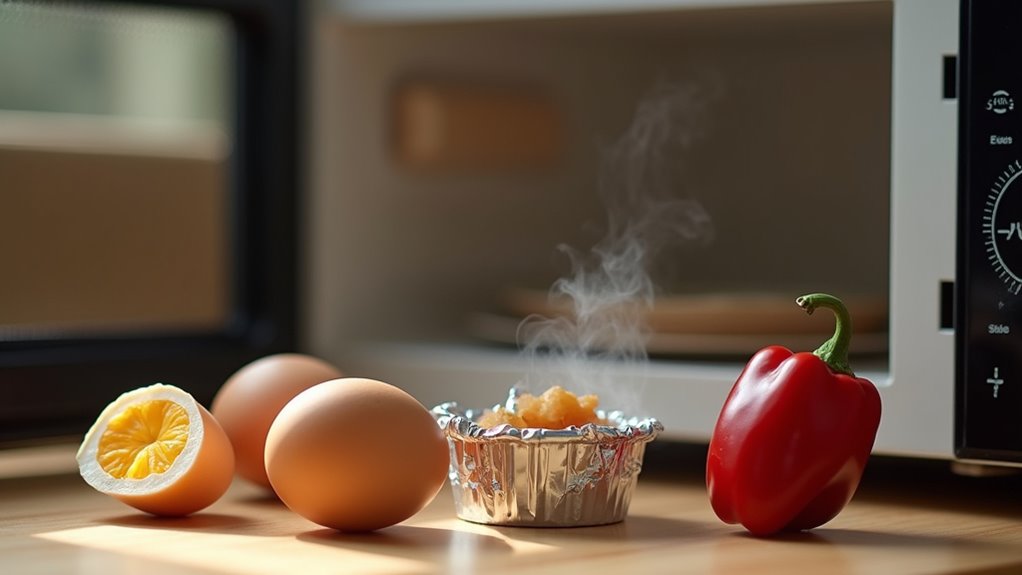
As you microwave a whole egg, the water inside heats up fast and turns into steam, but the shell traps it.
That pressure can build in the yolk or under the shell until the egg bursts and sprays hot bits around the oven.
To lower the risk, you should pierce the yolk or shell initially, or reheat cooked eggs in small pieces with low power and short bursts.
Steam Buildup Inside Shell
Eggs can turn from harmless to hazardous fast in the microwave, because the heat builds pressure inside the shell faster than the steam can escape. When you zap an in-shell egg, tiny pores can’t handle the rush, so pressure venting fails and shell integrity breaks down.
You might hear a pop, but the real danger comes whenever the shell bursts and sprays hot egg and sharp fragments. Should you be cooking eggs, you want your kitchen to feel safe, not like a surprise zone. That’s why experts advise you to avoid microwaving whole eggs.
In the event you have to heat one, fully submerge it in water and cover the dish, but even then, risk stays high. Piercing the egg helps vent steam and lowers the chance of a messy, painful blast.
Yolk Pressure Pockets
Because the heat rises so fast in a microwave, the yolk can become a tiny pressure pocket that has nowhere safe to go.
You could suppose an egg is simple, but yolk pressure can build fast inside the center while steam pockets form around it. That trapped moisture superheats, then bursts out all at once.
Should you microwave a whole egg or a peeled hard-boiled egg, the shell or white can hold the heat in just long enough for a sudden pop. Then hot bits and scalding liquid can fly out and sting you or ruin your meal.
So, whenever you see that smooth yolk, bear in mind it can hide danger.
It’s wiser to treat eggs with care and keep your kitchen calm, not chaotic.
Safe Microwave Egg Methods
Microwaving eggs can feel like a quick fix, but it can also turn risky in a flash whether you don’t handle them the right way. Steam traps inside whole eggs fast, so pressure can burst the shell or yolk. Use these safe moves and you’ll cook with confidence.
| Method | Safe step |
|---|---|
| Peeled egg | Pierce yolk and white with a fork or toothpick. |
| Scrambled egg | Cook on low power in 20 to 30 second bursts, stirring often. |
| Hard-boiled egg | Warm in hot water for 3 to 5 minutes. |
For microwave poaching, keep the egg out of the shell and watch every second. In case you ever try shell eggs, submerge them in water and cover the cup, but expect a mess. These steam release techniques help you stay calm, safe, and part of a smarter kitchen crowd.
Why Grapes, Hot Peppers, and Foil Spark
Grapes, hot peppers, and foil can all turn a microwave into a trouble spot, even though they seem harmless at first. Whenever you split grapes or pack them close, you create tiny antennas that focus energy between them. That heat can trigger microwave plasma, so you might see bright sparks and hear popping.
Hot peppers act differently. As they warm, they release capsaicinoids that become chemical aerosols, and those fumes can sting your eyes, throat, and lungs upon opening the door.
Foil is risky because metal reflects waves and builds sharp currents at edges. Even a crumpled piece can spark, scorch food, and damage the oven.
Should you want a safer kitchen, keep these items out and use containers made for microwave use instead.
Why Plastic and Styrofoam Can Leach Chemicals
Even though a plastic cup or foam takeout box looks sturdy, heat can quietly change what it releases into your food. Whenever you microwave unlabeled containers, you invite plastic leaching and styrene migration. That can add BPA, phthalates, microplastics, and other unwanted bits to your meal. Provided the bottom lacks the wavy microwave symbol, skip it. | Container type | Risk |
| — | — |
|---|---|
| Single-use plastic tub | Cracks and sheds chemicals |
| Styrofoam cup | Releases styrene faster |
| Microwave-safe glass | Safer for reheating |
You deserve food that feels safe and fits your routine. So, move leftovers into glass or ceramic initially. Also, avoid cracked, discolored, or greasy plastic, since heat makes them deteriorate quicker. This simple habit helps protect you, your family, and every warm bite.
Why Processed Meats and Frozen Meat Are Risky
Once you heat processed meats like bacon, hot dogs, sausages, or deli slices in the microwave, you’re not just warming them up, because the quick, uneven heat can change what’s inside them. That can push nitrate formation and raise compounds tied to cancer and heart trouble.
High-fat meats are especially tricky, since the microwave can crowd heat into oily spots and enhance cholesterol oxidation products.
Frozen meat brings a different risk. Uneven thawing can leave some parts in the danger zone while other parts stay icy, and that gives germs a chance to grow. It can also make steaks tougher and drier, with edges partly cooked before the center awakens.
For your own peace of mind, skip the microwave whenever you can and keep your meals safer and more satisfying.
Safer Ways to Reheat Leftovers Without a Microwave
Leftovers can taste just as good the next day, but the microwave often turns them soft, rubbery, or unevenly hot.
Use oven reheating for pizza, fries, fried chicken, and other breaded foods. Set your oven to 375°F, or use a 350°F air fryer, and heat them 5 to 8 minutes until they reach 165°F. Keep them on a wire rack so the coating stays crisp.
For pasta and creamy sauces, choose stovetop simmering instead. Warm pasta over low heat with a splash of water or milk, then stir often. For sauce, add a little cream or milk and keep stirring.
Should you be finishing frozen meat, thaw it initially in the fridge, then sear or bake it straightaway.
Frequently Asked Questions
What Four Foods Should Never Be Reheated?
You shouldn’t reheat hard boiled eggs, grapes, creamy sauces, or bread based foods. Eggs can explode and cause burns, grapes may spark, sauces can split, and bread turns soggy. Choose safer alternatives for leftover rice and other dishes and reheat them carefully.