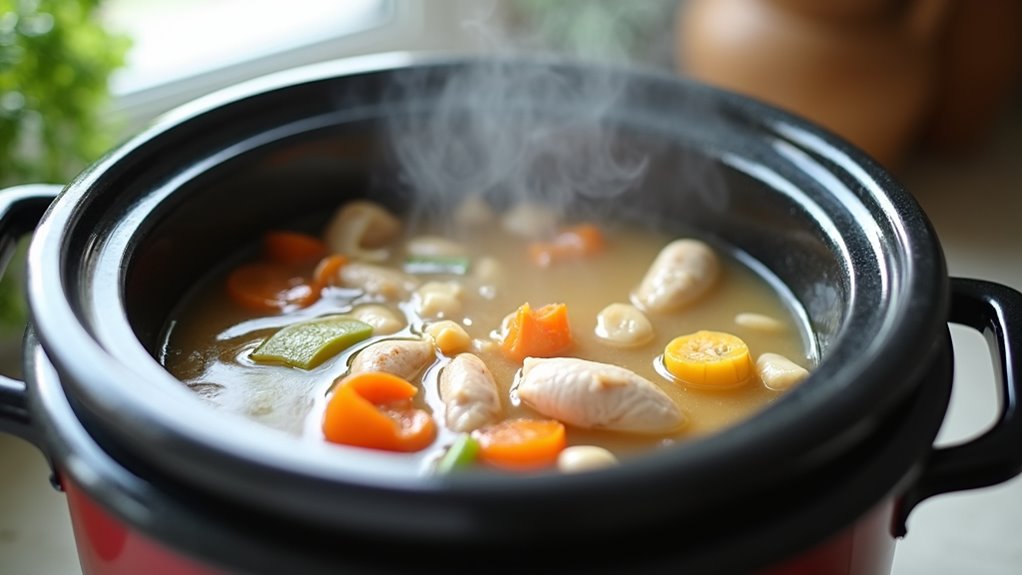
Slow cookers leave food underdone for clear, fixable reasons. Using the wrong size pot or packing it too full prevents even heat circulation. Stacking ingredients so heat can’t reach them slows cooking. A cooker running cooler than labeled, excess liquid, or frequent lid lifting also delays doneness. Change these habits and meals cook reliably.
Why Your Slow Cooker Food Is Undercooked
When your slow cooker keeps leaving food soft on the outside but stubbornly firm in the middle, you’re not doing anything “wrong” so much as missing a few heat rules that matter a lot.
Initially, check slow cooker calibration, because a cool-running unit can fool you.
Then consider altitude adjustments, since higher locations often require longer cooking.
Denser root vegetables do belong on the bottom, but 1 to 1.5 cm pieces can still stay tough should you run High for under 6 to 8 hours total in that layer.
Also, too much liquid or a heavy sauce can block heat, so keep the pot about half to three-quarters full.
Lastly, should you start vegetables alone, then cover them with chicken later, they might lose the steady heat they need to finish.
Stop Lifting the Lid Too Often
A slow cooker can seem like it’s lagging even after you fix the usual heating issues, but one small habit can still throw it off: lifting the lid too often. Each peek causes steam loss, and that lets hot air escape with it. Then the cooker must work on temperature recovery, which can add 20 to 30 minutes each time.
During the opening few hours, that matters even more because the pot is still building to a steady simmer. So, trust the process and keep the lid on as much as you can. Should you need to check doneness, wait until the end, then lift fast and close it right away. You can also use a probe thermometer or a viewing window to stay in the loop without disturbing the heat.
Choose the Right Slow Cooker Size
The right slow cooker size can make a huge difference, even provided your recipe and settings are spot on. Whenever you handle capacity selection well, you help your food cook evenly and feel more like a win at dinnertime. Most recipes assume a 6-quart pot, so cooker scaling matters.
In the event that you use a much larger or smaller unit, heat spreads differently and cook times shift. Aim for a fill level between half and three-quarters full, because that midrange supports steady heat.
A too-small cooker can crowd big pieces, so cut root vegetables to 1 to 1.5 cm, or choose a larger pot. In case you switch to a bigger model, give it extra time to warm through. That small adjustment can save the meal.
Don’t Overfill the Crock
Even with the right size cooker, packing it too full can throw off the whole meal. You want your crock about half to three-quarters full so heat can move freely and your food can reach safe cooking temperatures on time.
Whenever you crowd the pot, air circulation drops, steam gets trapped, and the center might stay undercooked while the edges race ahead. A too-full cooker also spills more easily and takes longer to warm up, which can leave you waiting and worrying.
Should you be making a big batch, split it between two cookers or move up to a larger one instead of stuffing everything into one pot. That small change helps your food cook evenly and keeps mealtime stress lower for everyone.
Layer Ingredients for Even Cooking
Start with dense roots like potatoes and carrots on the bottom, since they need the most heat to soften well.
Then place delicate foods like greens, seafood, or dairy on top, so they don’t break apart before the rest of the pot is ready.
You’ll also want to leave enough space and liquid for steady heat flow, because a crowded cooker can turn a cozy meal into a stubborn one.
Place Roots First
A well-built layer can fix a lot of slow cooker trouble. Whenever you focus on root placement, you help the pot share heat better from the bottom up. That’s smart heat mapping, and it keeps potatoes and carrots from staying hard in the center.
- Put roots on the bottom, where the heat is strongest.
- Cut them into 1 to 1.5 cm pieces so they soften together.
- Add meat or other tender items above them.
- Keep the cooker half to three-quarters full, not jammed tight.
If your roots still feel firm, lift the lid only once, shift them closer to the base, and give them 30 to 60 more minutes on high. You’re building a kinder, more even cook every time.
Keep Delicates Up Top
Once the roots are tucked into the bottom, you need to protect the gentler ingredients so they don’t get mushy or lose their flavor.
Keep leafy greens, peas, fish, pasta, dairy, and fresh herbs on top, where they can ride the steaming layer instead of sitting in the hottest zone. That delicate placement helps you stay in control, especially when you’re cooking a meal with mixed textures.
Should you be able to, add these items in the last 20 to 60 minutes, so they finish softly without falling apart. Also, keep quick-cooking vegetables from hiding under heavy meat, because that blocks heat and steam flow.
Whenever your pieces are cut evenly, they all have a fair shot at cooking right, and your slow cooker feels a lot friendlier.
Balance Liquid And Space
Getting the balance right in your slow cooker can make the difference between a cozy, tender meal and a pot that feels stubbornly uneven.
You need enough room for heat to move, but not so much that the food dries out. Aim to fill the crock halfway to three-quarters full, and keep extra liquid light because the cooker traps steam.
Should you be layering a meal, try this:
- Put cut carrots and potatoes on the bottom.
- Add meat above them.
- Use only enough broth to moisten, not drown.
- Keep the lid seal tight, since every peek steals heat.
That steady cover matters even more whenever ambient temperature drops, because your cooker works harder to stay warm.
Put Root Vegetables on the Bottom
Put your root vegetables on the bottom of the slow cooker because that’s where the heat starts.
Carrots and potatoes are dense, so they need that direct bottom heat to turn soft instead of staying firm.
Then layer meat on top so it cooks evenly without blocking the vegetables.
Dense Veggies First
Dense root vegetables should go in initially, because slow cookers heat mostly from the bottom and those heavier pieces need that direct warmth to soften properly.
At the outset you build the pot with carrots or potatoes to begin with, you match root density with heat conduction, so everyone at the table gets a better chance at tender bites.
To keep things even, you can:
- Cut pieces to about 1 to 1.5 cm.
- Keep the layer loose, not crowded.
- Let meat sit above them for gentle steaming.
- Use Low once you’ve got time.
If the chunks stay firm, check your fill level too, since a half to three-quarters full cooker heats more evenly.
You’re not doing it wrong; you’re just giving those sturdy veggies the best seat in the pot.
Bottom Heat Advantage
Start with the vegetables that need the most help, because the slow cooker gives off its strongest heat from the bottom. Put carrots, potatoes, and other root vegetables on the cooker floor, where bottom convection and steady heat can soften them faster. Cut them into 1 to 1.5 cm pieces should you want quicker tenderness.
| Placement | Result |
|---|---|
| Bottom | More heat |
| Smaller pieces | Faster cooking |
| Too packed | Base insulation slows heat |
Should your veggies still feel firm, check the fill level. You want the pot about half to three-quarters full so heat can move around. As you nest roots under meat, they get the best start and stay cozy in the heat. A little space helps every bite belong at the table.
Layer For Even Cooking
Whenever your slow cooker keeps leaving the middle underdone, the way you layer it can make all the difference. You’re not doing anything wrong; you just need better crock placement for steadier heat circulation. Since the cooker warms from the bottom, give dense roots the best seat in the house.
- Put potatoes and carrots on the bottom in one layer.
- Cut them into 1 to 1.5 cm pieces so they cook evenly.
- Fill the pot halfway to three-quarters, not less.
- Keep extra liquid low so veggies stay on the hot base.
If meat sits on top, it can slow the roots below, so add time or start the vegetables initially. With this setup, your slow cooker works alongside you, and dinner feels less like guesswork.
Thaw Meat Before It Goes In
Because a slow cooker warms food gently, putting in frozen meat can throw the whole schedule off and leave you with undercooked dinner and extra worry.
You’ll do better whenever you thaw meat in the refrigerator initially, because that keeps it out of the danger zone and helps your cooker reach safe heat faster.
Follow the thawing timeline on the package or plan ahead for thicker cuts.
Should you be in a rush, use microwave defrosting, then start cooking right away.
Thawed meat also breaks down more evenly, so your roast or chicken turns tender on schedule.
Keep portions reasonable, since big frozen chunks leak extra water and blur flavor.
Pat the meat dry before it goes in, and you’ll give your slow cooker a fair chance to work for you tonight.
Avoid High Heat for All-Day Cooking
Even though the high setting feels like the faster fix, it usually works against you while you’re cooking all day. You want steady temperature profiles, not a rush that hurts texture preservation. High heat can make meat tighten, dry out, or fall apart, and it can leave carrots and potatoes stubborn in the middle.
- Choose LOW whenever the recipe gives you hours.
- Let the cooker rise slowly so starches soften.
- Should your schedule force HIGH, shorten the time and cut root vegetables smaller.
- Trust that HIGH changes speed, not the final safe temperature.
Add Chicken After the Vegetables Start Cooking
Should you add the chicken after the vegetables have already started cooking, you can keep the meat from overcooking while the vegetables keep softening.
You’ll want to give the veggies a head start initially, because they usually need more time than chicken to get tender all the way through.
This timing works best whenever you place the chicken in after the root vegetables have begun to disintegrate, so everything finishes at a better pace.
Vegetable First
A smart initial move is to let the vegetables start cooking before you add the chicken, and that can make a stubborn slow cooker feel a lot more cooperative.
You’ll give the roots a fair shot at softening, especially with smart root placement on the bottom, where the heat is strongest.
- Place carrots and potatoes low for steady heat.
- Cut them to 1 to 1.5 cm so they cook evenly.
- Use pre cooking methods like steaming for 10 to 15 minutes in case they’re dense.
- Then add chicken so the mix cooks together without the veg staying firm.
Provided your cooker runs cool, this order helps you feel less stuck and more in control.
Gentle stirring can also spread the warmth, so everyone in the pot gets a better chance to turn tender.
Chicken Timing
Slide the chicken in after the vegetables have already had a head start, because that timing can save a meal that feels stuck. You’re not just filling the pot; you’re helping the whole team cook together.
Slow cookers heat from the bottom, so vegetables that sit for 4 hours on High perhaps already be near their softest point. In case you drop chicken on top, the steam can crowd the veg, but it won’t push root vegetables much farther.
Follow timing guidelines through nesting the poultry placement among the vegetables, not above them. That helps heat move evenly.
Should you’re starting late, finish uncovered on High for 30 to 60 minutes, or use Low to High timing, so your chicken stays tender and your carrots and potatoes aren’t left behind.
Why Too Much Liquid Hurts Flavor
Too much liquid can flatten a slow cooker meal fast, because the lid traps steam and leaves almost no room for evaporation. You can end up with excess dilution, and that weakens every spice, herb, and broth observation you expected to shine. Since slow cookers run low, they don’t reduce sauce much, so extra water stays put. Many recipes already count the juices from meat, vegetables, and canned foods, so adding stovetop amounts can throw off the balance.
- Trust the recipe’s liquid amount.
- Keep an eye on watery sauces.
- Stir in a cornstarch slurry provided needed.
- Remove the lid and cook briefly on high.
That way, you protect flavor masking and keep your dish rich, cozy, and worth sharing.
Brown Meat and Veggies for Better Results
You’ll get better slow cooker flavor once you brown your meat initially in a hot skillet.
Then sauté your veggies for a few minutes, so they pick up a little color and taste richer in the pot. This simple step can make your dish feel fuller, less watery, and a lot more like a real meal.
Browning Meat First
Browning meat and vegetables initially can make a slow cooker meal taste like it simmered all day in a great kitchen, not just in a pot. You join the people who know that a quick hot skillet step pays off. It builds crust formation, deepens sauce caramelization, and gives you richer flavor.
- Heat a skillet.
- Brown meat 2 to 4 minutes per side.
- Sear vegetables until they pick up color.
- Pour in a little broth or wine to lift the browned bits.
That fast move also drives off surface moisture, so your stew stays less watery and feels better on the spoon. You only spend 5 to 10 extra minutes, yet beef, pork, and root vegetables taste fuller and more welcoming. Should you skip this, your slow cooker can leave your crew feeling underwhelmed.
Sauté Veggies for Flavor
A quick skillet step can change your slow cooker meal from flat to full of life.
Whenever you sauté onions, garlic, celery, or other veggies initially, you help moisture evaporation and build stovetop caramelization that raw crockpot cooking can’t match. In 4 to 6 minutes, they soften, turn sweet, and start sharing savory flavor with the pan.
Then, as you brown meat and scrape up the fond with a splash of stock or wine, you add even more depth to the pot. This small extra step takes only about 10 to 15 minutes, but it helps your vegetables cook more evenly and keeps your sauce from turning watery.
You’ll get a richer, cozier meal that feels made with care.
Add Dairy and Herbs at the Right Time
At the time your slow cooker meal needs dairy or herbs, timing really matters, because the wrong moment can turn a smooth sauce into a separated mess or make fresh flavor fade away. You can keep the dish cozy and balanced whenever you plan ahead and trust the finish.
- Add milk, cream, sour cream, cream cheese, or soft cheeses in the last 20 to 30 minutes.
- Stir hard or aged cheeses in near the end, and heat just until they melt.
- Fold in parsley, basil, cilantro, or dill during the final 5 to 15 minutes.
- Save fresh herb garnishes for serving so they stay bright and fragrant.
If you time dairy and herbs this way, you protect texture and help every bite taste like it belongs.
Skip Pasta Until the End
Provided you want pasta that still has a pleasant bite, skip it until the end, because dried noodles can turn soft and heavy whenever they sit in a slow cooker for too long.
You’ll get better pasta timing if you add small shapes during the last 10 to 15 minutes, or thicker and long pasta during the last 15 to 25 minutes.
Should you need more holding time, cook it on the stove until just al dente, then stir it in right before serving.
Fresh pasta and ravioli need even less time, so give them only 5 to 10 minutes.
Also, bear in mind to reserve liquid, since pasta drinks up sauce fast.
That little step helps your meal stay cozy, saucy, and ready for your table.
When a Slow Cooker Won’t Cook Vegetables Fast Enough
Should your vegetables are still hard while the rest of the meal looks ready, the problem usually comes down to heat reaching them too slowly. You can fix that through giving them a better path to the heat and via stopping little delays that pile up. Try this:
- Put carrots and potatoes on the bottom.
- Cut them into 1 to 1.5 cm pieces.
- Keep the cooker half to three-quarters full.
- Lift the lid less, so steam pockets stay in.
If you use High, the pot should simmer in about 3 to 4 hours; Low needs 7 to 8. Too much liquid, sauce, or insulation effects can also slow softening. You don’t need to fight the cooker; you just need to help heat move through it.
Frequently Asked Questions
Can You Slow Cook in a Le Creuset?
Yes, you can slow cook in a Le Creuset. Use its enameled cast iron in a low oven, then finish with stovetop searing. You will get comforting, tender results with a cozy, homemade feel.