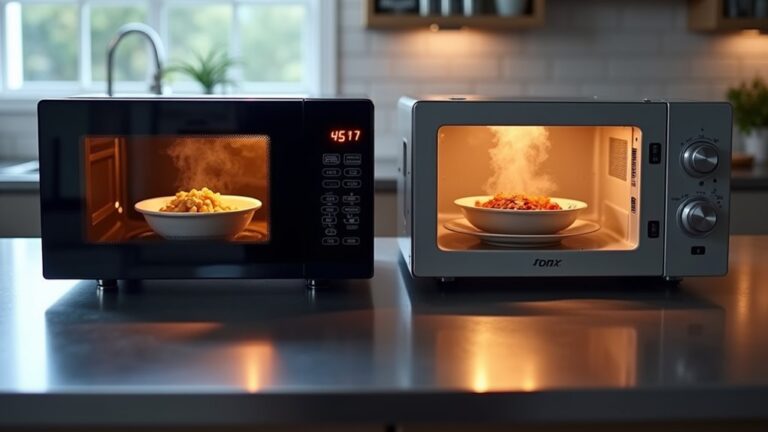
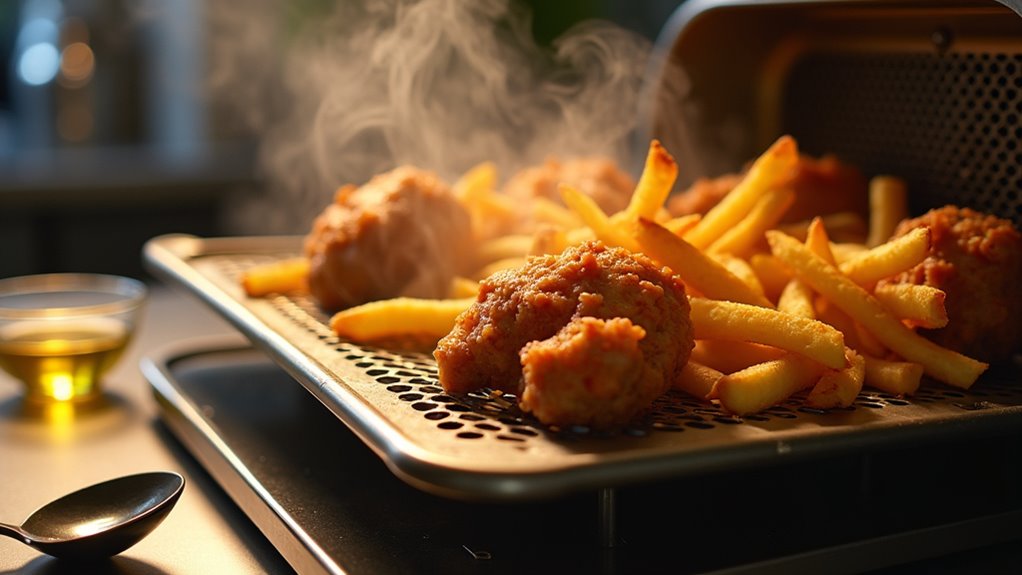
Yes — air fryers can make food crispy with very little oil. They use a powerful fan and concentrated heat to circulate hot air rapidly around food. Rapid air movement dries the surface and promotes the Maillard reaction, producing browning and savory flavors. A shallow, perforated basket exposes more surface area to heat, so oil only needs to coat surfaces lightly. This method reduces oil usage while still delivering a satisfying crispy texture.
What Is an Air Fryer?
An air fryer breaks down the idea of frying and makes it much simpler. You get a portable countertop appliance that fits your kitchen and your routine.
It works like a compact convection oven, so it uses a heating element and a fast fan inside a small chamber. That setup moves hot air around your food and helps it brown evenly.
You also need far less oil, often just a spoonful or none, which can feel like a relief whenever you want lighter meals. Inside, perforated baskets and racks let air reach every side, so your food cooks with a crisp finish.
Since models vary, you can choose a small unit or a larger one with presets for fries, baking, roasting, reheating, and defrosting.
How an Air Fryer Cooks Food
As you turn on an air fryer, it sends very hot air racing around your food in a tight space, and that fast movement does most of the work.
With compact convection, the fan pushes heat over every side, while a top element adds radiant warmth. That combo helps you get rapid browning and a crisp outside without much fuss.
Because the chamber is small, the air stays focused, so your food heats fast and loses surface moisture quickly. You’ll usually see even color and a tender center, which feels pretty great whenever you want a meal that fits right in with your routine.
In many cases, precise temperature control and strong airflow cut cook time, so dinner gets to the table sooner and with less guesswork.
Why Air Fryers Use So Little Oil
The same fast-moving hot air that cooks your food so well also explains why you barely need oil. You’re not trying to soak the food; you’re just helping the surface brown and stay tender.
In the compact chamber, the fan blasts heat across every side, so a light spritz or about 1 tablespoon is usually enough. That small amount supports oil recycling and keeps the basket from drying out, while the perforated tray lets moisture escape fast. With less oil, you can use a better heat-stable oil without wasting it. This also fits texture psychology: a thin sheen can still give you that crisp bite your group craves. Studies show big fat cuts, and some makers report up to 75% less fat.
Air Fryer vs. Deep Fryer
If you compare an air fryer with a deep fryer, the biggest difference is oil and fat use. You can get a crisp, browned finish with little or no oil in an air fryer, while deep frying soaks food in hot oil and usually adds more calories.
That means you might enjoy a lighter result with the air fryer, but a deep fryer still gives you that classic rich, crunchy bite.
Oil And Fat Use
Air fryers usually keep things much lighter on oil, which can feel like a relief provided you love crispy food but don’t want the greasy aftermath. You only need a light coating, or even a quick spritz, so your kitchen stays cleaner and your meals feel easier to manage.
Compared with a deep fryer, which can swallow up about 3 cups of oil, your air fryer might use about 1 tablespoon. That huge gap means you can lean on oil alternatives and practice portion control without losing the foods you enjoy.
Because you’re using so little, you can also choose a higher-quality oil, like avocado oil, and still keep things simple. It’s a small change that helps you cook with more ease and less waste.
Calories And Cooking Results
Because air fryers use far less oil, they usually give you a lighter meal with fewer calories than deep fryers do. You still get that satisfying crunch, but you won’t soak your food in nearly as much fat, so your calories drop fast. Since fat has 9 calories per gram, that smaller oil load matters, especially when you watch portion control.
Air-fried fries often look golden and taste close to the real thing, even provided the texture perception feels a little less crisp than deep-fried versions. Still, the hot air helps you build a browned outside and keep the inside moist. That means you can enjoy a familiar bite with less guilt and more room to share the meal with everyone at the table.
Does Air Frying Cut Calories?
Yes, air frying can cut calories because you usually use far less oil than deep frying.
Since fat has a lot of calories, that swap can lower the calories in your meal without making you give up crispy food.
Provided you use sensible portions and simple ingredients, air-fried versions can be a helpful step should you be watching your weight.
Fewer Calories From Fat
Often, the biggest calorie drop from air frying comes from the oil you don’t use. You still get a crispy feel, but you skip most of the fat that deep-frying adds. Since fat has 9 calories per gram, that swap can save a lot in each serving. For your kitchen routine, this works well with smart oil alternatives and steady portion control.
- You might use about 1 tablespoon or less per recipe.
- Deep-frying can require up to 3 cups of oil.
- Some foods show up to 75% less fat.
- Fries can keep color and moisture with less grease.
When you choose air-fried foods with your crew, you’re not missing out. You’re just making a lighter plate that still feels like part of the group.
Weight Loss Implications
Whenever you swap deep-fried foods for air-fried ones, you can usually cut a lot of calories without giving up that crispy bite you want.
You’re making a smart behavioral substitution that fits real life, so it’s easier to stay with friends and family meals without feeling left out. Air frying often uses about 1 tablespoon of oil per batch, while deep-frying can soak food in cups of oil, and fat packs 9 calories per gram. That difference adds up fast, especially with fries or chicken.
Some trials show fat drops as much as 75%, and acrylamide can fall too. Still, your results depend on portions and the rest of your plate, so long term adherence matters most.
Best Foods for an Air Fryer
Air fryers shine whenever you cook foods that need a crisp outside and a tender inside, and that’s why potatoes, chicken pieces, vegetables, frozen snacks, and small baked treats work so well in them.
You can lean on them for easy meals that still feel cozy and shared.
- Thin-cut fries or chips cook fast, with just a little oil.
- Wings, drumsticks, and breast strips brown nicely and stay juicy.
- Seasonal produce like broccoli, asparagus, peppers, and Brussels sprouts keeps its bite.
- Kid friendly snacks like mozzarella sticks and tater tots crisp straight from frozen.
You can also make cookies or mini cupcakes in short bursts, so dessert fits busy nights too.
How Air Fryers Get Foods Crispy
You get that golden crunch while the air fryer blasts hot air around your food in a small space, so the surface heats evenly and dries out fast.
That steady airflow helps trigger the Maillard reaction, which turns sugars and proteins into brown, flavorful, crispy bits.
With a little oil and a basket that lets air move all around, you’ll get a crisp outside without losing the moist inside.
Hot Air Circulation
Inside the fryer, a powerful fan pushes very hot air around the food in a fast, steady loop, and that moving heat is what helps turn soft surfaces crisp.
You get that hot airflow because the heating element warms the air fast, then the fan sweeps it through the chamber.
With careful chamber behavior, the heat hits each side, so you feel like your food is getting a fair chance.
- A perforated basket lets air reach more of your food.
- The compact chamber keeps heat close and steady.
- A little oil on the surface can help heat spread better.
- Quick circulation helps the outside dry while the inside stays tender.
Maillard Browning Effect
That fast-moving hot air does more than dry the surface, because it also helps trigger the Maillard reaction, which is the chemistry behind deep browning and rich, savory flavor.
You get this magic whenever amino acids and reducing sugars heat up around 285 to 330°F. The air fryer’s strong element and quick airflow raise the surface fast, so browning kinetics move in your favor.
A light brush of oil, about a tablespoon for a batch, helps heat spread and reactants mingle, so you build more flavor compounds.
At the same time, the airflow strips away moisture, which lets a crisp crust form where browning can take over. So you can enjoy that fried-style bite with less oil, less fat, and a lot less guilt on your plate.
What Happens to Acrylamide?
Whenever food like potatoes hits high heat, acrylamide can form as natural sugars and amino acids react during browning, but air fryers often cut that risk down because they cook with fast-moving hot air, less oil, and shorter cook times than deep-frying. You can still enjoy that golden color with a bit more peace of mind. In some trials, air-frying lowered acrylamide by up to 90% in French fries.
- Lower heat can slow formation.
- Less browning can mean less acrylamide.
- Acrylamide metabolism matters whenever your body breaks it down.
- Biomonitoring studies help track exposure in real life.
Still, acrylamide can form provided you push the heat too far. So, for your kitchen crew, keep temps moderate, watch the color, and pull food once it’s just crisp, not dark.
Are Air Fryers Healthier?
Yes, air fryers can be healthier than deep frying because they use much less oil, so you get fewer calories and less added fat.
You might also lower acrylamide in starchy foods, which is a nice win for your kitchen routine.
Still, what you cook, how much you eat, and the oils you choose all shape the real health impact.
Lower Fat, Fewer Calories
Air frying can feel like a small kitchen upgrade, but it often makes a big difference on your plate. You use far less oil, so you usually eat fewer calories than with deep-fried foods. That helps you stay on track with portion control without feeling like you’re missing out. Because fat has 9 calories per gram, every spoonful you skip matters. And since air-fried foods still brown well, your taste perception stays satisfying.
- You might use about 1 tablespoon of oil instead of cups.
- You can cut fat up to 75% in some recipes.
- You get a crisp bite with less heavy greasiness.
- You can choose small amounts of better oils, like avocado oil.
When you want food that fits in with your goals, this swap could feel easy and familiar.
Less Acrylamide Formation
One helpful surprise is that air frying can also lower acrylamide, a chemical that can form whenever starchy foods like potatoes get cooked at high heat.
Whenever you air fry fries or other starchy foods, you usually cut acrylamide much more than with deep frying, sometimes by about 90%. That helps with acrylamide mitigation and can ease consumer perceptions about how safe your snacks feel.
The reason is simple: less oil contact and gentler heat flow keep the surface from getting so hot for so long. You can help even more by choosing lower temperatures, shorter cook times, and stopping before heavy browning starts.
Air frying doesn’t remove every heat-made compound, so smart settings still matter whenever you want a better balance.
Healthier Than Deep Frying
Compared with the greasy soak of deep frying, air frying usually gives you a much lighter result, and that can feel like a relief should you want comfort food without so much extra fat.
You still get browning from hot air and a perforated basket, but you use far less oil, so each bite usually carries fewer calories and less fat.
That can help you keep portions steadier and might lower cardiometabolic risk whenever you build meals around smarter choices.
- Fries can stay golden with less grease
- Crispness drops a little, but color stays
- Less acrylamide could form in starchy foods
- Your culinary skill still matters for results
Even so, you’re still cooking fried-style food, so your overall dietary pattern shapes the health gain.
How to Use an Air Fryer
Start with a quick preheat, and you’ll make the whole process easier from the initial batch. Set your air fryer to the recipe temperature for 3 to 5 minutes, so the hot air can begin crisping right away.
Next, add your food in a single layer and give it a light coat or quick spritz of oil, about 1 tablespoon per batch. That small amount helps browning without making a mess. Should you’re trying recipe swaps, this step also helps veggies, chicken, and frozen snacks turn out better.
During cooking, shake, flip, or turn the pieces halfway through the 5 to 25 minute time range.
Afterward, clean tips matter too: wash the basket or rack, and keep oil out of the heating chamber so your next meal feels easy and welcoming.
Common Air Fryer Mistakes
Even a great air fryer can disappoint in case you make a few easy-to-fix mistakes, but fortunately is that most of them are simple to spot and correct.
Whenever you know the usual traps, you can feel more confident and cook with your crowd. Keep your basket placement smart and leave room for air.
- Don’t crowd the basket; cook in single layers or batches.
- Use just a light spritz of oil, not a heavy pour.
- Preheat for 2 to 5 minutes if a recipe calls for it.
- Skip wet batter and choose dry coating techniques instead.
- Shake, flip, or rotate food once so it browns evenly.
These small changes help your meals crisp better and keep that easy air-fryer comfort you’re after.
Air Fryer Cooking Times and Temperatures
Once you’ve got your basket loaded the right way, the next thing that shapes your results is timing and heat. Most air fryers work best at 320 to 400°F, and your food usually needs 5 to 25 minutes. Use this quick guide for temperature mapping:
| Food | Time |
|---|---|
| Frozen snacks | 5 to 8 min |
| Fish or small chicken | 8 to 12 min |
| French fries | 15 to 21 min |
| Roasted vegetables | 18 to 25 min |
| Small roast | 20 to 25 min |
Start with timing adjustments by checking 2 to 3 minutes sooner. Many recipes also need about 25% less time than your oven, plus a 2 to 5 minute preheat. Should you cook thicker pieces, lower the heat a bit and turn them once. Keep batches small, and you’ll stay right in the groove with everyone else.
Best Oils for Air Frying
The best oil for air frying is usually the one that can handle high heat and still taste good in a small amount. You only need a light brush or mister, so you can focus on browning and flavor without piling on fat.
For high heat, reach for avocado oil or refined sunflower or safflower oil. Should you want a neutral base, canola or light olive oil lets your seasoning shine. Then add personality with a small sesame drizzle or another finishing technique after cooking.
- Brush oil on the food, not the basket.
- Use about 1 teaspoon to 1 tablespoon per batch.
- Pick oils with strong heat stability.
- Match the oil to your flavor pairing and the meal.
Why Air Frying Still Counts as Fried Food
Now that you know how to choose the right oil, it helps to see why air frying still lands in the fried-food family. You still get that crisp shell and rich taste because hot air drives the same browning reactions that make fried food feel satisfying.
In other words, your texture perception tells a true story: the food feels fried, even with only a spoon of oil. Deep-frying could soak food in cups of oil, but air frying uses far less and still builds a crust through heat and fast air.
Cultural definitions matter too, since many people term a dish fried whenever it tastes and looks fried. It also can form heat-made compounds like acrylamide, so you should treat it as fried food, just lighter.
Frequently Asked Questions
Why Do Air Fryers Need Less Oil?
You need less oil because convection circulation surrounds your food with hot air, creating crisp edges and surface browning like a quick warm hug. You still taste belonging at the table with only a light drizzle.