
Hard-anodized aluminum earns its reputation the quiet way: the metal passes through an electrochemical process that thickens its natural oxide layer, leaving the surface harder and far less reactive than plain aluminum. That matters on a weeknight, when tomato sauce simmers for twenty minutes and cheaper bodies start to pit or discolor. My shortlist here covers the full range of kitchen realities, from an eight-piece starter setup to a nine-well paniyaram pan for South Indian breakfasts. Some of these are workhorses, one is a specialist, and a couple are honest budget plays, so the right choice depends on how you actually cook.
The Choices Worth Comparing

Cooks Standard 8-Piece Hard-Anodized Cookware Set

Cook N Home Professional 9.5 Inch Nonstick Frying Pan
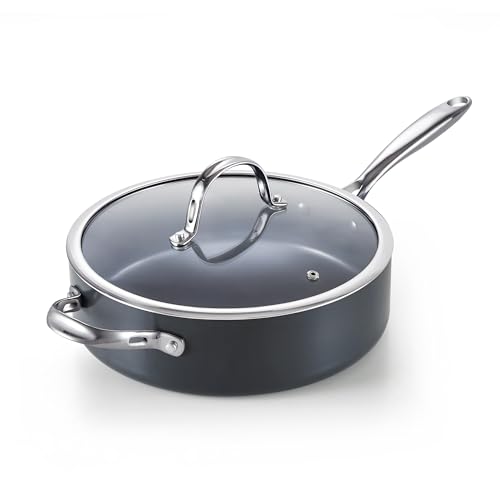
Cooks Standard Classic 4 Quart Deep Sauté Pan with Lid

Cooks Standard 12-inch Nonstick Wok Chef’s Pan 5-Qt
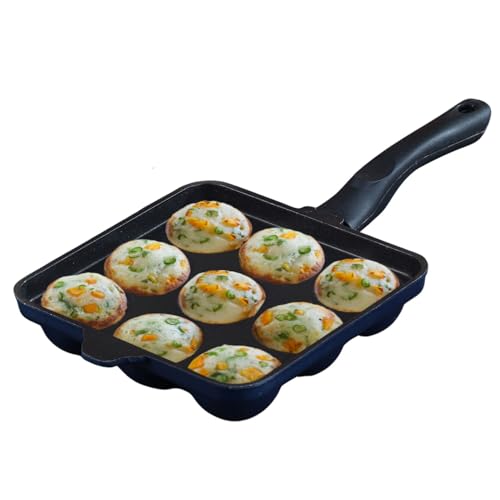
Vinod Non Stick 9-Cup Paniyaram Pan 17.5cm

IMUSA 12 Inch Madera Ceramic Fry Pan
Inside Each Recommended Option
The Cooks Standard set covers a full kitchen in one box: a 2-quart and a 3-quart saucepan with lids, an 8-quart stockpot with its own lid, plus 8- and 10-inch skillets. Everything wears the same bronze hard-anodized finish, treated to resist wear better than ordinary nonstick surfaces. For anyone furnishing a first apartment or replacing a mismatched cabinet, the single-purchase route removes a lot of second-guessing.
In practice, the spread of sizes is the real argument here. Small saucepans handle oatmeal and reheating, the stockpot manages pasta night for four, and the two skillets cover most frying without crowding. The one gap, in my view, is that ceramic nonstick coatings generally prefer medium heat, so hard searing is not this set’s strongest trick.
Well-Handled Touches
- Eight coordinated pieces mean a whole kitchen upgrade without mixing brands.
- The hard-anodized surface holds up to daily stirring better than standard nonstick finishes tend to.
- Every pot and pan ships with a matching lid, which saves the drawer chaos of orphaned lids.
- The 8-quart stockpot has genuine volume for pasta, soups, and batch cooking.
- The matching bronze finish looks intentional on open shelving.
Things To Consider
- Ceramic nonstick layers commonly lose release faster under sustained high heat, so medium flames pay off long term.
- Eight pieces ask for real cabinet space, which matters in smaller kitchens.
At A Glance
Who It Suits Best
First-apartment cooks and anyone replacing a whole mismatched cabinet in one decisive purchase.
A Better Fit Elsewhere
Cooks who already own pots and just need one reliable skillet will get more from the Cook N Home Professional 9.5-inch pan.
Where the Cooks Standard set spreads across a whole cabinet, the Cook N Home skillet bets on doing one job well. The 9.5-inch hard-anodized aluminum body heats fast and evenly, and because the surface is anodized it won’t react with acidic ingredients like tomato or wine. That matters for weeknight stir-fries and sautés where cheaper pans can leave a metallic edge behind.
The stay-cool handle is the detail worth highlighting, since it lets the pan travel from burner to counter without a towel. Cleanup is straightforward too, as the pan is dishwasher safe, though most owners still prefer a quick hand wash to protect the coating. It’s a focused pick rather than a complete solution.
Useful Highlights
- Stay-cool handle keeps the pan comfortable to move mid-cook.
- Hard-anodized aluminum spreads heat evenly, so stir-fries cook without hot spots.
- Dishwasher-safe construction makes cleanup after greasy frying less of a chore.
Worth Noting
- This is a single pan with no lid included, so braising and simmering tasks fall outside its range.
- Like any nonstick surface, it rewards soft utensils; dragging metal spatulas usually shortens the coating’s life.
Made For
Apartment cooks and busy weeknight fryers who want one dependable skillet rather than a full set.
Reach For A Different Pick When
Anyone starting from an empty kitchen gets better value from the Cooks Standard 8-Piece Hard-Anodized Cookware Set.
The Cooks Standard Classic deep sauté sits between a skillet and a pot, and that middle ground is exactly why it earns a spot here. You get 4 quarts of depth in a 10.5-inch pan, so one-pot pasta, braises, and simmering sauces all fit without a second vessel. Compared with the shallower Cook N Home skillet above, this one handles liquid-heavy cooking far better.
The heavy-duty aluminum base conducts heat quickly and evenly, which the brand pairs with a ceramic nonstick interior to keep food from welding to the bottom. It’s also rated for induction cooktops, oven use, and the dishwasher, a rare combination at this level.
Where It Delivers
- 4-quart depth turns this into a genuine one-pot meal pan.
- Induction compatibility opens it to modern cooktops.
- Oven-safe construction lets braises finish in the oven without a transfer.
- Heavy aluminum heats evenly, so sauces simmer without scorching.
Trade Offs
- A deep 4-quart pan takes up noticeable cabinet and burner space.
- The wide 10.5-inch base may overhang smaller burners, depending on your stovetop.
Feature Snapshot
Right Fit For
Home cooks who lean on one-pot meals and want a single pan to replace both skillet and saucepan.
Where A Sibling Pick Shines
Stir-fry-first kitchens will prefer the taller, wok-shaped Cooks Standard 12-inch Chef’s Pan.
This 12-inch wok-style chef’s pan from Cooks Standard brings 5 quarts of capacity, which is enough room to stir-fry a family dinner without cooking in batches. The deep sides suit tossing vegetables, but the brand also positions it for stewing and soups, and the volume backs that up. It’s the most versatile single pan on this list in my view.
The hard-anodized surface is built for scratch resistance and long-term daily use, which shows up in how the pan tolerates years of metal-edged tongs and busy stovetops. Worth weighing though: 12 inches of width wants a generous burner, and 5 quarts of food gets heavy to lift.
Reasons It Performs
- 5-quart capacity handles family-size stir-fries, stews, and soups in one pan.
- The wok shape lets you toss and fold ingredients without spillage.
- Hard-anodized construction resists scratches through daily use.
Minor Gripes
- A 12-inch base needs a wide burner; smaller stoves leave the edges cooler.
- Fully loaded, the pan’s weight challenges one-handed tossing.
Who Will Love This
Batch cooks and stir-fry enthusiasts feeding three or more people on a regular basis.
Swap It Out When
Cooks who find large pans tiring to lift will get similar versatility with less weight from the IMUSA Madera 12-inch fry pan.
Not every hard-anodized pick is a Western skillet, and the Vinod paniyaram pan proves the point. This 17.5cm Indian paniyarakkal molds nine wells of appe, paniyaram, or small pancakes at once, and the 3mm three-ply aluminum body is built to hold heat steadily across all nine cups. For South Indian breakfast routines, nothing else on this list does this work.
The brand notes the surface tolerates metal spoons, which is unusual for nonstick and genuinely handy for turning each ball as it browns. One honest limit: the pan is designed with a gas base, so induction and smooth-top households should plan accordingly.
What Pays Off
- Nine wells cook a full batch of paniyaram or appe in one pass.
- The 3mm three-ply aluminum resists warping and spreads heat across all cups.
- A metal-spoon-friendly surface simplifies turning each piece.
Points To Keep In Mind
- The gas-base design leaves induction and smooth-top owners without a match.
- This is a single-purpose specialty pan, so it earns its cabinet slot only with regular use.
Quick Facts
Whose Shelf It Belongs On
Home cooks who make South Indian paniyaram, appe, or appam often enough to justify a dedicated pan.
Skip It When
General everyday frying needs are better served by the Cook N Home 9.5-inch skillet.
The IMUSA Madera is the lightest lift on this list, a 12-inch aluminum fry pan with a black speckled ceramic interior and a matte exterior. The wood-look handle finishes it with a modern touch, and the cool-touch design keeps the grip comfortable during long stovetop sessions. It reads far more considered than its budget bracket suggests.
Ceramic release means less oil for eggs and pancakes, which suits lighter everyday cooking. In my view it’s the friendliest pick for students and first kitchens, though the trade-off is that ceramic coatings generally ask for gentler heat than hard-anodized nonstick.
Why It Works Well
- Lightweight aluminum makes a 12-inch pan easy to lift and maneuver.
- Cool-touch handle stays comfortable through long frying sessions.
- Ceramic coating releases food with less oil for lighter cooking.
- Matte black speckled finish looks sharper than typical budget pans.
Small Caveats
- Ceramic coatings commonly lose release over time under high heat, so moderate flames extend the coating’s life.
- A 12-inch pan demands generous storage space in cramped cabinets.
Core Details
Built With In Mind
Students, first-apartment cooks, and anyone who wants a big pan without the weight.
Another Choice May Suit
Frequent high-heat searing is better matched to the hard-anodized Cook N Home skillet.
What Matters Most Before Choosing Hard Anodised Pans
How the Coating Actually Works
Hard anodizing is an electrochemical treatment that thickens aluminum’s natural oxide layer, making the surface harder, smoother, and less reactive than bare metal. That non-reactivity is why these pans handle acidic tomato sauces and wine deglazing without pitting or picking up metallic flavors. Ceramic nonstick interiors, which several of my picks use, add a second layer of food release on top. The trade-off is that ceramic layers generally prefer moderate heat, so sustained high flames shorten their useful life.
Sizing Up Capacity and Cooktop Fit
Capacity drives everything else. A 9.5-inch skillet covers eggs and stir-fries for two, while a 4-quart deep sauté or a 5-quart wok handles family-scale one-pot cooking. Measure your largest burner before choosing a 12-inch pan, because an oversized base on a small burner heats unevenly. Induction households should confirm compatibility explicitly, since not every aluminum pan carries an induction-ready base.
Handles, Lids, and Daily Handling
Stay-cool handles matter more than most shoppers expect, especially when a loaded pan travels from stove to table. Lids turn a frying pan into a braising tool, so a included lid adds real range. Weight is the quiet factor: a fully loaded 5-quart pan is a two-handed lift for many people.
Matching the Pan to Your Cooking Style
Frequent fryers get the most from a single hard-anodized skillet. Cooks who braise, simmer, and batch-cook should lean toward deep sauté or wok shapes. Specialty cooking, like South Indian paniyaram, justifies a dedicated multi-well pan that no general skillet can replace.
A Few Notes Before You Decide
Wrong Turns To Avoid
The most common mistake is buying a full set when one or two pans would cover ninety percent of your cooking. Another is pairing a large pan with an undersized burner, which wastes the even-heating advantage. Skipping the utensil check costs people too; metal tools on soft coatings shorten their lifespan noticeably.
The Case For Spending Up
Higher-tier hard-anodized pans typically spend more on thicker aluminum bodies, better handle riveting, and more resilient nonstick layers. That shows up as steadier heat on big batches and coatings that stay slick for more seasons. Frequent cooks recover that difference quickly; occasional fryers usually don’t need to.
Frequently Asked Questions
What does hard anodized actually mean?
It describes aluminum treated through an electrochemical process that thickens its natural oxide surface layer. The result is a harder, less reactive pan body than untreated aluminum.
Are hard anodised pans dishwasher safe?
Some models are, including the Cook N Home skillet and the Cooks Standard deep sauté on this list. Hand washing still tends to extend any nonstick coating’s life.
Can hard anodised pans work on induction stoves?
Only models with a compatible base can, so check the listing before committing. The Cooks Standard 4-quart deep sauté is one example that supports induction.
How long does the nonstick coating last?
Most nonstick and ceramic coatings gradually lose release over years of use, faster under sustained high heat. Medium flames and soft utensils stretch that timeline considerably.
Is a set or a single pan the smarter first purchase?
A single 9.5-inch skillet suits most small households and tight budgets. A full set makes more sense when furnishing a kitchen from scratch.
Closing Thoughts
Hard anodised pans reward matching the tool to the table. The Cooks Standard set fits anyone starting fresh, the Cook N Home skillet is the dependable everyday workhorse, and the deep sauté and wok cover bigger appetites. The Vinod paniyaram pan serves a specific and worthwhile tradition, while the IMUSA keeps things light and affordable. Choose for the meals you actually cook, and any of these will earn its burner space.
